Overview
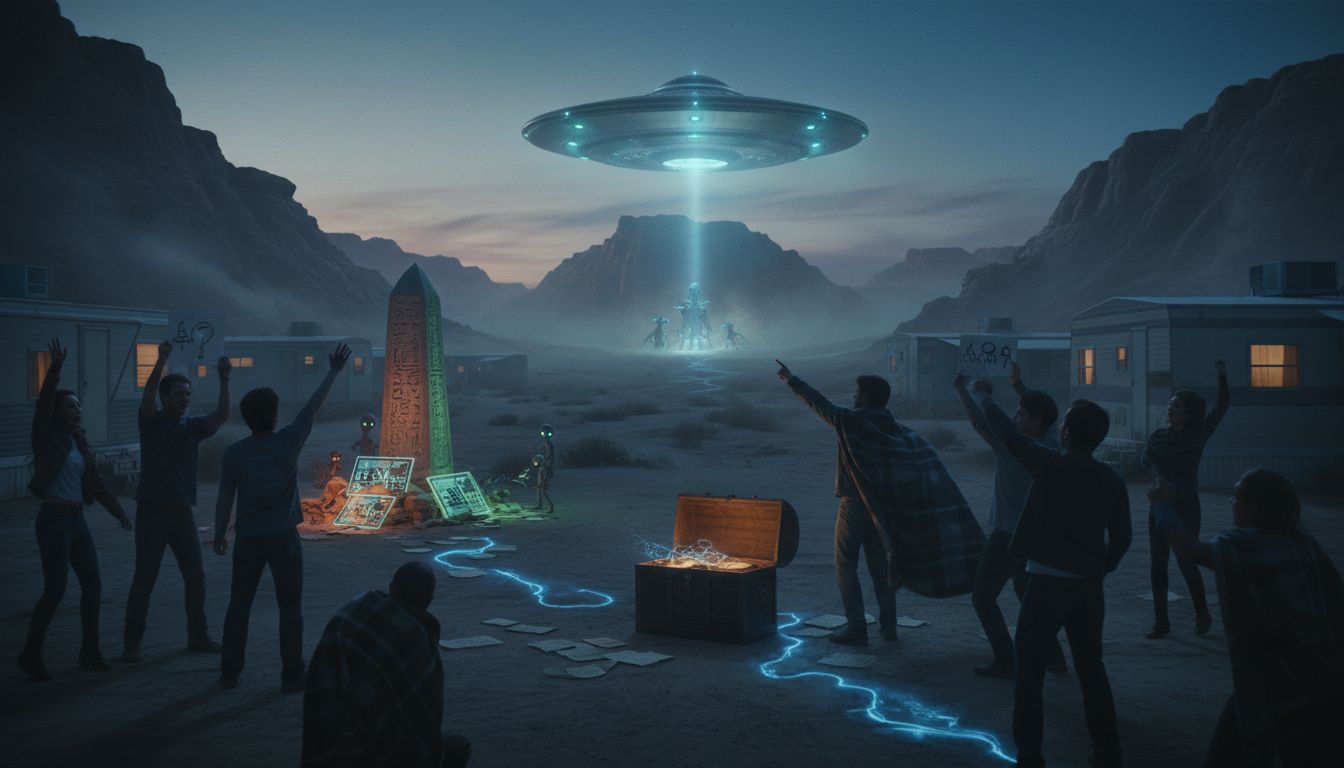
President Donald J. Trump issued an executive directive on Friday ordering the declassification of a cache of previously classified UFO/UAP (Unidentified Aerial Phenomena) documents held by the Department of Defense. The move, announced during a televised briefing, marks the most significant public release of such material since the 2021 Pentagon “UAP Task Force” report. In the Rio Grande Valley, reactions have been sharply divided: some residents celebrate the step toward government transparency, while others warn that the files could fuel misinformation or distract from pressing local concerns.
Background
The newly released files span roughly two decades of intelligence and flight‑test records, including radar logs, pilot testimonies, and internal memos. While the documents do not confirm extraterrestrial technology, they do detail a series of unexplained aerial encounters that were previously kept under the “National Security” classification. The decision follows mounting pressure from congressional committees and advocacy groups such as the U.S. Unidentified Aerial Phenomena Task Force, which have called for greater public oversight. Historically, the Valley has been a hotspot for reported sightings, a fact that has kept the community’s interest in UFO matters alive for years.
Local Reactions
In Brownsville, longtime resident María González, 58, expressed relief: “For years we’ve heard rumors and seen strange lights, but the government kept quiet. Knowing the truth—whatever it is—helps our community feel respected.” Conversely, Carlos Mendoza, a small‑business owner in McAllen, voiced skepticism: “I’m worried this is a political stunt. We need jobs and better schools, not a circus of ‘alien’ headlines.” The Valley’s elected officials are also split. City Councilmember Lena Hernandez praised the move as “a step toward accountability,” while County Judge Tom Baker cautioned that “the public deserves clear, factual explanations, not speculation that could undermine trust in our institutions.”
Expert Insight
UFO researcher Dr. Evelyn Park, director of the Southwest Institute for Aerial Phenomena Studies, noted that the release “provides a rare, verifiable data set for scientific analysis.” She emphasized that many of the sightings can be attributed to sensor anomalies, foreign drones, or atmospheric effects, but added that “a small subset remains genuinely unexplained and warrants further study.” Meanwhile, former Pentagon analyst Lt. Col. James Rivers (ret.) warned that the documents could be “misinterpreted without proper context,” urging journalists and the public to rely on expert commentary rather than sensational headlines.
Looking Ahead
The National Archives is slated to make the files available online within the next 48 hours, with redactions limited to national‑security details. Federal officials have promised a follow‑up briefing in two weeks to address lingering questions and outline any policy changes regarding UAP investigations. In the Valley, community groups are organizing town‑hall meetings to discuss the implications, ranging from potential tourism boosts to concerns about spreading unfounded rumors. As the files become public, the challenge for residents and policymakers alike will be to separate credible information from conjecture, ensuring that the conversation remains grounded in fact while respecting the genuine curiosity that UFO phenomena inspire.


