Overview
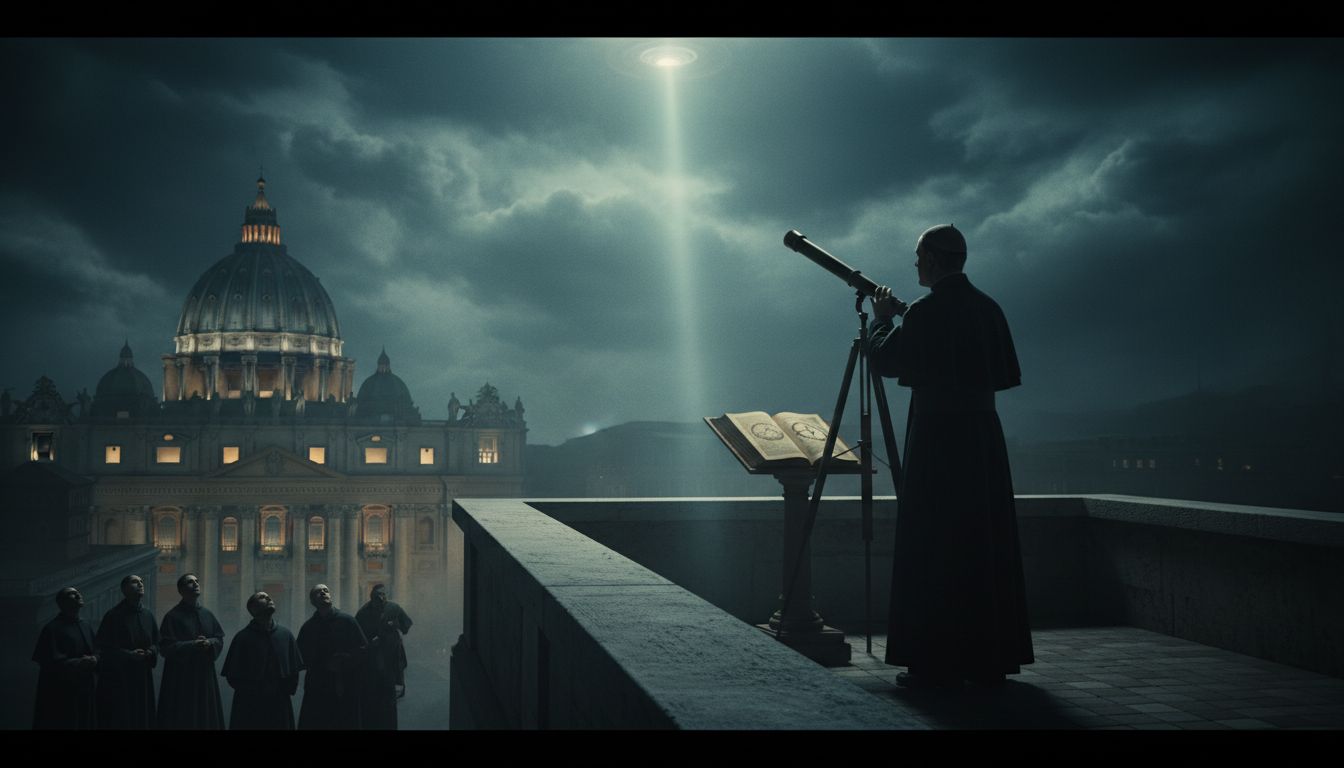
The Holy See announced on Tuesday that it will take an active role in the ongoing public conversation about unidentified aerial phenomena (UAP), commonly known as UFOs. In a brief statement released by the Vatican’s press office, officials said the Church is “prepared to engage with scientific, philosophical and theological questions raised by the increasing volume of official disclosures.” The move comes as the United States government, NASA, and several European defense ministries have released new data and reports that have reignited public and scholarly interest in the possibility of extraterrestrial encounters.
Background to the UAP Surge
Over the past year, a series of high‑profile releases—most notably the U.S. Department of Defense’s “Preliminary Assessment of Unidentified Aerial Phenomena” and NASA’s 2023 UAP research roadmap—have shifted the discussion from fringe speculation to a matter of national security and scientific inquiry. Congressional hearings in Washington featured testimonies from former pilots and intelligence officials who described encounters with objects that “exhibit flight characteristics beyond known technology.” Simultaneously, European agencies such as the UK’s Ministry of Defence have de‑classified hundreds of sighting reports, prompting academic conferences and peer‑reviewed studies on the phenomenon.
Vatican’s Position
The Vatican’s statement was issued by the Secretariat of State, citing a “long‑standing interest in the relationship between humanity, the cosmos, and the divine.” Cardinal Francesco Parisi, the Vatican’s chief scientist and director of the Vatican Observatory, elaborated in an interview:
“The Church has always encouraged the pursuit of truth, whether it be through theology, philosophy, or the natural sciences. If credible evidence emerges that we are not alone in the universe, it will invite us to reflect on the theological implications for doctrines such as creation, incarnation, and the universality of salvation.”
The Vatican also indicated it will convene a multidisciplinary working group that will include astronomers, physicists, ethicists, and theologians. The group’s mandate is to assess new data, evaluate the compatibility of potential findings with Catholic teaching, and propose guidelines for pastoral care should contact with non‑human intelligences ever become a reality.
Scientific and Theological Implications
The Vatican’s involvement underscores a growing recognition that UAP research sits at the intersection of empirical science and existential meaning. Dr. Sara Seager, an astrophysicist at MIT who recently testified before the U.S. Senate, noted that “the detection of technosignatures would be a paradigm shift comparable to Copernicus or Darwin.” For theologians, the prospect raises questions about the scope of God’s creation and the uniqueness of the human soul.
In a recent symposium organized by the Pontifical Academy of Sciences, scholars debated whether the existence of extraterrestrial life would challenge the doctrine of original sin or the salvific role of Christ. While consensus remains elusive, many agreed that the Church’s doctrine of “the universality of Christ’s redemption” could accommodate a broader cosmic community, provided that any beings discovered are also created by God and possess rational souls.
Looking Ahead
The Vatican plans to submit an initial briefing to Pope Francis within the next six months, after the working group reviews the latest UAP data released by the Pentagon’s All‑Domain Anomaly Resolution Office (AARO). The Holy See has also expressed willingness to collaborate with international bodies such as the United Nations Office for Outer Space Affairs, which is drafting a global framework for the transparent sharing of UAP observations.
By entering the dialogue, the Vatican signals that the conversation about unidentified aerial phenomena is no longer confined to military briefings or fringe media; it is now a matter of scientific rigor, ethical responsibility, and theological reflection. Whether the forthcoming reports will confirm the existence of non‑human intelligences remains uncertain, but the Church’s proactive stance ensures that, should such a discovery occur, humanity will have a prepared moral and spiritual compass to navigate the new frontier.


