Overview
Vermont state Representative Megan Collins (D‑Rutland) introduced a bill on Thursday calling for the creation of a dedicated UAP (Unidentified Aerial Phenomena) task force within the state’s Office of Legislative Auditing. The proposal, filed during the 2026 legislative session, seeks to “coordinate investigations, standardize data collection, and increase transparency for Vermonters who have reported anomalous aerial sightings over the past two years.” Collins’ motion follows a surge in public reports and aligns with renewed federal attention to UAPs after the Pentagon’s 2023 assessment and the 2024 congressional hearings on the subject.
Recent Sightings in Vermont
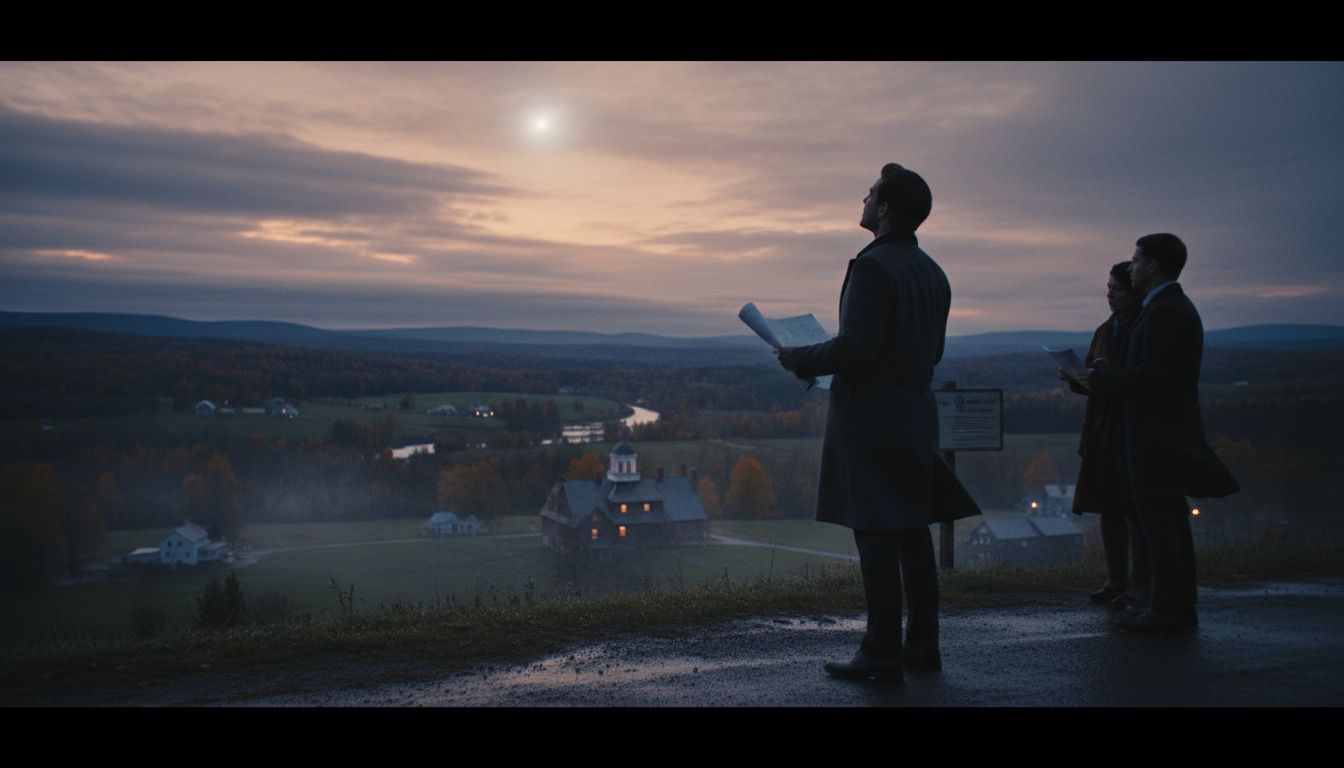
Since late 2024, local law‑enforcement agencies and private pilots have logged more than 30 credible sightings across the Green Mountain State, ranging from luminous orbs hovering over Lake Champlain to fast‑moving, low‑altitude objects observed near the town of St. Albans. The Vermont State Police’s aviation unit has documented several incidents with radar returns that could not be reconciled with known aircraft or weather balloons. “We’re receiving calls from residents who are genuinely concerned,” said Lt. Aaron Patel, head of the state’s aviation investigations division. “The data we have is fragmented, and without a centralized effort, we risk missing critical patterns.”
Legislative Proposal and Objectives
Collins’ bill outlines a three‑pronged mandate for the task force:
- Data Integration – Consolidate reports from law‑enforcement, the Federal Aviation Administration, and civilian observers into a single, searchable database.
- Scientific Review – Partner with the University of Vermont’s atmospheric physics department to analyze radar, visual, and electromagnetic data.
- Public Reporting – Issue quarterly summaries to the public and legislature, ensuring “full transparency while protecting legitimate national‑security concerns.”
The legislation also earmarks $250,000 from the state budget for the first year, covering staff, analytical tools, and outreach efforts. “A modest investment now can prevent costly ambiguities later,” Collins argued on the House floor, citing the potential economic impact of tourism and the need to maintain public trust.
Coordination with Federal Efforts
The proposed task force would operate in concert with the U.S. Department of Defense’s UAP Office, which, after the 2023 report, established a nationwide network of reporting points. Vermont’s initiative mirrors similar state‑level efforts in Texas and Colorado, where local agencies have partnered with the All‑Domain Anomaly Resolution Office (AARO) to share data. Sen. Robert Hayes (R‑VT), a member of the Senate Committee on Transportation, welcomed the bill, noting, “State‑level expertise can complement federal analysis, especially when it comes to regional atmospheric conditions that affect sensor readings.”
Next Steps and Outlook
The bill is slated for committee review next week, after which it could advance to a floor vote before the end of the session. If passed, the task force would be operational by July 2026, positioning Vermont as one of the first states with a formal, science‑driven UAP investigative body. Observers from the UFO Research Center have praised the measured approach, emphasizing that “structured, transparent inquiry is the cornerstone of credible research into aerial anomalies.”
As the debate unfolds, Vermont’s lawmakers appear poised to balance public curiosity with methodological rigor, setting a potential template for other jurisdictions grappling with the growing tide of UAP reports nationwide.