Overview
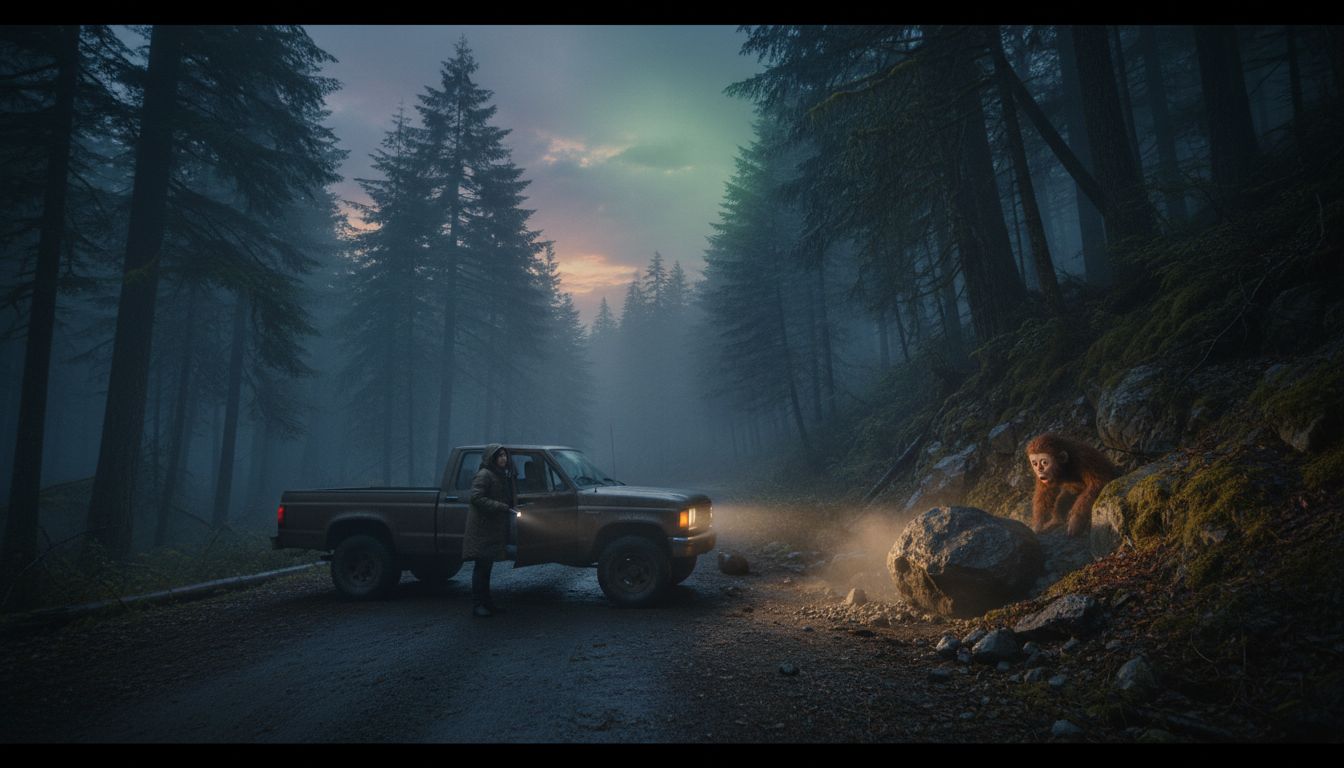
Two separate eyewitness accounts of legendary cryptids have surfaced this week, prompting renewed discussion among researchers and the public. In Washington State’s Gifford Pinchot National Forest, a motorist reported a brief encounter with a small, reddish‑brown, furry figure she identified as a juvenile Sasquatch after a boulder tumbled down an embankment. Across the Atlantic, a guided tourist tour on Scotland’s Loch Ness documented a whitish‑grey fin protruding from the water, marking the fourth Loch Ness Monster sighting recorded in 2026. Both reports were featured on the long‑running paranormal radio program Coast to Coast AM.
Washington Sighting Details
The driver, a 38‑year‑old resident of Yakima County who requested anonymity, was traveling eastbound on State Route 12 when a large boulder dislodged from a nearby slope and rolled onto the roadway. “I stopped the car, and as the dust settled I saw a quick, darting movement near the tree line,” she told Coast to Coast AM host George Noory. She described the creature as “about three feet tall, covered in reddish‑brown hair, with a head that seemed slightly larger than a human child.” The motorist believed the animal was a juvenile Sasquatch, noting that it did not appear to be a known wildlife species such as a bear or mountain lion. No physical evidence—such as footprints or hair samples—was recovered, and local law‑enforcement officers did not open a formal investigation. The Washington Department of Natural Resources (DNR) was notified, and a routine wildlife‑track survey was scheduled for the area.
Loch Ness Tour Observation
On the same day, a group of ten tourists aboard a licensed Loch Ness cruise reported a startling visual near the lake’s western shore. “We saw a long, pale‑grey fin breaking the surface for about ten seconds before disappearing,” said tour guide Ewan MacLeod, who has led excursions on the loch for twelve years. The sighting was captured on a handheld video device, though the footage remains under review by the Scottish Association for Marine Science (SAMS) for authenticity and possible environmental explanations. This incident follows three other documented sightings in 2026, including a 2026‑March sonar anomaly and a July aerial photograph that showed a faint, elongated shape near Urquhart Castle. The Scottish tourism board has not issued an official statement, but it has encouraged visitors to report any unusual observations to the National Marine Laboratory.
Expert Commentary
Cryptozoologist Dr. Linda M. Harrington of the University of Washington cautioned against drawing definitive conclusions from single‑incident reports. “Both accounts share common features—brief visibility, lack of physical trace, and reliance on eyewitness perception,” she explained. “While the Washington sighting aligns with classic Sasquatch descriptions, the reddish‑brown coloration is less typical, which could suggest a misidentified known animal or a lighting effect.” Regarding Loch Ness, Dr. Alistair G. Ferguson, a marine biologist with SAMS, noted that “large fish, floating debris, or wave patterns can produce fin‑like silhouettes, especially under low‑light conditions.” He added that systematic sonar sweeps and environmental DNA sampling are the most reliable methods for verifying such claims.
Next Steps and Public Response
Both incidents have spurred interest from local enthusiasts and scientific bodies. The Washington DNR plans to conduct a track‑mapping expedition in the Gifford Pinchot area over the next two weeks, employing motion‑triggered cameras and scent‑detection dogs. Meanwhile, SAMS has scheduled a multibeam sonar survey of the Loch Ness sector where the fin was observed, with results expected later this summer. Public reaction has been mixed; social‑media platforms show a surge of supportive comments from cryptid communities, while skeptics emphasize the need for verifiable evidence. As the investigations proceed, the two reports underscore the enduring allure—and the methodological challenges—of studying phenomena that sit at the fringe of mainstream science.


