Overview
A recent uptick in unexplained disappearances among researchers has drawn renewed scrutiny to the 2020 Monica Reza case, in which a post‑doctoral physicist vanished after filing a report describing a possible unidentified aerial phenomenon (UAP) encounter. The clustering of missing‑person incidents—four scientists in the United States and two abroad have been reported in the past six months—has prompted federal investigators and academic institutions to revisit the Reza file, while legislators and advocacy groups are urging greater transparency on anomalous phenomena.
Background
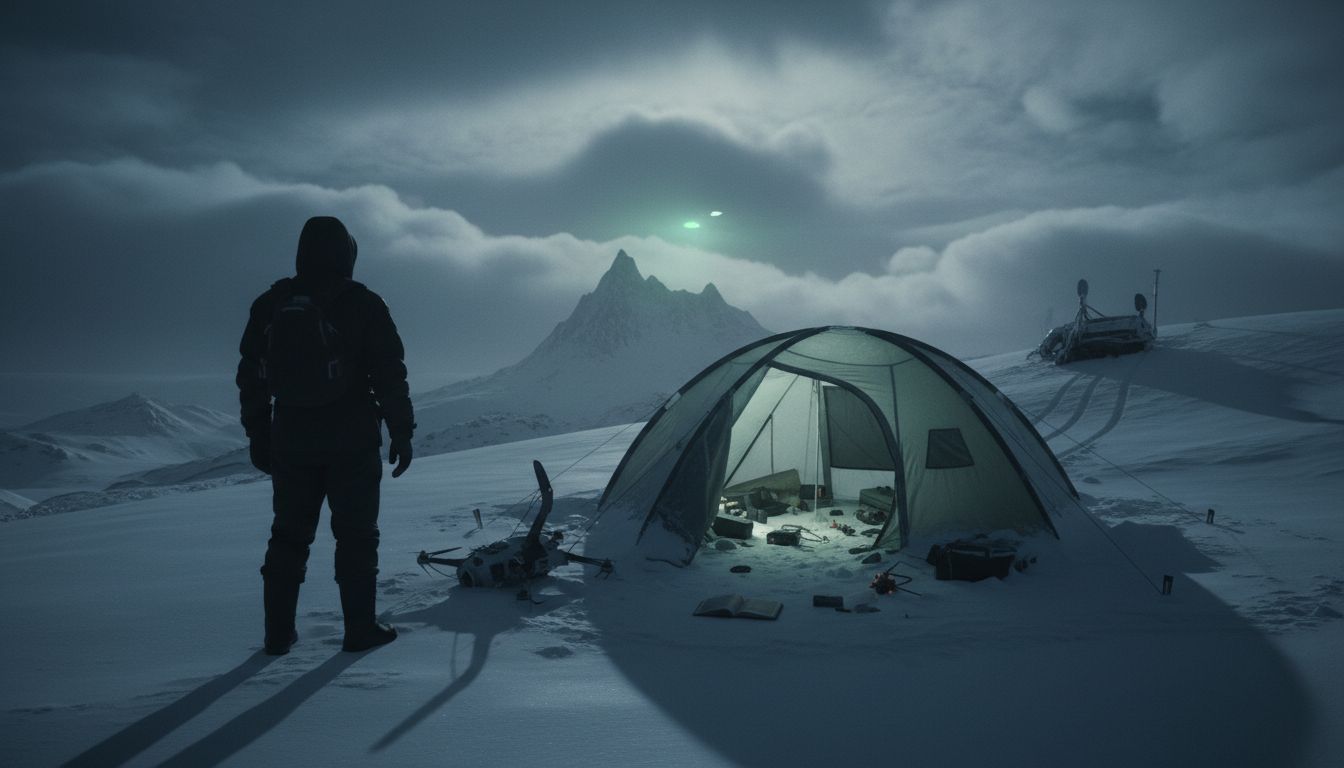
Monica Reza, a 31‑year‑old quantum optics researcher at a Midwestern university, was last seen on June 12 2020 leaving her laboratory after an alleged encounter with a luminous, disc‑shaped object that hovered above the campus research field. According to her colleague Dr. Elena Mendoza, Reza “documented the event in a detailed lab notebook and submitted a formal incident report to the university’s safety office.” Two days later, Reza failed to appear for a scheduled conference and was reported missing by her department chair. Despite an extensive search involving local law enforcement, the FBI, and private investigators, no trace of Reza has been found.
The case entered the public domain in early 2021 when a declassified Pentagon report on UAPs referenced “multiple credible civilian sightings” and cited the Reza incident as an example of a “potentially hazardous encounter.” Since then, the investigation has largely remained dormant, with limited updates released to the media.
Recent Developments
In early April 2026, the National Science Integrity Task Force (NSITF) released a briefing noting a “statistically significant rise in the disappearance of researchers working in high‑energy physics, aerospace engineering, and atmospheric sciences.” The task force highlighted six cases, including the 2020 Reza disappearance, that share common factors: the individuals were engaged in classified or sensitive research, reported anomalous observations shortly before vanishing, and left behind minimal personal effects.
The NSITF has now authorized a joint review involving the Department of Defense’s UAP Office, the FBI’s Missing Persons Unit, and the Office of Scientific Integrity. Lead investigator Special Agent Marcus Levy told reporters, “We are re‑examining all available evidence, from surveillance footage to electronic device logs, to determine whether there is a single thread linking these incidents or if they are unrelated tragedies.” The task force also announced plans to issue a public request for information within the next 30 days, inviting anyone with relevant data to submit tips through a secure portal.
Expert Opinions
Academic experts caution against jumping to conclusions while acknowledging the need for thorough investigation. Dr. Sanjay Patel, professor of astrophysics at the University of Colorado, remarked, “The correlation between research fields and disappearances is intriguing, but we must consider occupational hazards, mental health stressors, and even targeted espionage as plausible explanations.”
Conversely, former Pentagon UAP analyst Laura Michaels emphasized the broader policy implications: “When credible scientists report encounters that they cannot readily explain, it challenges our current scientific and security frameworks. Transparency is essential to maintain public trust and to protect researchers who may be on the front lines of unknown phenomena.”
Civil‑rights organizations have also weighed in. The Scientific Freedom Coalition issued a statement urging Congress to pass the Researcher Safety and Transparency Act, a bill that would mandate timely disclosure of any government‑held data related to UAP sightings involving scientific personnel.
Next Steps
The upcoming NSITF public outreach is expected to generate new leads, and the task force has pledged to release a comprehensive report by the end of the year. In parallel, several universities have instituted mandatory debriefings for staff who experience anomalous events, aiming to create a systematic record that could aid future investigations.
While the fate of Monica Reza remains unresolved, the convergence of recent disappearances has sparked a renewed call for accountability across scientific, governmental, and legislative spheres. As the nation watches, the outcome of this renewed inquiry may set a precedent for how anomalous phenomena are handled in the scientific community and beyond.


