Overview
The Pentagon’s highly anticipated 2025 Unidentified Aerial Phenomena (UAP) report was released last month, but it did not deliver definitive explanations for the majority of the incidents catalogued over the past decade. The 400‑page document, compiled by the Office of the Assistant Secretary of Defense for Research and Engineering, concluded that most sightings remain “unexplained” due to limited data, sensor gaps, and classification constraints. While the report stopped short of confirming extraterrestrial origins, it acknowledged that a subset of observations could represent advanced technologies—potentially from foreign adversaries or unknown sources—warranting continued scrutiny.
Key Findings
The report examined 442 UAP incidents reported by military pilots, radar operators, and intelligence analysts between 2004 and 2024. Of these, 173 cases were classified as “unexplained” after exhaustive analysis. The remaining 269 were attributed to known atmospheric phenomena, instrument anomalies, or misidentified conventional aircraft. Notably, the report highlighted three recurring characteristics—high‑speed maneuverability, lack of conventional propulsion signatures, and the ability to operate in both civilian and restricted airspace—that defy current aerospace engineering explanations. “We have a data set that is both rich and frustratingly incomplete,” said Dr. Linda Bracken, senior scientist at the UAP Research Center, “and that is the crux of why the 2025 assessment remains inconclusive.”
Ongoing Data Collection
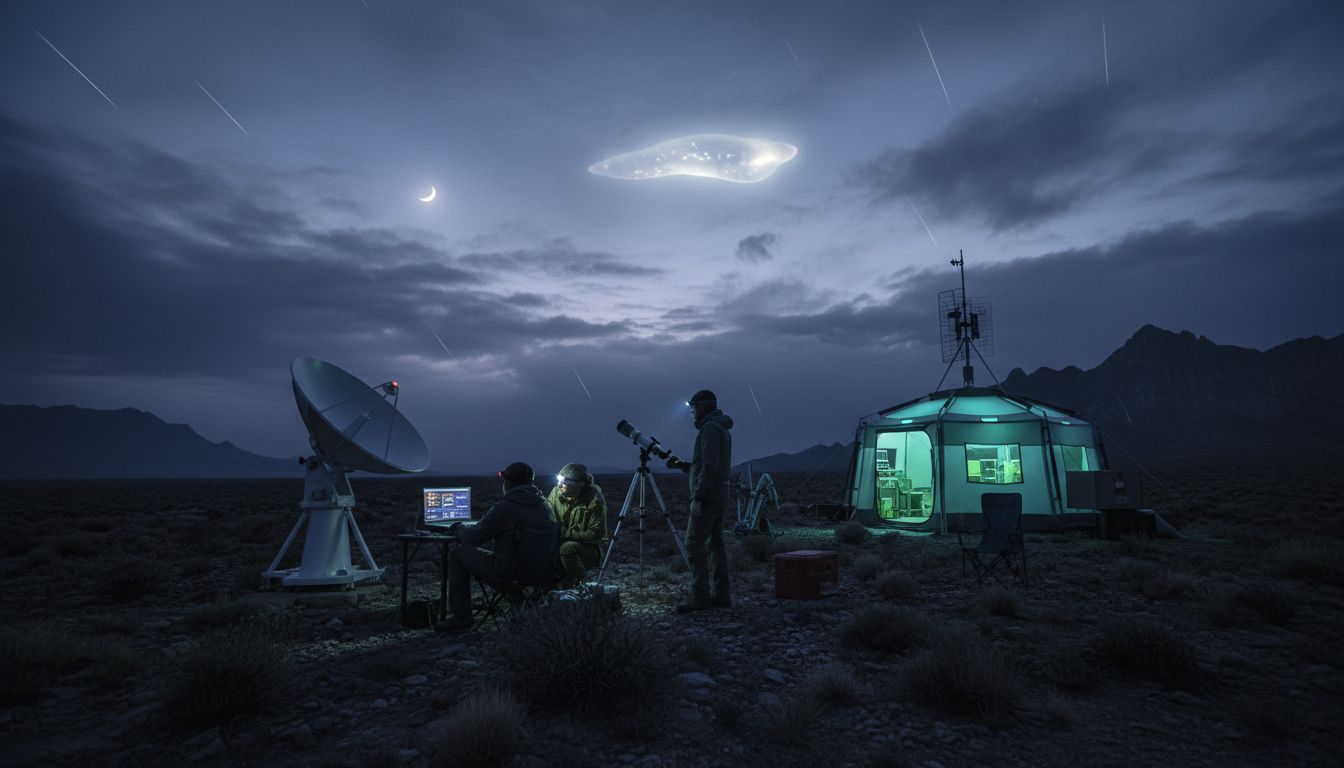
In response to the report’s data‑shortage criticism, several civilian and governmental initiatives have accelerated their collection efforts. The UAP Data Alliance (UAPDA), a coalition of academic institutions, private aerospace firms, and former military pilots, has launched a cloud‑based repository that aggregates sensor logs, video footage, and eyewitness testimony in near‑real time. Since its inception in early 2025, UAPDA has ingested over 1,200 new submissions, increasing the volume of analyzable material by 35 %. Meanwhile, the Department of Defense has authorized the Advanced Aerial Surveillance Program (AASP) to equip select fighter squadrons with high‑resolution infrared and lidar packages, aiming to capture higher fidelity data on any anomalous objects encountered during training missions.
New Investigative Bodies
The report also spurred legislative action. In June 2025, Congress passed the UAP Transparency and Accountability Act, mandating the creation of an independent UAP Oversight Committee within the Office of the Director of National Intelligence. The committee, chaired by former CIA analyst Robert “Bob” Hargrove, will review classified findings, publish quarterly summaries, and recommend policy changes. “A transparent, bipartisan structure is essential to maintain public trust while protecting national security,” Hargrove told a Senate hearing. Parallel to this, the National Aeronautics and Space Administration (NASA) announced a dedicated UAP Research Task Force to apply scientific methodology to the phenomenon, leveraging orbital platforms and deep‑space telemetry.
Calls for Greater Transparency
UFO researchers and advocacy groups have welcomed the institutional developments but continue to press for full declassification of the Pentagon’s raw data. The Scientific Coalition for UAP Studies (SCUS) released a statement urging the Department of Defense to release at least 70 % of the sensor recordings cited in the 2025 report within the next twelve months. “Without open data, independent verification is impossible, and the scientific community remains sidelined,” said SCUS co‑founder Dr. Miguel Alvarez. The coalition also called for a standardized reporting protocol for civilian sightings, arguing that a unified framework would reduce duplication and improve data quality.
Looking Ahead
While the 2025 Pentagon report did not solve the UAP puzzle, it has undeniably galvanized a broader, more coordinated research effort across governmental, academic, and private sectors. The convergence of new data streams, legislative oversight, and scientific inquiry suggests that the next few years could yield more concrete insights—whether they point to advanced terrestrial technologies, atmospheric anomalies, or something entirely unexpected. As Dr. Bracken cautioned, “Patience and rigor are our best tools; the answers may be out there, but they will require sustained, transparent investigation to uncover.”


