Overview
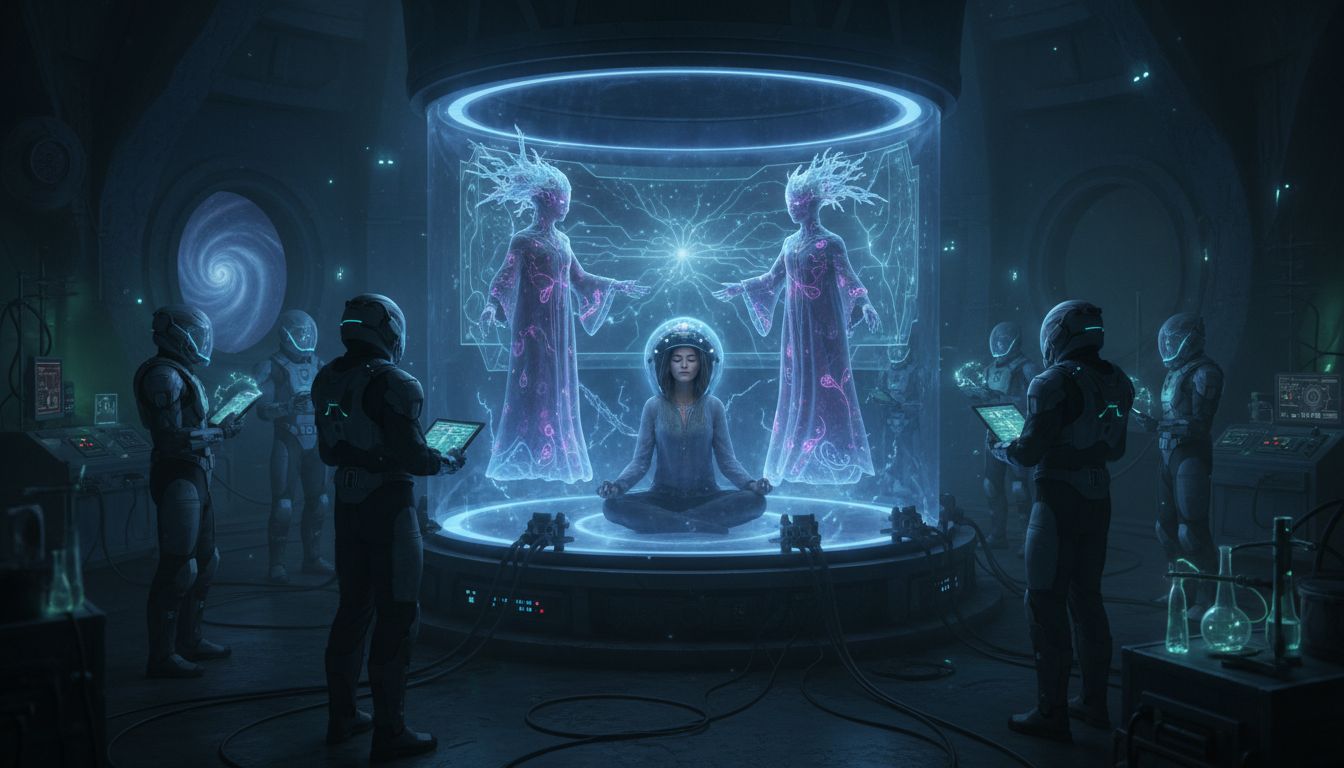
A growing body of research is re‑examining the vivid “psychedelic entities” that people report encountering during intense hallucinogenic experiences with compounds such as N,N‑dimethyltryptamine (DMT), ayahuasca, and ibogaine. Rather than dismissing these encounters as random visual noise, scientists are documenting a striking consistency: the entities often appear as plant‑specific guides—“Mother Iboga,” “Blue Deer,” or other culturally resonant figures—that interact with users in ways that promote feelings of unity, insight, and well‑being. In recent statements, researchers have likened the reality of these phenomena to that of natural, observable events such as rainbows, suggesting a shift from purely subjective interpretation toward a more objective, phenomenological framework.
Consistency Across Substances
Large‑scale surveys of psychedelic users, compiled from online forums, clinical trial debriefs, and ethnographic fieldwork, reveal recurring archetypes tied to particular plants. Participants who ingest ayahuasca frequently describe encounters with luminous, serpentine beings that convey moral teachings, while ibogaine users often meet a regal, West‑African woman—referred to by many as “Mother Iboga.” The consistency extends beyond visual similarity; the entities tend to adopt roles that mirror the cultural origins of the plant, offering guidance, protection, or a sense of purpose.
In a 2025 meta‑analysis published in Frontiers in Psychology, researchers identified that over 70 % of respondents who used DMT reported meeting sentient “machine‑like” or “elf‑like” presences that communicated in symbolic language. Similar patterns emerged in ayahuasca studies conducted among the Huichol people of Mexico, where the Blue Deer (Kauyumari) appears as a recurring spiritual guide in ceremonial visions. These cross‑cultural parallels suggest that the entities are not merely random hallucinations but may reflect a shared neurocognitive template activated by serotonergic psychedelics.
Scientific Perspectives
Neuroscientists and psychologists are approaching the phenomenon from a multidisciplinary angle. Dr. Lena Ortiz, a cognitive neuroscientist at the University of California, Berkeley, explains that “the brain’s predictive‑coding circuits appear to generate coherent agents when the usual sensory hierarchy is destabilized. What is remarkable is the degree of cultural convergence we see, which points to a deeper, perhaps evolutionary, predisposition for the mind to personify abstract processes.”
Philosophers of mind are also weighing in. Dr. Samuel Greene of the Institute for Consciousness Studies argues that the entities challenge the traditional boundary between “internal” imagination and “external” reality. “If a subject repeatedly experiences a consistent, agency‑bearing presence that elicits measurable positive affect and lasting behavioral change, we must consider the possibility that the experience has ontological weight comparable to other natural phenomena,” he says.
The emerging consensus is cautious but optimistic: while the entities are not yet amenable to direct measurement, their reproducibility and therapeutic impact warrant serious scientific inquiry.
Personal Accounts and Cultural Context
The discussion is grounded in lived experience. Joanna Steinhardt, a freelance writer and senior editor at Ayin Press, recounts her own ibogaine ceremony in rural Mexico, where a “gorgeous and commanding West African woman” guided her through a twelve‑hour visionary journey. “At the time I wondered if I was projecting a ‘magical Negro’ trope onto the vision,” Steinhardt writes, “but repeated conversations with researchers and other users showed me that these plant spirits are more than cultural shorthand—they are a recurring feature of the psychedelic landscape.”
Indigenous testimonies reinforce this view. Huichol participants describe the Blue Deer not as a mythic story but as a present, interactive guide who imparts ethical counsel during peyote rituals. Such accounts underscore the importance of respecting the cultural origins of these entities while investigating them through modern scientific lenses.
Implications and Future Directions
If psychedelic entities are indeed consistent, plant‑specific guides, they could become a valuable tool in psychotherapy. Preliminary clinical trials with ayahuasca and psilocybin have already reported that encounters with benevolent entities correlate with greater reductions in depressive symptoms and higher rates of sustained well‑being. Researchers propose incorporating structured “entity‑dialogue” protocols into integration sessions, allowing patients to articulate and process the guidance received during the trip.
Funding agencies are responding. The National Institute of Mental Health announced a $12 million grant in early 2026 to study the therapeutic potential of entity‑mediated experiences across multiple psychedelic compounds. Parallel efforts are underway to develop neuroimaging paradigms that capture the brain’s activity during reported entity encounters, aiming to move the discussion from anecdote to empirical evidence.
As the field matures, scholars caution against sensationalism. “We must avoid the trap of exoticizing or mystifying these experiences,” Dr. Ortiz emphasizes. “Rigorous, culturally informed research will determine whether psychedelic entities are best understood as neurocognitive constructs, emergent agents, or something that straddles both realms.”
The conversation surrounding psychedelic entities is evolving from fringe speculation to a credible scientific frontier. By combining ethnographic insight, neurobiological data, and therapeutic outcomes, researchers hope to clarify whether these plant‑guided presences are a unique facet of human consciousness—or, as some now suggest, as real and observable as the rainbow that arches across the sky after a storm.


