Overview
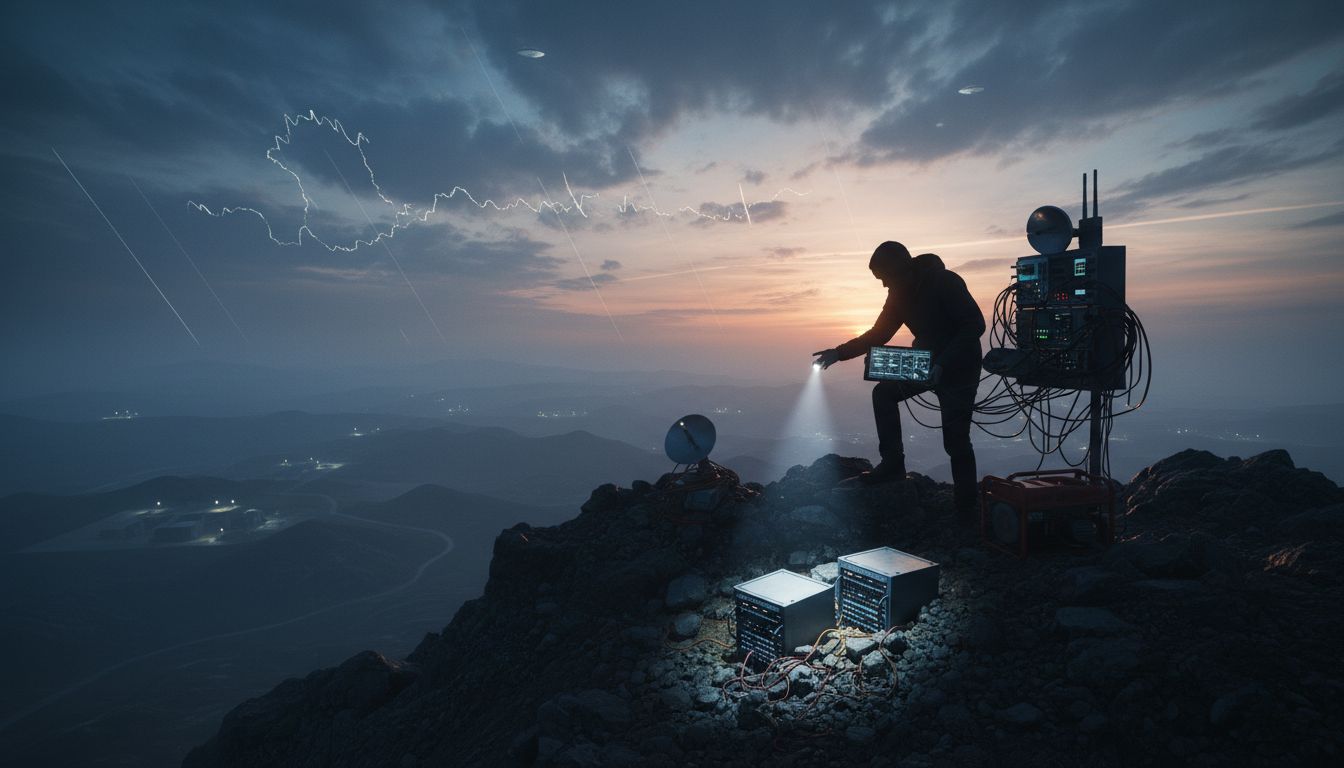
A new BBC audio documentary, What are UFO hunters really searching for?, aired on 24 April 2026, explores why the search for unidentified aerial phenomena (UAP) has re‑entered mainstream discourse. While headlines often focus on high‑profile political promises—former President Donald Trump pledging to release “many very interesting documents” and Ohio Governor J.D. Vance describing his “obsession” with alien life—the programme delves deeper into the motivations that drive contemporary investigators. Journalist Daniel Lavelle, author of the forthcoming book Chasing Aliens: Conspiracy in the UFO Heartlands, travelled across the United States to interview researchers, hobbyists, and officials, seeking to understand whether the quest is about extraterrestrials, hidden data, or something else entirely.
Political Landscape
In recent years, UAP inquiries have moved from fringe forums to the halls of Congress. Public hearings in 2022 and 2023, initiated after the Pentagon’s 2020 “Unidentified Aerial Phenomena” report, compelled lawmakers to request declassified material and to establish a permanent oversight office. The documentary notes that “the political stakes have shifted,” with figures such as former President Barack Obama and current Vice President Kamala Harris also commenting on the need for transparency. Lavelle highlights that the bipartisan interest is less about confirming alien visitation and more about assessing national‑security implications and restoring public trust in government secrecy.
Motivations Behind the Hunt
The programme identifies three overlapping drivers among modern UFO hunters:
Scientific curiosity – Many participants, often with backgrounds in astronomy or aerospace engineering, treat UAP sightings as anomalous data points that could expand our understanding of atmospheric physics. As one researcher told Lavelle, “If we can explain one of these events, it may open new avenues in aerodynamics or sensor technology.”
Conspiracy culture – A longstanding subculture links UFOs to covert government projects. The documentary cites a veteran “UFOlogist” who argues that the very act of seeking hidden files is a form of institutional accountability, regardless of whether extraterrestrials are involved.
Desire for validation – For some hobbyists, documenting a sighting offers personal affirmation and community recognition. “It’s about being seen,” a frequent sky‑watcher explained, “not just by our peers, but by a society that has historically dismissed us.”
These motivations intersect, producing a landscape where the search for “aliens” often serves as a proxy for broader concerns about transparency, scientific rigor, and belonging.
On the Ground: Lavelle’s Road Trip
Lavelle’s cross‑country journey took him from the desert observatories of Nevada to the “UFO heartlands” of the Midwest. He attended a gathering in Roswell, New Mexico, where veterans of the 1947 incident discussed the evolution of public perception. In Ohio, he met Governor Vance’s advisory team, who disclosed that the governor’s “obsession” is framed as a cultural‑psychology study, exploring how myth and belief influence public policy. The documentary also recorded a candid interview with a former Air Force pilot who had filed a UAP report in 2021, noting that “the paperwork is real, the phenomenon is real, but the narrative around it is still being written.”
Implications and Outlook
The BBC piece concludes that while the allure of extraterrestrials remains a powerful narrative hook, the core pursuit is for hidden information and institutional accountability. As more UAP data becomes publicly available through the Pentagon’s UAP Task Force and congressional mandates, researchers anticipate a shift from speculative storytelling to evidence‑based analysis. Lavelle’s upcoming book is expected to further map this transition, highlighting how “conspiracy” and “science” are not mutually exclusive but part of a complex tapestry driving today’s UFO community.
In an era where misinformation spreads rapidly, the documentary underscores the importance of rigorous methodology and transparent governance. Whether the skies will ultimately reveal alien technology or simply expose gaps in our own surveillance capabilities, the renewed public interest signals a broader societal demand: to know what is hidden, why it is hidden, and what it means for the future of scientific inquiry and democratic oversight.


