Overview
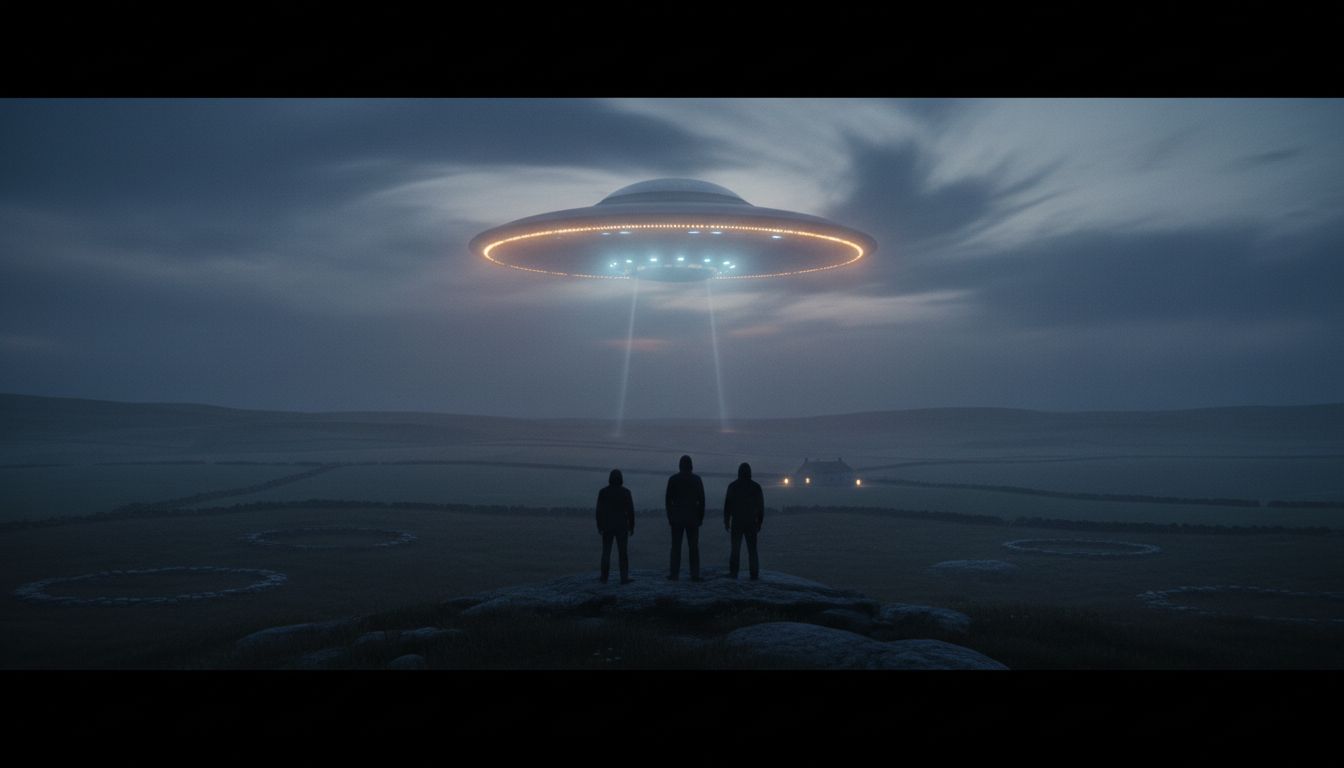
In a new column for Flying Magazine published on April 22, 2026, the author examines the persistent unease many Americans feel toward unidentified flying objects (UFOs), or unidentified aerial phenomena (UAPs). By tracing the phenomenon from Cold‑War paranoia to today’s de‑classified Pentagon videos, the piece argues that confronting the psychological roots of this fear is essential for a more measured public conversation about possible extraterrestrial encounters.
Cultural Roots of the Fear
The article points out that the modern UFO narrative is built on a series of cultural flashpoints. “The first wave of panic in the 1950s was less about aliens and more about the unknown capabilities of rival superpowers,” the author writes, referencing the era’s “flying saucer” hysteria that dovetailed with nuclear anxieties. Subsequent decades added layers: the 1970s’ “Close Encounters” boom, the rise of conspiracy‑theory networks in the 1990s, and today’s social‑media echo chambers.
Sociologist Dr. Lena Morales of the University of Arizona, quoted in the column, explains that “UFOs become a canvas for broader societal worries—whether it’s loss of control, technological displacement, or mistrust of government secrecy.” The piece underscores that these anxieties are not merely fringe concerns; surveys from the Pew Research Center show that about 45 % of U.S. adults still consider UFOs a serious issue, despite increasing scientific scrutiny.
Recent UAP Sightings and Public Reaction
The column links cultural anxiety to a surge in credible sightings reported in the last two years. In 2025, the U.S. Department of Defense released three previously classified Navy videos—dubbed “Gimbal,” “GoFast,” and “FLIR”—that captured objects moving at speeds and with maneuverability beyond known aircraft. The Office of the Director of National Intelligence’s annual UAP report (released in March 2026) listed 174 incidents, 41 of which remained unexplained after scientific analysis.
A former Navy pilot, Lt. Cmdr. Aaron Patel, who helped authenticate the footage, told the author, “When you see something that defies the physics we teach, the instinct is fear—not just of the object, but of what we don’t understand about our own capabilities.” The article notes that mainstream media coverage has shifted from sensational headlines to more nuanced reporting, yet public sentiment remains split, with online forums still rife with speculation and alarm.
Toward a Rational Public Discourse
The core argument of the Flying Magazine piece is that acknowledging the emotional underpinnings of UFO fear can pave the way for constructive dialogue. The author cites a recent symposium hosted by the National Academies of Sciences, Engineering, and Medicine, where experts from aerospace, psychology, and national security convened to recommend transparent data sharing and interdisciplinary research.
Astrophysicist Dr. Maya Chen, a panelist at the symposium, emphasized that “open‑source analysis of sensor data, combined with public education on atmospheric and optical phenomena, reduces the space where speculation can thrive.” The column also highlights legislative steps: the UAP Transparency Act of 2025, now signed into law, mandates quarterly briefings to Congress and the public on high‑priority sightings, aiming to replace secrecy with accountability.
Conclusion
By weaving together historical context, recent government disclosures, and expert perspectives, the Flying Magazine column provides a measured look at why UFOs continue to provoke fear and how that fear can be redirected into evidence‑based inquiry. As the author concludes, “If we can name the anxieties that fuel our reactions, we stand a better chance of turning a topic once relegated to the fringe into a legitimate field of scientific and policy discussion.” The piece serves as a reminder that the path to understanding—whether the objects are terrestrial, foreign, or otherwise—begins with confronting, rather than ignoring, the human emotions that accompany the unknown.


