Overview
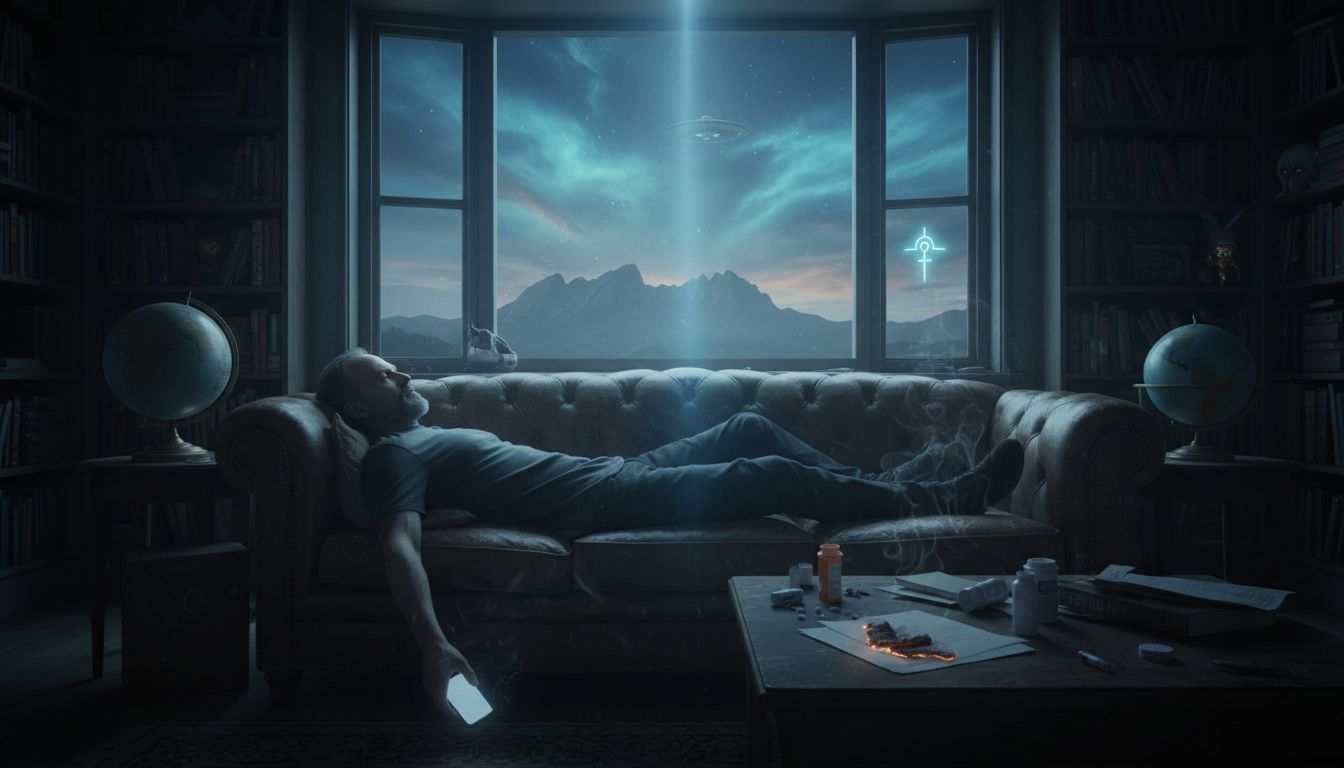
Controversial author and self‑described “UFO specialist” David Wilcock was found dead in Boulder County, Colorado, on April 18, 2026. Local law‑enforcement officials have opened a death‑probe that, based on preliminary findings, points to suicide. The news comes after Wilcock posted a brief, cryptic message on his social‑media channel saying he was dealing with “intense stuff,” prompting immediate concern among his followers and a wave of tributes from public figures, including U.S. Representative Anna Paulina Luna.
Background
Wilcock rose to prominence in the 2010s through a series of best‑selling books, YouTube series, and live‑streamed events that blended New Age spirituality, speculative history, and claims of contact with extraterrestrials. His most popular titles—The Ascension Mysteries and The Secrets of the Great Pyramids—have sold millions of copies worldwide, while his weekly “Future Timeline” livestreams have drawn audiences in the hundreds of thousands. Critics have repeatedly labeled his work as pseudoscience, noting a pattern of unverified predictions and reliance on anecdotal evidence. Nonetheless, Wilcock cultivated a devoted community that frequently cites his commentary on government disclosure and alleged UFO sightings as a primary source of information.
Recent Livestream and the “Intense Stuff”
On April 15, Wilcock hosted a three‑hour livestream in which he announced that “the promised UFO videos are finally coming out” and displayed a series of political graphics that referenced the ongoing geopolitical tension surrounding Iran. He suggested that the footage would “prove the existence of non‑human intelligence working with world governments.” Viewers noted that the broadcast contained several unverified claims and that the promised video material never materialized. Within days, Wilcock’s social‑media account posted the brief note: “Going through intense stuff. Need to step back.” The message was deleted shortly after posting, but screenshots circulated among his fan base, fueling speculation about his mental state.
Reactions from the Public and Officials
The announcement of Wilcock’s death elicited an outpouring of condolences across social platforms. Representative Anna Paulina Luna, a vocal supporter of transparency on unidentified aerial phenomena (UAP), posted on X: “David Wilcock was a brave voice calling for truth. My thoughts are with his family and friends.” Other commentators, including former Pentagon UAP analyst Luis Elizondo, offered measured remarks, emphasizing the need for “responsible discourse” when discussing classified or speculative material.
Meanwhile, mental‑health advocates highlighted the pressures faced by internet personalities who operate at the intersection of fringe theories and mainstream politics. Dr. Karen Mitchell, a clinical psychologist specializing in digital‑age stress, told The New York Times that “the rapid feedback loop of online audiences can amplify anxiety, especially when creators feel responsible for delivering on high‑stakes promises.”
Investigation and Legal Proceedings
Boulder County Sheriff’s Office confirmed that the death probe is ongoing and that a preliminary autopsy report supports the suicide hypothesis. Authorities have not released a full toxicology report, citing standard procedural timelines. The department also noted that Wilcock’s residence was searched for “any evidence of foul play or external threats,” and that no immediate signs of a struggle were observed.
Legal experts point out that Wilcock’s estate may face challenges related to the ownership of his extensive digital content library, which includes thousands of hours of livestream recordings and unpublished manuscripts. Attorney Michael Greene of the firm Greene & Partners remarked that “intellectual‑property disputes are common in cases where a creator’s output is closely tied to a personal brand, especially when the brand’s value is tied to speculative claims.”
Context Within the UFO Disclosure Landscape
Wilcock’s death arrives at a moment of heightened public interest in UAPs, following the 2025 release of a classified Pentagon report that confirmed multiple unexplained aerial phenomena. While the report stopped short of confirming extraterrestrial origins, it reignited calls for greater transparency. Wilcock’s earlier advocacy for “government‑released UFO footage” had aligned him with a broader coalition of activists, researchers, and politicians pushing for legislative hearings.
His passing underscores the personal toll that high‑profile advocacy can exact, particularly when expectations from a fervent audience intersect with the uncertainties of governmental disclosure. As investigators continue their work, the UFO community watches closely, balancing respect for Wilcock’s contributions with a sober assessment of the challenges inherent in navigating the thin line between belief and evidence.


