Overview
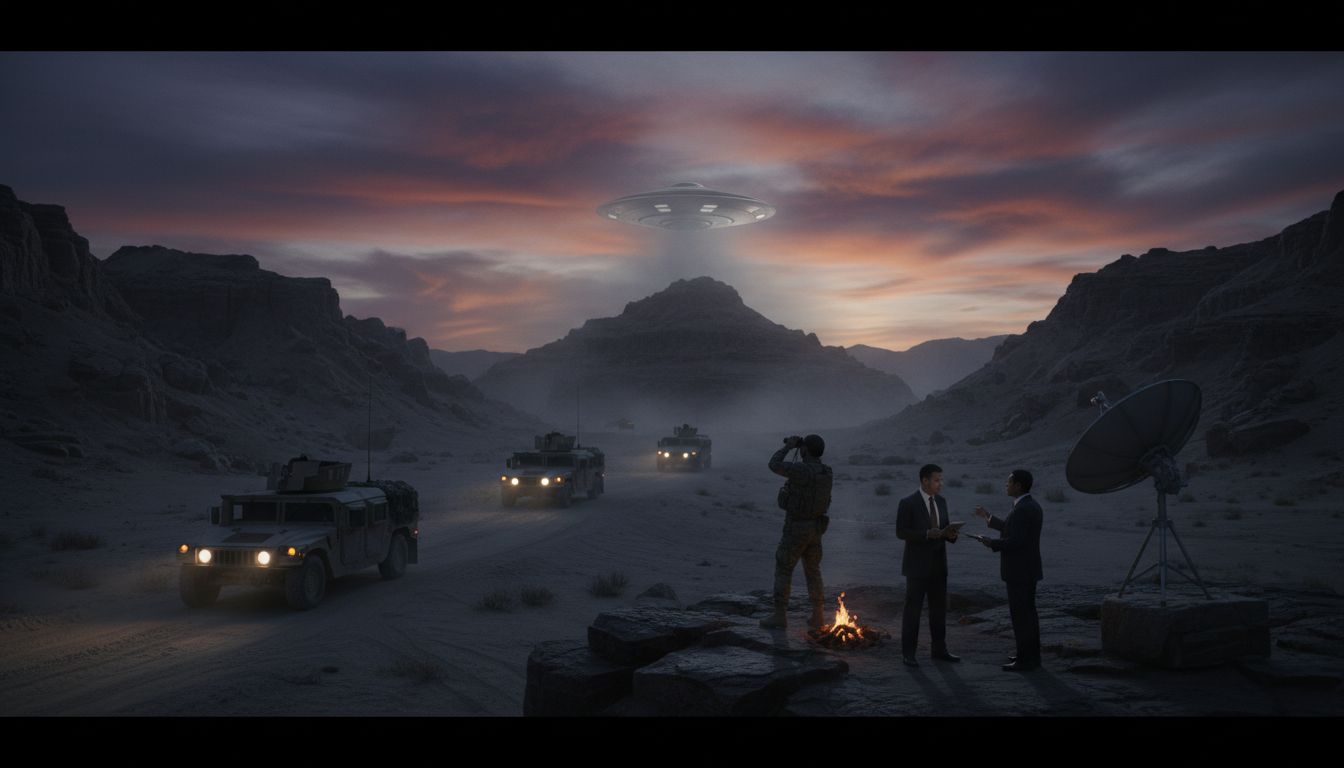
In the two weeks following the announcement of a tentative cease‑fire between the United States and Iran, CBS News has identified a set of developments that observers should track. While diplomatic channels work to solidify the pause in hostilities, analysts note that a temporary lull in conventional conflict reporting may make any unexplained aerial phenomena (UAP) near the region more conspicuous. The focus on UAPs is not new—Washington’s Unidentified Aerial Phenomena Task Force has been collecting and analyzing data since 2020—but the current geopolitical climate adds a layer of scrutiny to sightings that might otherwise be dismissed amid combat noise.
Diplomatic Landscape
The cease‑fire, brokered through back‑channel talks involving European mediators and the United Nations, aims to halt direct engagements in the Strait of Hormuz and adjacent airspace for at least fourteen days. Both governments have pledged to “maintain open lines of communication” and to “avoid actions that could jeopardize the fragile peace.” U.S. Secretary of State Linda Martinez emphasized that “the cease‑fire is a step toward de‑escalation, but it is only the beginning of a longer diplomatic process.” Iranian Foreign Minister Amir Hosseini echoed the sentiment, calling the pause “an opportunity for constructive dialogue and regional stability.”
UAP Monitoring in a Quiet Zone
Historically, spikes in UAP reports have coincided with periods of heightened military activity, when radar operators and pilots are on constant alert. With combat operations expected to pause, the U.S. Department of Defense’s Advanced Aerospace Threat Identification Program (AATIP) plans to maintain its standard surveillance schedule over the Gulf, but analysts warn that reduced “background noise” could make anomalous readings stand out.
“During active conflict, anomalous contacts are often buried in a sea of conventional radar clutter,” said Dr. Michael S. O’Brien, senior researcher at the Center for Unidentified Aerial Phenomena Studies. “A cease‑fire creates a cleaner data set, so any unexplained blips become statistically more significant.” The Pentagon’s recent public release of 144 de‑classified UAP videos includes several captured over maritime routes near Iran, reinforcing the need for continued monitoring even when hostilities subside.
Analyst Perspectives
Security experts caution against conflating diplomatic calm with a reduction in all forms of risk. “A cease‑fire does not mean the region is free from surprise,” noted retired Navy aviator and defense analyst Rear Admiral (Ret.) Susan Patel. “If anything, the pause gives adversaries—state or non‑state—more time to test new technologies, including those that could be misidentified as UAPs.”
Meanwhile, civilian UFO research groups such as the National UFO Reporting Center (NUFORC) have issued a bulletin urging witnesses in the Gulf area to report sightings through established channels. “We expect a modest uptick in civilian reports simply because fewer news outlets will be occupied with battle updates,” said NUFORC director James Whitaker. “That data could prove valuable for both scientific inquiry and national security assessments.”
Looking Ahead
As the cease‑fire period draws to a close, several key events are slated to shape the narrative. A scheduled joint naval exercise between U.S. and allied forces in the Arabian Sea on April 20 will test the durability of the truce, while Iran is set to hold a parliamentary session on April 22 to debate the terms of any long‑term agreement. Both events will likely generate renewed radar activity, potentially obscuring or, conversely, highlighting further UAP observations.
Stakeholders across the diplomatic, military, and scientific communities agree that maintaining transparent data collection during this window is essential. “Whether the anomalies turn out to be advanced drones, atmospheric phenomena, or something else, the information we gather now will inform policy and safety protocols for years to come,” Dr. O’Brien concluded. The coming fortnight, therefore, offers a rare chance to observe the intersection of geopolitics and the unknown without the usual fog of war.