Overview
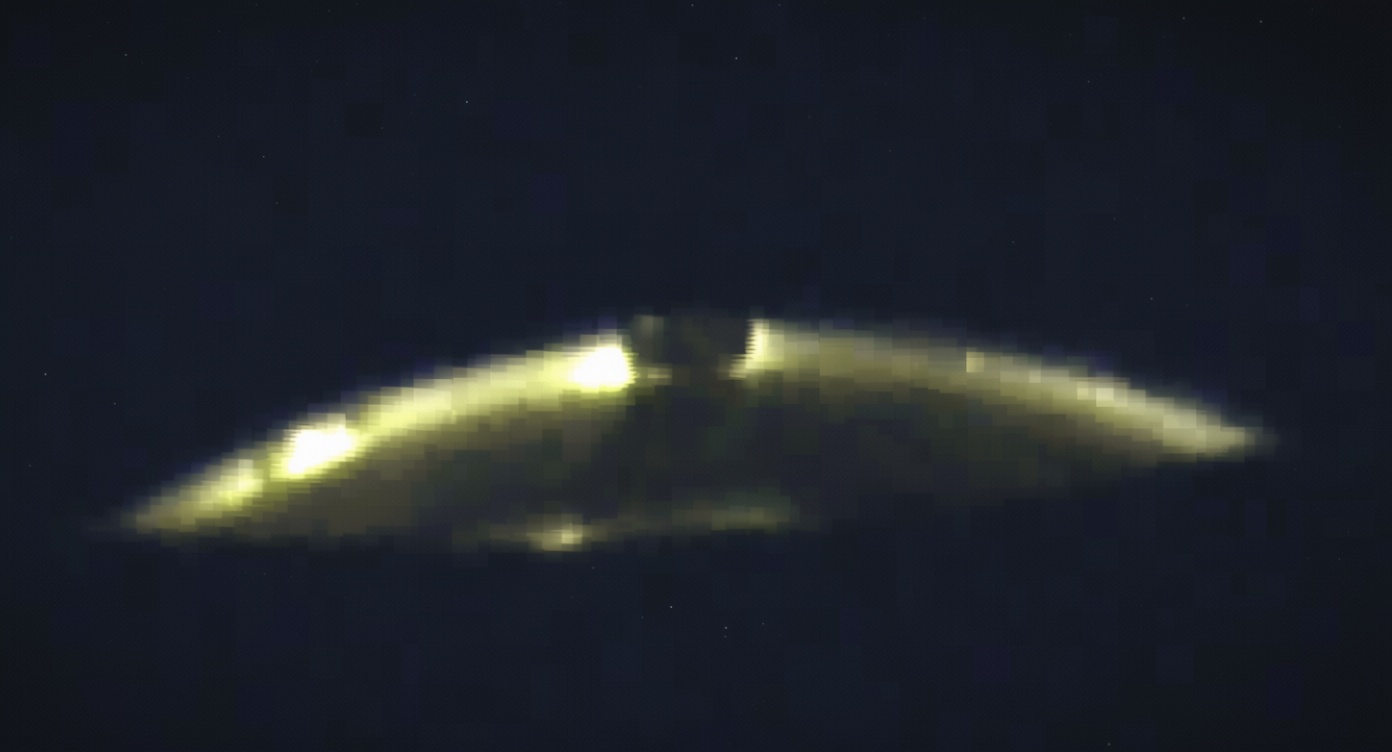
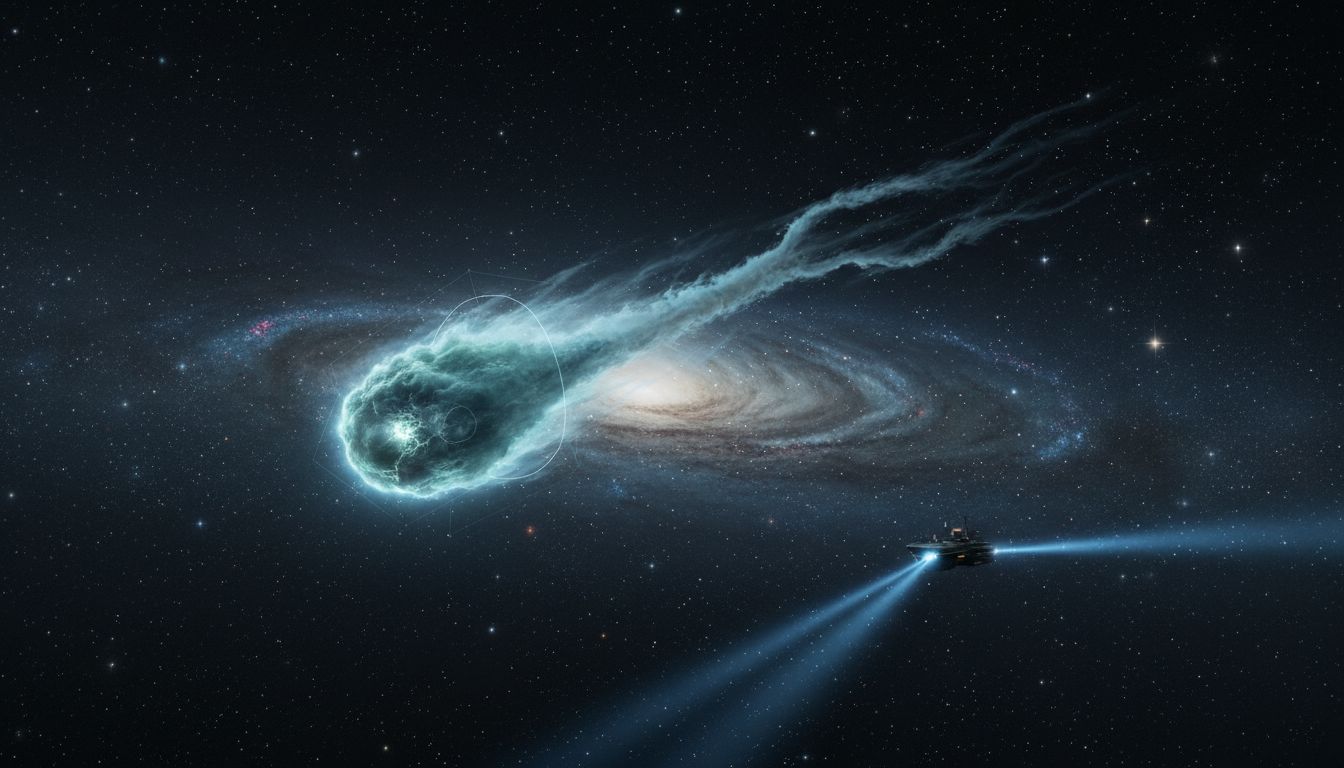
Interstellar comet 3I/ATLAS has become one of the most closely watched objects in recent astronomical memory, not because it has been confirmed as extraordinary technology, but because it offers a rare glimpse of material from beyond our solar system. First identified in July 2024, the object followed a steep hyperbolic path that made clear it was not native to the solar system. After swinging past the Sun, 3I/ATLAS is now continuing outward into interstellar space, leaving researchers with a limited but valuable set of observations from its brief visit.
The comet’s significance lies in its rarity. It is only the third confirmed interstellar visitor ever detected, following 1I/ʻOumuamua in 2017 and 2I/Borisov in 2019. Unlike those earlier objects, however, 3I/ATLAS was bright enough to be studied in far greater detail, giving astronomers an unusual chance to probe its composition, brightness changes and behavior as it neared the Sun.
Claims of an Alien Probe
The public debate around 3I/ATLAS intensified when Harvard astrophysicist Avi Loeb suggested the object could be artificial — possibly an alien probe or some other form of spacecraft. Loeb has long argued that ʻOumuamua may have been engineered technology rather than a natural rock or comet, and he has pointed to similar debates surrounding 3I/ATLAS as justification for taking unconventional hypotheses seriously.
But mainstream scientific institutions have not found support for that interpretation. NASA rejected the alien spacecraft claim, instead describing the object as a natural body made of ice and dust, albeit one that may be unusually old and chemically distinct. The SETI Institute later reinforced that view, saying it found “no evidence of extraterrestrial technology” associated with the comet. For now, the technology argument remains speculative, with no publicly released data showing any artificial signature.
What the Telescopes Found
Much of the scientific value of 3I/ATLAS comes from observations made with the James Webb Space Telescope and the Atacama Large Millimeter/submillimeter Array (ALMA) in Chile. Those instruments allowed researchers to study the comet’s chemistry more precisely than is usually possible for such fleeting interstellar objects. In a Nature study led by Martin Cordiner, scientists reported a detailed look at the comet’s composition as it brightened near the Sun, helping build a clearer picture of how it behaved under solar heating.
At the same time, radio scans have been used to test whether the object emitted anything that might suggest engineered activity. According to one widely shared summary of those efforts, researchers examined more than 74 million radio signals and found no evidence of extraterrestrial technology, with all remaining signals traced back to terrestrial or natural sources. That is consistent with the broader scientific reading: unusual, yes, but still explainable without invoking an alien origin.
Current Status and Scientific Outlook
For astronomers, the bigger story is not whether 3I/ATLAS is a probe, but what it can teach us about the material traveling between star systems. The comet’s apparent age — described in some reports as a possible 12-billion-year-old relic — adds to the intrigue, though that figure remains part of the broader discussion rather than a settled fact. What is clear is that 3I/ATLAS has offered an exceptionally rare sample from deep space, and its brief passage is already informing models of interstellar objects.
The controversy surrounding the comet also underscores a familiar tension in UAP and space reporting: striking claims can generate headlines, but hard evidence remains the standard. In the case of 3I/ATLAS, current observations point overwhelmingly toward a natural interstellar comet, not a technological artifact. As the object recedes from view, scientists will continue analyzing the data it left behind — and the debate over what else may be traveling between the stars is likely to continue.