Overview
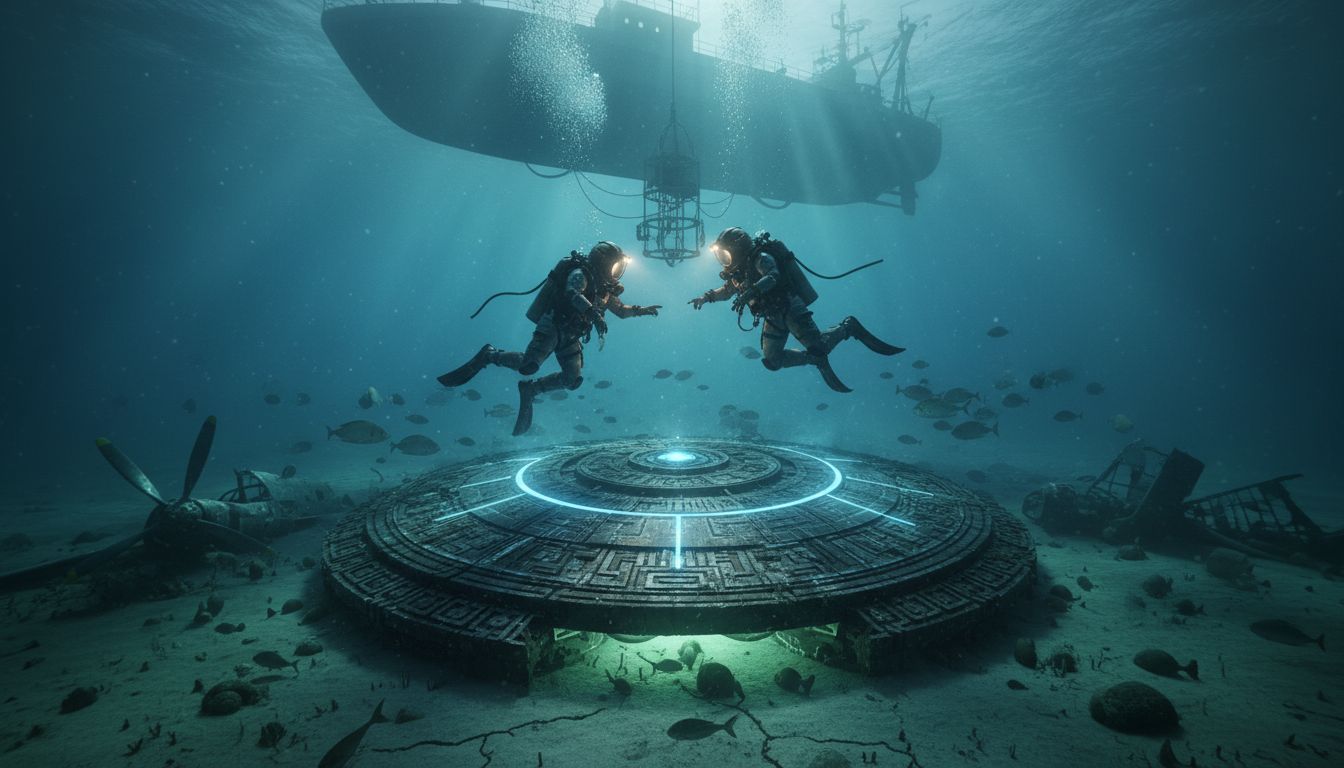
While conducting a multi‑month underwater survey of the Bermuda Triangle for the History Channel’s upcoming series on lost World War II aircraft, a team of commercial divers uncovered an unusual, clearly human‑made object lodged in the seabed at a depth of roughly 3,200 feet. The find, described by the production crew as a “metallic, riveted structure with identifiable aerospace markings,” prompted the network to reach out to NASA for expert analysis. NASA’s subsequent review confirmed that the debris is consistent with components from the Space Shuttle Challenger, which broke apart during its launch on 28 January 1986.
The Search Operation
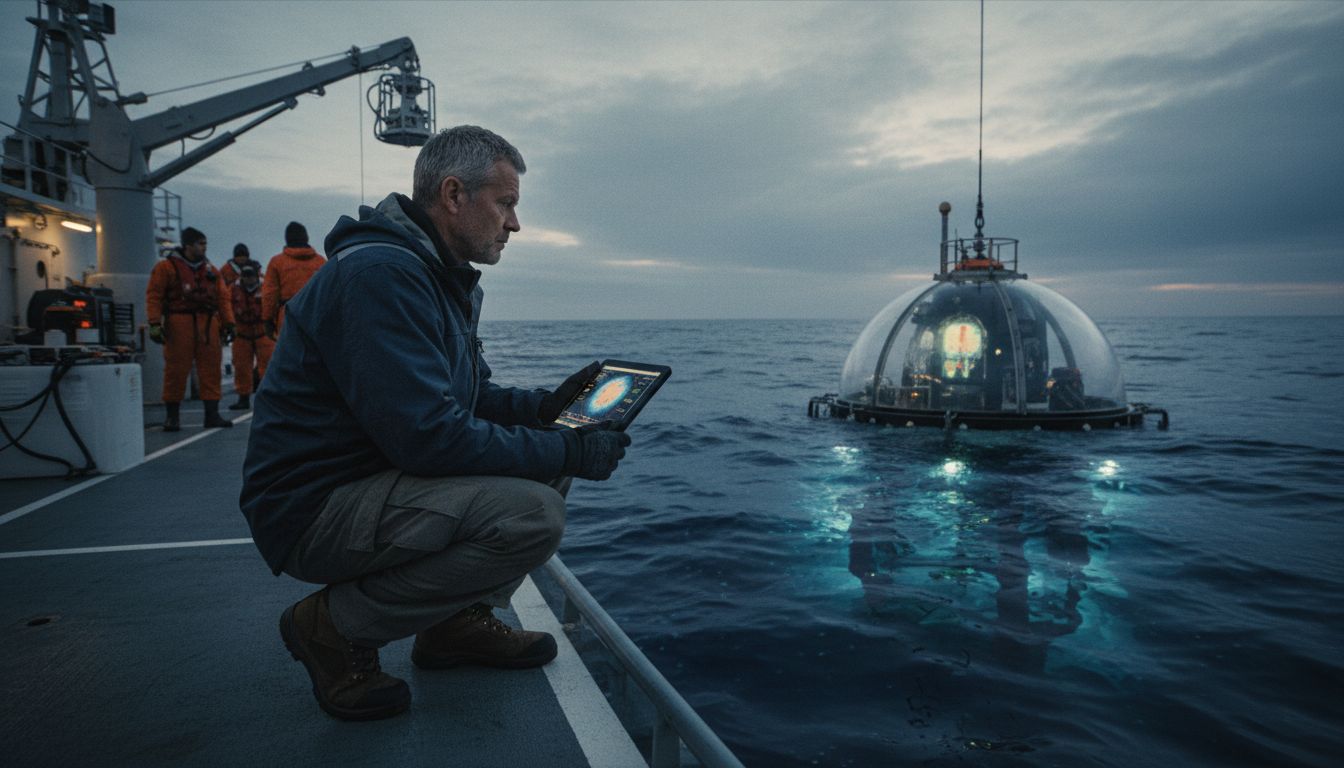
The History Channel’s “Lost Wings” expedition, launched in early 2025, partnered with ocean‑search firm Oceanic Quest to locate aircraft that vanished over the infamous “Triangle.” Using side‑scan sonar and remotely operated vehicles (ROVs), divers surveyed a 150‑square‑nautical‑mile corridor stretching from the Florida Keys to the Bahamas. Lead marine archaeologist Dr. Elena Martinez explained that the team “focused on areas where wartime records indicated aircraft were last reported, while also mapping the seafloor for any anomalous wreckage.” The operation, funded by the network and a grant from the National Oceanic and Atmospheric Administration (NOAA), was slated to run through March 2026.
The Discovery
During a routine ROV sweep on 12 March 2026, operators detected a compact, rectangular object partially buried in silt. The ROV’s high‑definition cameras captured a series of serial‑number plates and rivet patterns that matched NASA‑standard aerospace fasteners. “At first we thought it might be a World War II bomber fragment,” said History Channel producer Mark Rogers, “but the alloy composition and the stamped part numbers didn’t line up with any aircraft from that era.” The object measured roughly 1.2 meters by 0.6 meters and bore the faint imprint of the NASA “NASA” logo alongside a partially legible part designation.
NASA Verification
Within 48 hours of the discovery, the History Channel’s technical liaison transmitted the video footage and sonar data to NASA’s Johnson Space Center. Dr. Laura Hernandez, senior materials specialist at NASA, led the rapid assessment. In a written statement, she noted: “The metallurgical profile, rivet geometry, and part markings are consistent with the external fuel tank (ET) hardware used on the Space Shuttle Challenger. While we cannot claim absolute identification without physical retrieval, the evidence strongly points to Challenger debris.” NASA’s confirmation aligns with earlier, unverified reports that fragments of Challenger may have drifted far from the Atlantic launch site, though the exact dispersal pattern has never been mapped.
Implications and Reactions
The finding has reignited scholarly interest in the long‑standing mystery of Challenger’s final trajectory. Dr. Michael Kelley, professor of aerospace history at the University of Colorado, remarked, “If these components are indeed from Challenger, it would be the first confirmed recovery of shuttle debris from the deep ocean, offering new data on breakup dynamics and oceanic drift.” Meanwhile, families of the Challenger crew have expressed mixed emotions. “Any new information brings a measure of closure, but we also hope it is handled with the utmost respect,” said Linda McNally, a spokesperson for the Challenger Family Association.
Next Steps
The History Channel plans to retrieve the object using a manned submersible in the coming weeks, pending permits from the U.S. Coast Guard and collaboration with NOAA’s Office of Ocean Exploration. NASA has agreed to provide forensic analysis of any recovered material, which could inform future safety assessments for launch vehicle design. Both organizations emphasize that the discovery is scientifically significant, not sensational, and will be documented in a forthcoming episode slated for late 2026.
The article reflects information released by the History Channel, NASA, and independent experts as of 20 March 2026.