Overview
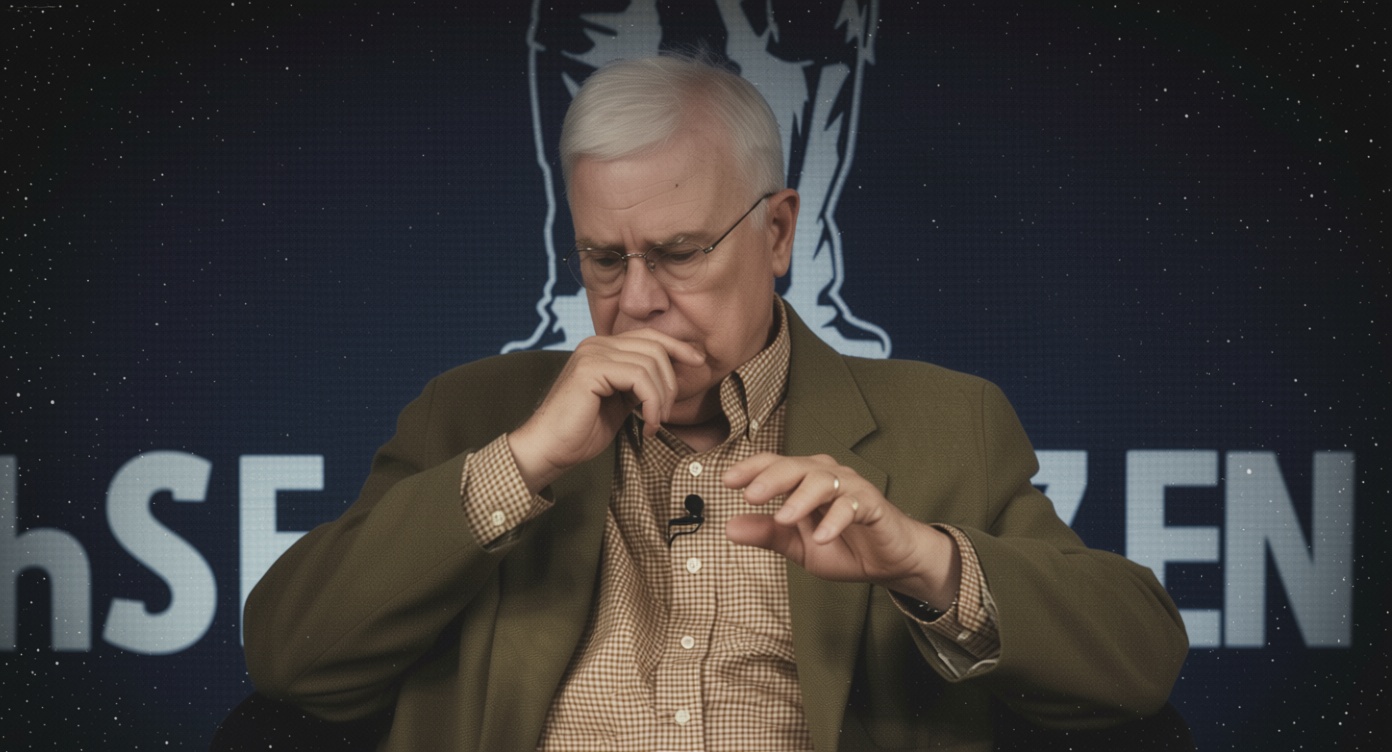
Author Whitley Strieber revisited the divide between personal UFO experiences and independently verifiable physical evidence in an archival segment from the 2023 episode of the WEAPONIZED podcast. Hosted by journalist George Knapp and filmmaker Jeremy Corbell, the discussion examined how reports of encounters are received by the public and what, if anything, can establish a factual basis for claims involving non-human or extraterrestrial phenomena.
Strieber, best known for his 1987 book Communion, spoke from the perspective of a longtime “experiencer.” His account reflects a broader debate within UFO research: whether testimony and memory should be treated as meaningful evidence on their own, or whether extraordinary claims require physical material, medical documentation, or other forms of independent corroboration.
Three Public Responses
During the discussion, Strieber described what he sees as three broad groups engaged with the subject. The first consists of “experiencers,” people who report direct encounters with unusual entities or craft. The second is what he called the “vast, vast majority”—people who are either unfamiliar with the phenomenon or largely indifferent to it. The third is a smaller but vocal group of skeptics who reject such accounts outright and, according to Strieber, may characterize witnesses as dishonest or deluded.
Strieber said he has spent much of his life confronting the third group. However, he also offered a qualified position on skepticism, stating that he does not necessarily believe skeptics are wrong because he lacks what he described as a “baseline in fact” for many of the subjective elements of his experiences. That distinction is central to his argument: personal conviction may be strong, while the standards used to establish public evidence remain uncertain.
Claims of Physical Evidence
Strieber said his belief is not based solely on memory or interpretation. He pointed to three physical matters that he considers significant: an injury or mark on the side of his head, scars he associates with an encounter he described as a sexual assault, and an object in his ear that he claims was implanted in 1989.
He said the scars were examined by medical professionals and presented them as evidence that something physically occurred, although the clip does not establish the nature or cause of the injuries. Likewise, Strieber’s claim regarding the alleged ear implant is presented as his own account. The available summary does not identify an independent laboratory analysis, chain of custody, or peer-reviewed examination confirming that the object was non-human or connected to an anomalous event.
Implications for Disclosure
The conversation highlights a recurring challenge in UFO reporting and disclosure discussions: a physical object may be testable, but its meaning and origin still require verification. Medical findings can document an injury without determining how it occurred, while an unidentified object can remain unexplained without necessarily demonstrating an extraterrestrial source.
For Strieber, however, these claims provide what he regards as an objective foundation for experiences that are otherwise difficult to communicate. His position underscores the tension between witness credibility and scientific standards—an issue likely to remain central as researchers, officials, and the public continue to assess reports of anomalous phenomena.