Overview
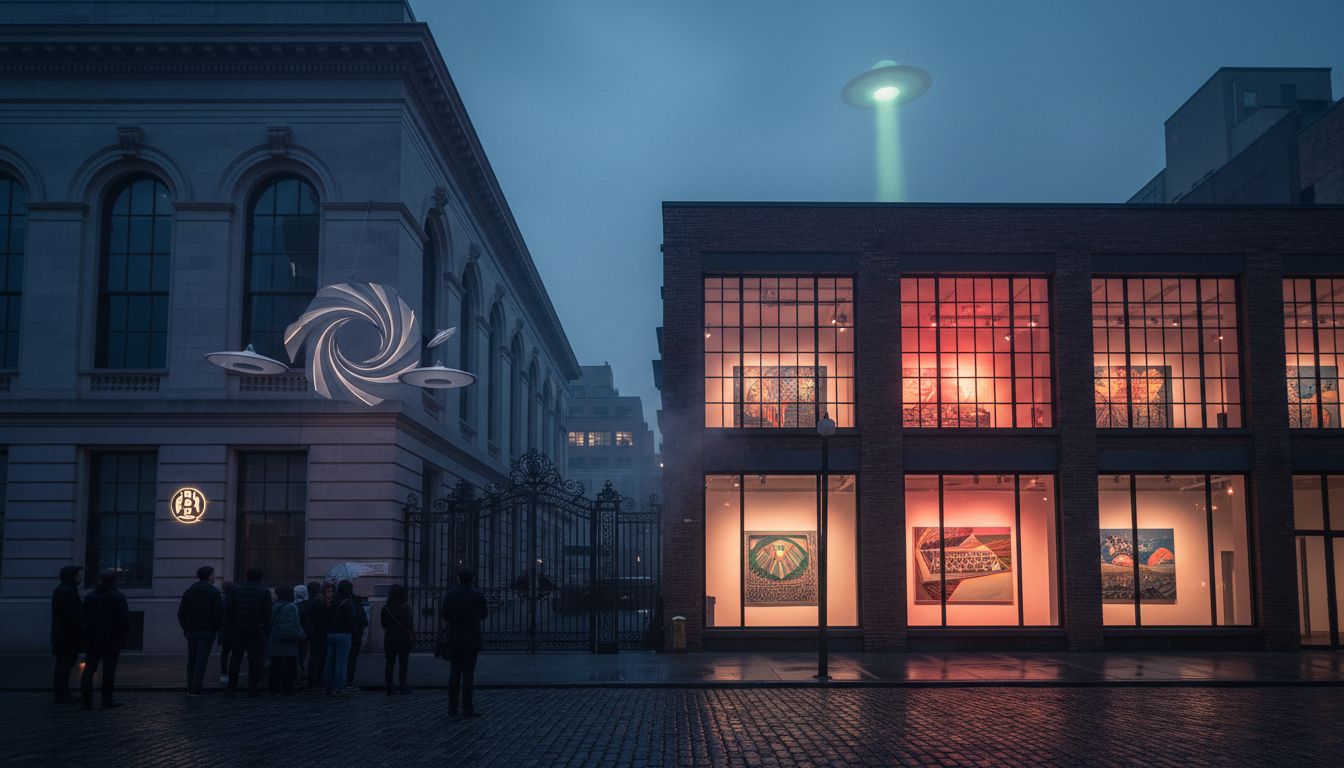
Two New York exhibitions this winter are turning the public’s renewed fascination with unidentified aerial phenomena into a curatorial conversation. “Voice of Space: UFOs and Paranormal Phenomena” at the Drawing Center runs through February 1, 2026, while “Paintings Made for Aliens Above” at P.P.O.W closes on December 20, 2025. Together they map a lineage that stretches from 16th‑century sky‑watchers to today’s Pentagon declassifications and Silicon Valley’s multibillion‑dollar “space race.” Curators argue that the surge of interest is not merely topical but reflects deeper shifts in how artists interrogate belief, technology, and speculative futures.
Historical Roots
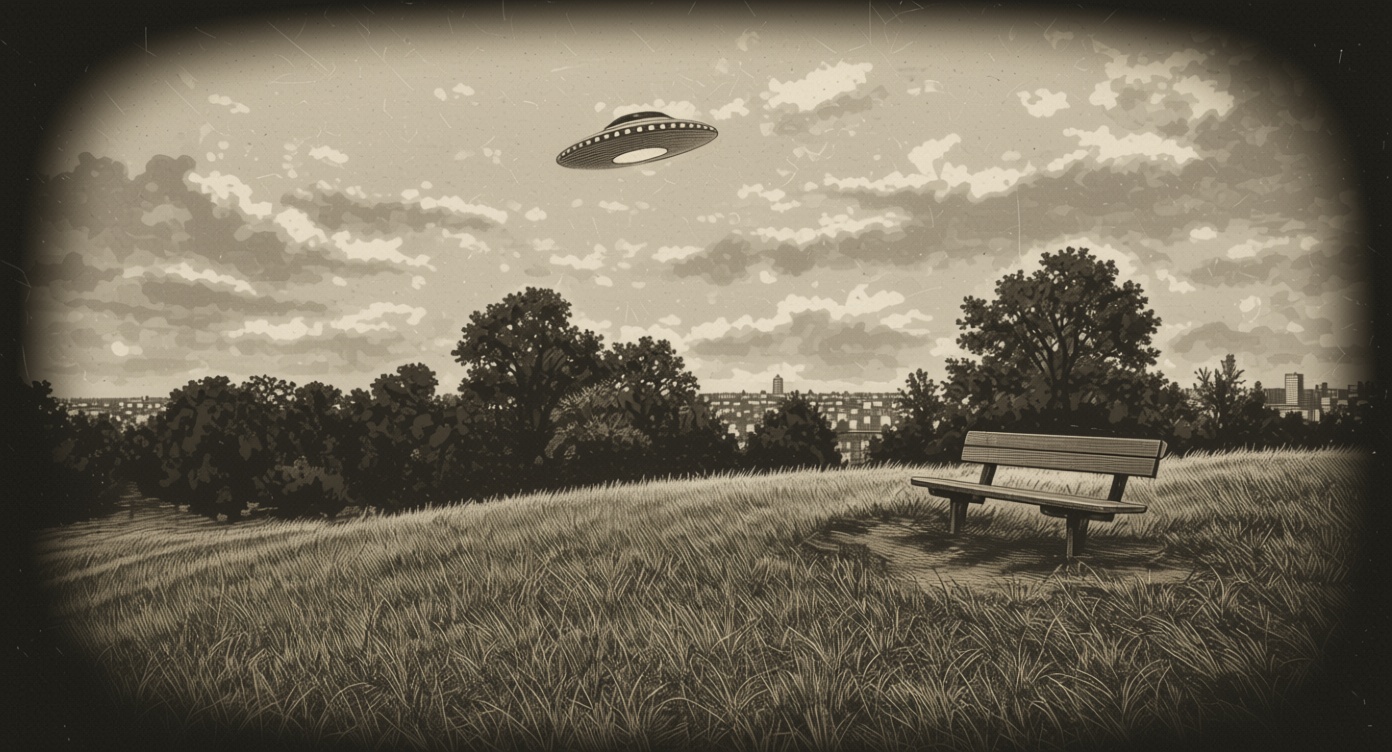
Artists have long turned to strange lights and celestial omens as metaphors for the unknown. On April 14, 1561, residents of Nuremberg sketched an aerial battle of “globes, rods, and crosses,” a scene that still circulates as an early UFO illustration. A blood‑red aurora over Britain in March 6, 1716 was interpreted as a “celestial war.” While Newtonian physics later demystified comets and meteors, the visual language of the extraordinary sky persisted. The exhibitions foreground this continuity, reminding viewers that contemporary UFO iconography is part of a centuries‑old artistic tradition of reading the heavens as a canvas for cultural anxieties and hopes.
Exhibition Highlights
At the Drawing Center, curator Olivia Shao positions René Magritte’s 1931 painting Voice of Space as the show’s conceptual lodestar. She has called it “the Mona Lisa of UFO paintings,” noting the three oversized silver orbs that hover over a pastoral landscape. Although Magritte later explained the spheres as “crotal bells” from horse‑drawn carriages, their sleek, metallic quality anticipates the visual shorthand of modern alien craft. The show also includes works by Isa Genzken, whose sculptural installations juxtapose industrial materials with glowing LED “signals,” and Paulina Peavy, whose multimedia pieces blend futurist abstraction with spiritualist symbolism, suggesting a personal encounter with otherworldly forces.
P.P.O.W’s solo presentation of Romanian artist Hortensia Mi Kafchin offers a more introspective take. Her newly painted canvases, titled “Paintings Made for Aliens Above,” explore “the promises and failures of technofuturism,” according to the gallery’s statement. Kafchin layers luminous pigments with geometric grids reminiscent of satellite schematics, creating a visual dialogue between human ambition and the indifferent vastness of space. Critics have noted that her work “flirts with utopia while acknowledging dystopia,” positioning the alien as a mirror for contemporary societal tensions.
Contemporary Context
The timing of both shows aligns with a wave of official disclosures. In 2024 the Pentagon released classified footage of “unidentified aerial phenomena” captured by Navy pilots, sparking mainstream media coverage and a surge in public inquiries. Simultaneously, tech conglomerates such as SpaceX and Blue Origin have poured billions into orbital infrastructure, blurring the line between speculative fiction and imminent reality. Artists in the exhibitions harness this climate, using the UFO motif to question not only the existence of extraterrestrials but also the cultural narratives that surround surveillance, militarization, and the commercialization of the cosmos.
Interpretation and Outlook
Both exhibitions suggest that the UFO has become a versatile signifier for contemporary anxieties: the loss of control in a data‑saturated world, the yearning for new mythologies, and the desire to re‑imagine identity beyond terrestrial borders. By pairing historical references with present‑day technological concerns, the shows invite viewers to consider how “the cosmic can open a space to explore queerness, speculative worlds, and flashes of utopia glimpsed through dystopia,” as the exhibition text states. As public fascination with the skies shows no sign of waning, curators anticipate that future art programs will continue to orbit this theme, translating the ever‑expanding frontier of space into tangible, thought‑provoking experiences for gallery audiences.