Overview
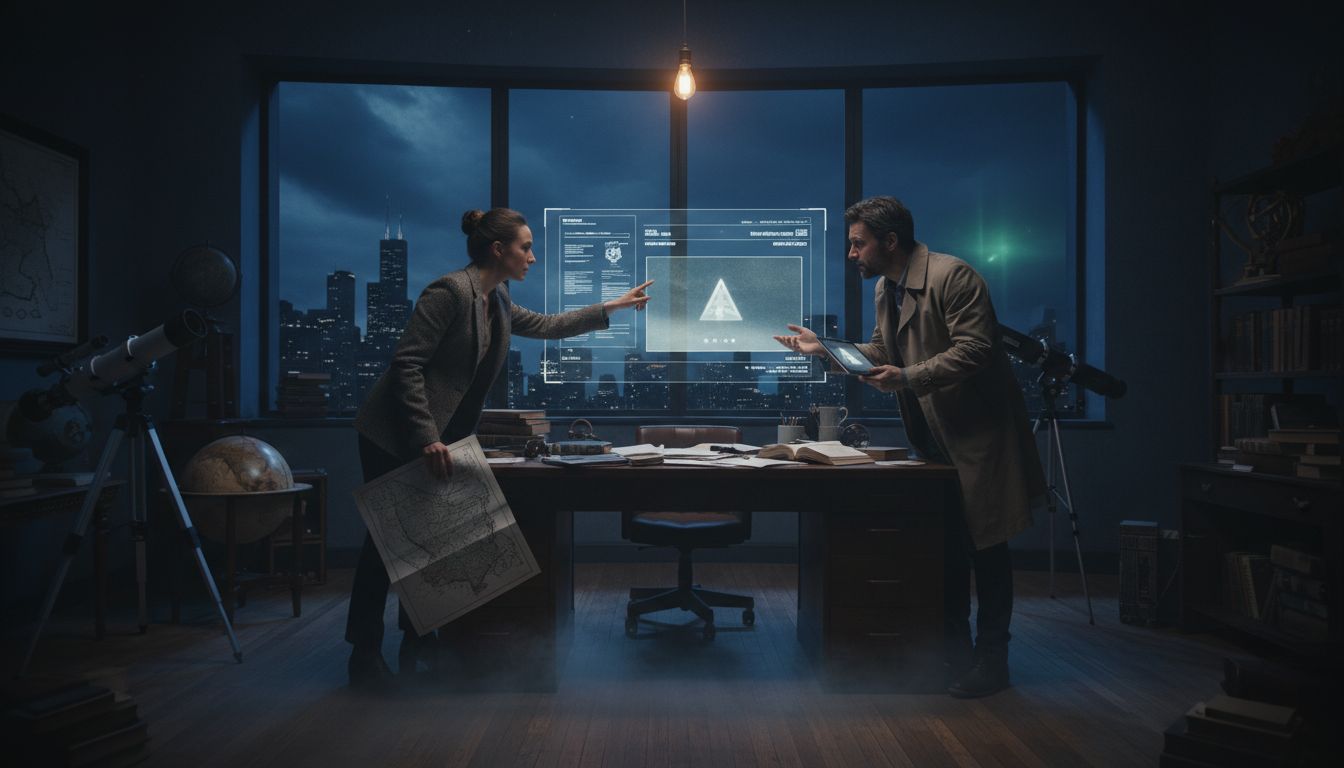
Public fascination with unidentified aerial phenomena (UAP) has reached a new peak in early 2026, according to a recent interview on NBC 5 Chicago. Dr. Lena Morales, an astrophysicist at the University of Chicago, and veteran UFO researcher Tom Whitaker explained that a confluence of de‑classified government documents, high‑profile sightings and relentless social‑media chatter has amplified what they describe as the “alien buzz.” Both experts stress that while curiosity is natural, rigorous scientific analysis must guide any conclusions about the nature of these reports.
Recent Government Revelations
The surge began after the U.S. Office of the Director of National Intelligence released its 2025 UAP Assessment, a 140‑page report that acknowledged 144 incidents involving “unexplained aerial objects” observed by military personnel between 2004 and 2023. The document stopped short of confirming extraterrestrial origins but noted that many cases remained “unresolved after exhaustive analysis.” A follow‑up briefing in late 2025 from the Pentagon’s Unidentified Aerial Phenomena Task Force (UAPTF) disclosed new sensor data from a 2024 encounter over the Pacific Ocean, sparking renewed media interest.
Dr. Morales highlighted the significance: “When credible agencies admit there are data they can’t readily explain, it forces the scientific community to take a closer look. It’s not proof of aliens, but it is a call for systematic study.” Whitaker added that the transparency—however limited—has “opened the floodgates for the public to demand answers.”
High‑Profile Sightings and Media Amplification
Since the release of the ODNI report, several sightings have dominated headlines. In March 2025, residents of Phoenix reported a formation of luminous objects that performed synchronized maneuvers, a video of which was aired on national news. More recently, in November 2025, a commercial airline pilot filed a formal report after observing a “metallic, disc‑shaped object” that hovered for several minutes before accelerating away at speeds exceeding known aircraft capabilities.
These incidents have been amplified by mainstream outlets and, more dramatically, by platforms such as TikTok and X, where clips garner millions of views within hours. “The algorithm rewards mystery,” Whitaker said. “A single unexplained clip can generate a cascade of speculation, memes, and even pseudo‑scientific theories, all of which keep the conversation alive.”
Expert Perspectives on the “Buzz”
Both Morales and Whitaker agree that the current wave of interest is a double‑edged sword. On one side, heightened visibility can attract funding for research and encourage interdisciplinary collaboration. On the other, it risks fostering misinformation.
“We need to distinguish between credible data and anecdotal hype,” Morales emphasized. “Astronomers are already proposing a coordinated observation network that would combine ground‑based telescopes, radar installations, and satellite sensors to capture any future events in real time.”
Whitaker echoed this sentiment, noting that the UFO community has begun to adopt more rigorous standards: “Our groups are now publishing peer‑reviewed papers, sharing raw sensor logs, and collaborating with university labs. The old ‘conspiracy‑theory’ label is fading as we adopt scientific methodology.”
Implications for Science and Policy
The renewed public attention is prompting policymakers to consider formal mechanisms for UAP investigation. A bipartisan bill introduced in the House in January 2026 proposes the creation of a National UAP Research Center within the Department of Defense, tasked with data collection, analysis, and public reporting.
For the scientific community, the challenge lies in integrating anomalous observations without compromising methodological rigor. Dr. Morales suggests that “even if these phenomena turn out to be advanced human technology or atmospheric anomalies, studying them could yield insights into propulsion physics, sensor technology, or atmospheric science.”
Looking Ahead
As the conversation continues to evolve, both experts call for patience and precision. “The public’s appetite for answers is understandable,” Whitaker concluded, “but the truth will emerge only through transparent data sharing and disciplined inquiry.” Morales added that “the next decade could either demystify these events or deepen the mystery—either outcome will expand our understanding of the skies above us.”


