Overview
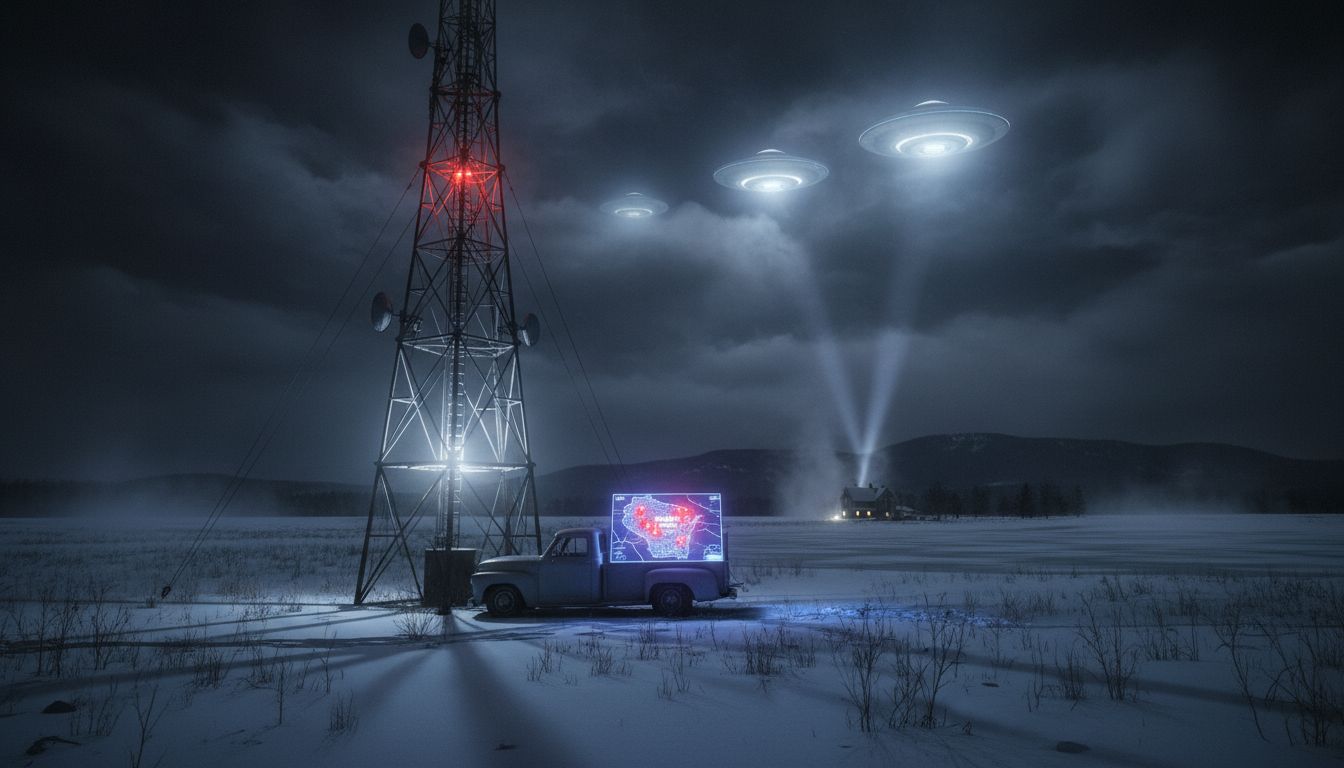
In 2025, Wisconsin recorded more than 70 reported UFO sightings, according to a map compiled by Duluth Country Radio. The radio station’s interactive graphic plots each incident across the state, revealing a noticeable uptick compared with the average of 45–50 reports per year over the past decade. While the majority of sightings were brief, daytime observations, a handful occurred at night and were captured on video by local residents. The surge has drawn heightened attention from both the public and local law‑enforcement agencies, prompting a coordinated effort to document and assess the reports.
Geographic Hotspots
The radio‑produced map highlights three primary clusters: the Lake Superior shoreline, the central Driftless Region, and the southern Milwaukee metropolitan area. Along the lake, witnesses described “slow‑moving, disc‑shaped lights” hovering just above the water’s surface, often accompanied by a faint humming sound. In the Driftless Region—known for its rugged terrain and limited light pollution—multiple observers reported “clusters of bright, pulsating orbs” executing rapid, angular maneuvers. The Milwaukee area saw the highest concentration of night‑time sightings, with several motorists noting “flashing, triangular formations” that disappeared within seconds of being recorded on dashboard cameras.
Official Response
State and local authorities have taken a measured approach. The Wisconsin Department of Safety and Professional Services (DSPS) issued a brief statement confirming that “all reports have been logged and will be forwarded to the Federal Aviation Administration’s Unidentified Aerial Phenomena (UAP) reporting channel.” Sheriff’s departments in Douglas, Sauk, and Milwaukee counties have each assigned a liaison officer to collect witness statements and any available photographic evidence. “Our priority is to determine whether these observations represent civilian aircraft, drones, or other explainable sources,” said Sheriff Michael Jensen of Douglas County, who added that the department is working with the National UFO Reporting Center to cross‑reference the data.
Public and Expert Reaction
The spike has reignited public curiosity. Social‑media posts using the hashtag #WisconsinUFOs have amassed thousands of interactions, with many residents sharing personal accounts and urging local media to investigate further. Dr. Elaine Martinez, a professor of atmospheric physics at the University of Wisconsin‑Madison, cautioned against jumping to extraterrestrial conclusions: “Atmospheric phenomena such as lenticular clouds, temperature inversions, or even high‑altitude balloons can produce visual effects that are easily misinterpreted, especially under low‑light conditions.” Nevertheless, UFO researcher John “J.J.” Anderson of the Mutual UFO Network (MUFON) noted that “the concentration of reports in specific regions suggests a pattern that merits systematic study, rather than dismissing each case in isolation.”
Looking Ahead
Duluth Country Radio plans to host a live panel discussion next month, featuring representatives from the DSPS, local law enforcement, and academic experts, to address community concerns and outline the investigative process. Meanwhile, the U.S. Office of the Director of National Intelligence has recently released a supplemental report acknowledging an increase in UAP sightings nationwide, urging agencies to improve data collection and analysis. As Wisconsin’s 2025 figures become part of that broader dataset, officials hope that a collaborative, evidence‑based approach will clarify the nature of these events and, if necessary, guide policy on airspace safety and public communication.