A surge of unexplained underwater activity has drawn the attention of both civilian observers and military analysts after a popular UFO‑tracking platform logged more than 9,000 sightings of “unidentified submersible objects” (USOs) within ten miles of the United States coastline this year. The Enigma app, which aggregates reports from a global user base and maintains a searchable database of over 30,000 aerial and maritime anomalies since its 2022 launch, recorded 500 incidents within five miles of shore and 150 that specifically described objects hovering above or plunging into the water. The majority of reports originated along the Pacific and Atlantic coasts, with California (389 sightings) and Florida (306) accounting for roughly two‑thirds of the total.
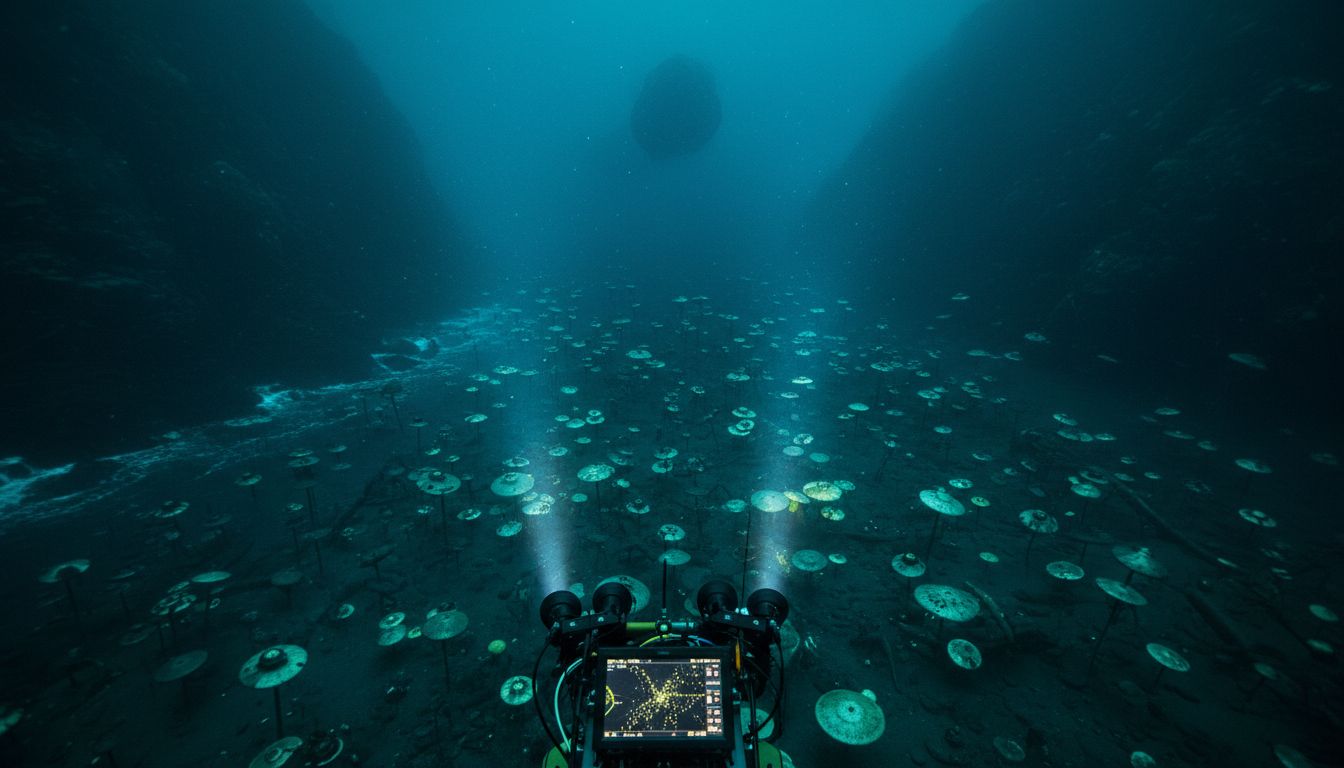
The reports are not limited to visual observations. Several contributors uploaded video clips showing clusters of green, bioluminescent‑like lights moving beneath the surface, while a handful of entries referenced sonar data collected by private research vessels that detected anomalous acoustic signatures consistent with solid objects moving at speeds beyond known marine life. Marine Technology News, which has been monitoring the dataset, noted that many of the sightings were logged during routine recreational boating trips, fishing expeditions, and coastal surveillance drills, raising questions about whether the phenomena are isolated incidents or part of a broader, coordinated pattern.
Former Navy admiral James McCarthy, who served as director of the Navy’s Undersea Warfare Center, cautioned that the growing volume of USO reports could represent a “potentially world‑changing security challenge” if the objects are indeed engineered and capable of operating undetected in the maritime domain. “We are accustomed to treating unknowns in the air as a matter of national security; the same rigor must now be applied beneath the waves,” McCarthy told reporters at a briefing in Washington, D.C. He urged the Department of Defense, the U.S. Navy’s Office of Naval Intelligence, and civilian agencies such as NOAA to prioritize a coordinated investigation, emphasizing that the ocean’s depth and acoustic complexity have historically shielded many foreign technologies from early detection.
Scientists and defense analysts, however, urge restraint in interpreting the data. Dr. Elena Ramirez, a marine acoustics specialist at the Scripps Institution of Oceanography, highlighted the limitations of crowd‑sourced reporting. “Citizen‑submitted sightings can be valuable, but they are prone to misidentification of natural phenomena—bioluminescent plankton, gas bubbles, or even de‑icing equipment on vessels can produce similar visual effects,” she explained. Ramirez added that the acoustic anomalies could stem from marine mammals, sub‑surface currents, or debris, and that rigorous verification using calibrated sonar arrays is essential before drawing conclusions about unknown technology.
The U.S. Navy has not publicly confirmed any operational response to the Enigma data, but a senior spokesperson for the Naval Sea Systems Command indicated that “ongoing undersea surveillance programs are continually assessing anomalous contacts, and any credible threat will be investigated in accordance with established protocols.” Meanwhile, the Pentagon’s Unidentified Aerial Phenomena (UAP) Task Force, recently expanded to include underwater encounters, is reportedly reviewing the Enigma database to determine whether the sightings warrant formal classification as potential threats. The agency’s interim report, released last month, called for “enhanced sensor coverage and data sharing across civilian and military platforms” to address gaps in undersea situational awareness.
As the number of reports climbs, researchers stress the importance of systematic data collection and interdisciplinary collaboration. The Enigma team plans to release a detailed heat map of USO activity later this month, which will include timestamps, depth estimates, and sensor types associated with each incident. Whether the phenomenon proves to be a novel class of marine life, a series of misidentified human activities, or an as‑yet‑unidentified technology, the growing catalog of underwater anomalies underscores a renewed focus on the ocean’s hidden domain—a realm that, until now, has received far less scrutiny than the skies above.


