Overview
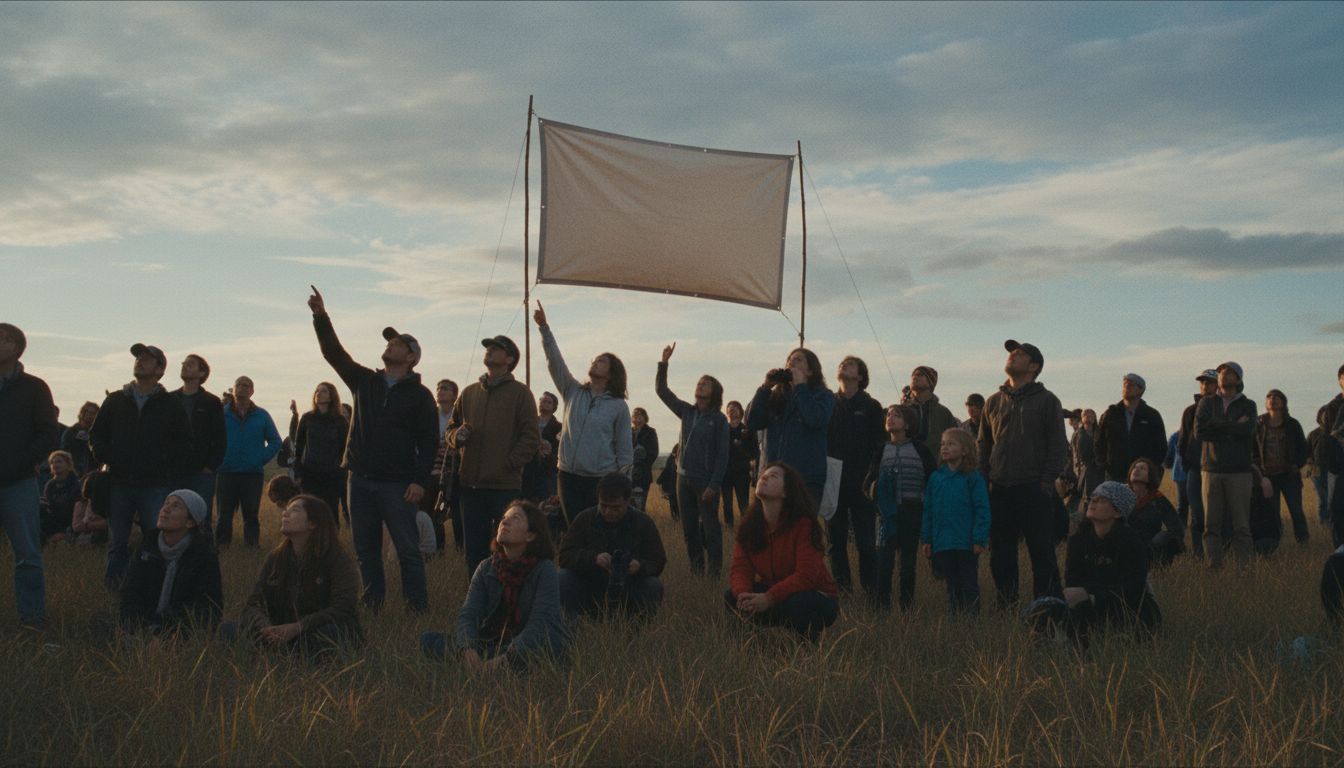
World UFO Day offers a rare cultural moment when believers, skeptics, and the merely curious are all invited to look up and consider one of the most enduring mysteries in modern life: the possibility of unidentified flying objects. As highlighted in the Wausau Pilot & Review’s coverage, the observance is less about proving a conclusion than it is about making room for questions — and for the many different ways people interpret what they see in the sky.
The day has become a broad forum for public curiosity, drawing together people who approach the subject from sharply different angles. For some, it is a chance to affirm long-held beliefs that something unexplained is out there. For others, it is an opportunity to revisit the topic with scientific skepticism, separating ambiguous sightings and speculation from evidence. For many more, World UFO Day simply provides a reminder that the unknown still has a place in a world increasingly shaped by data and technology.
A Shared Mystery
What gives the observance its staying power is not consensus, but contrast. Believers often see UFOs as evidence of phenomena that defy conventional explanation, while skeptics emphasize the need for documentation, repeatable observation and clear attribution before drawing conclusions. The curious, meanwhile, occupy the space between those positions — open to the possibility that the universe may still contain surprises, but not necessarily ready to leap to extraordinary claims.
That tension has long fueled public fascination with the subject. UFOs — now often referred to in official settings as unidentified anomalous phenomena, or UAP — have moved between science fiction, folklore, journalism and government inquiry for decades. World UFO Day taps into that larger tradition, inviting reflection not only on what has been reported, but also on how people respond when they encounter something they cannot immediately explain.
Why the Day Resonates
Part of the appeal lies in the universality of looking at the night sky and wondering what might be beyond human reach. The observance turns that instinct into a public event, encouraging conversation rather than confrontation. It allows believers to share experiences, skeptics to pose questions, and casual observers to participate without having to commit to one interpretation.
In that sense, World UFO Day functions as more than a celebration of extraterrestrial possibility. It is also a reminder of the value of inquiry itself. The phenomenon of UFOs persists not because every sighting points to alien life, but because some sightings remain unresolved — and unresolved questions naturally attract attention, debate and imagination.
Looking Ahead
As interest in unidentified sightings continues to surface in public life, from social media speculation to official investigations, World UFO Day remains a low-pressure entry point into a subject that can quickly become polarizing. It encourages people to consider the difference between proof and possibility, and to recognize that uncertainty is not the same thing as an answer.
For those who mark the day, the invitation is simple: look up, stay open-minded, and acknowledge that the sky still holds mysteries. Whether that leads to belief, skepticism or further questions, World UFO Day brings those perspectives into the same conversation — and that, for many, is part of its appeal.