Overview
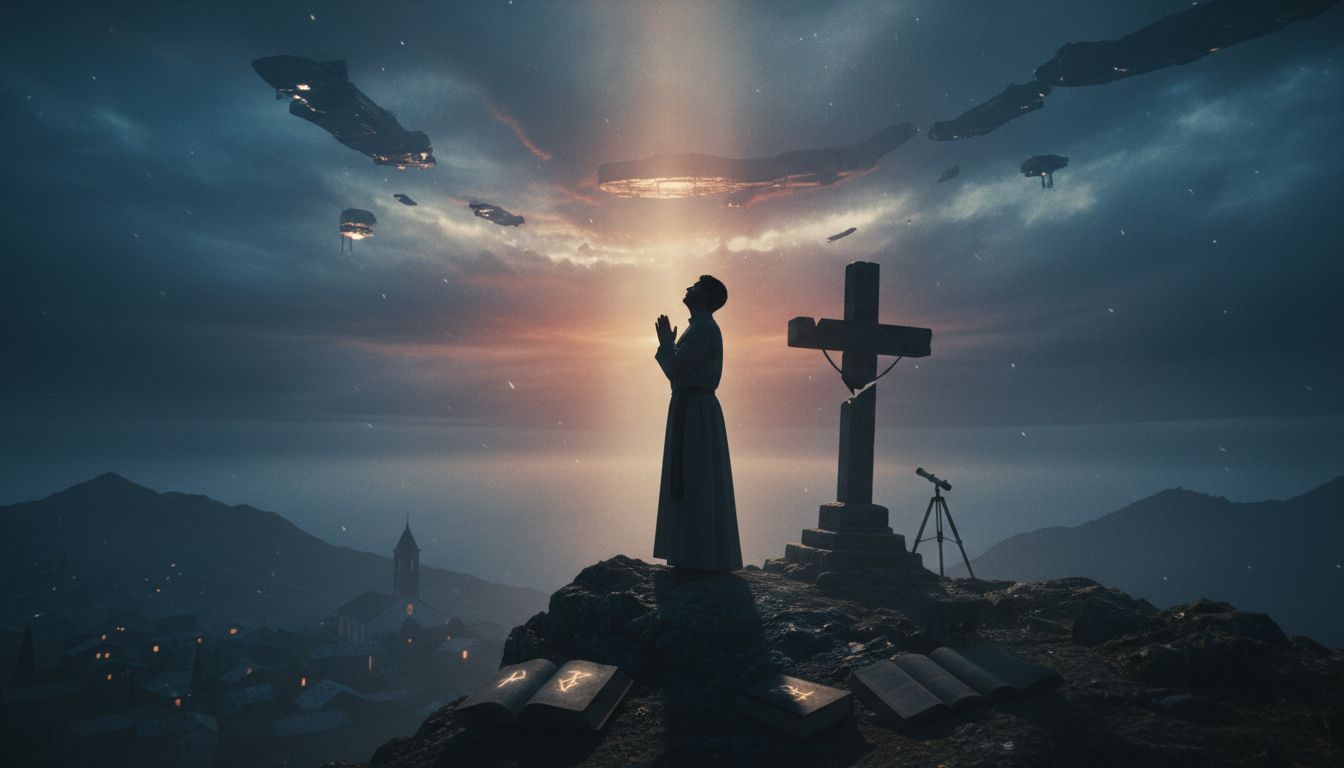
A recent CBN discussion has raised an enduring question at the intersection of faith, science, and speculation: would evidence of aliens or UFOs undermine Christian belief, or simply broaden it? Rather than treating the possibility of extraterrestrial life as a threat to religion, the piece frames it as a theological test case — one that asks whether Christians can absorb new discoveries about the universe without abandoning core doctrines about God, creation, and humanity’s place in it.
The conversation comes at a time when public interest in unidentified anomalous phenomena has remained high, fueled by government disclosures, scientific debate, and persistent cultural fascination with life beyond Earth. Against that backdrop, the CBN article explores not whether extraterrestrial life exists, but how believers might respond if it were ever confirmed. Its central premise is that the discovery of another intelligent species would not automatically invalidate Christianity; instead, it could force believers to reconsider the scale and diversity of creation.
Faith, Creation, and the Possibility of Life Beyond Earth
For Christians, the idea of alien life raises several familiar theological questions. If God is the creator of all things, then could extraterrestrial beings simply be part of that same creation? In that framework, life elsewhere in the cosmos would not compete with biblical teaching, but could be understood as evidence of a vast and complex universe shaped by God. That interpretation leaves room for the belief that humanity remains significant without requiring it to be the only intelligent life in existence.
Still, the issue is not without tension. Some believers worry that a confirmed encounter with nonhuman intelligence could unsettle traditional assumptions about the uniqueness of humanity, the meaning of salvation, or the scope of biblical revelation. The article suggests those concerns deserve serious consideration, but it also implies they are not fatal to faith. Instead, Christians may need to distinguish between theological essentials and long-held cultural assumptions about humanity’s place in the universe.
Reconciling Discovery with Doctrine
The CBN piece appears to approach the subject from a pastoral angle, asking how Christians might process such a discovery without spiritual panic. That question reflects a broader tradition within Christianity of engaging new scientific realities without abandoning doctrine. Throughout history, believers have had to wrestle with developments that expanded human understanding, from astronomy to genetics, while still seeking to interpret those discoveries through a biblical worldview.
In that sense, the possibility of alien life may function less as a crisis than as a prompt for reflection. If extraterrestrial intelligence were ever confirmed, Christian theology would likely face fresh debates about creation, redemption, and divine purpose — but those debates would not necessarily end in conflict. For many believers, the existence of other beings could even reinforce the idea of a creator who is far more expansive and imaginative than humanity has fully grasped.
A Question That Reflects a Larger Cultural Moment
Ultimately, the article uses the topic of aliens and UFOs to raise a larger question about religious resilience in the face of uncertainty. Whether one sees extraterrestrial life as science fiction, a future possibility, or a genuine mystery, the underlying issue is how faith responds when human knowledge grows beyond its previous boundaries. CBN’s framing suggests that Christianity need not be fragile in the face of cosmic discovery; instead, it may be flexible enough to interpret such findings as part of a larger divine reality.
For believers and skeptics alike, the discussion highlights an important point: the debate over aliens is not only about life elsewhere in the universe, but also about how people define truth, meaning, and creation itself.