Overview
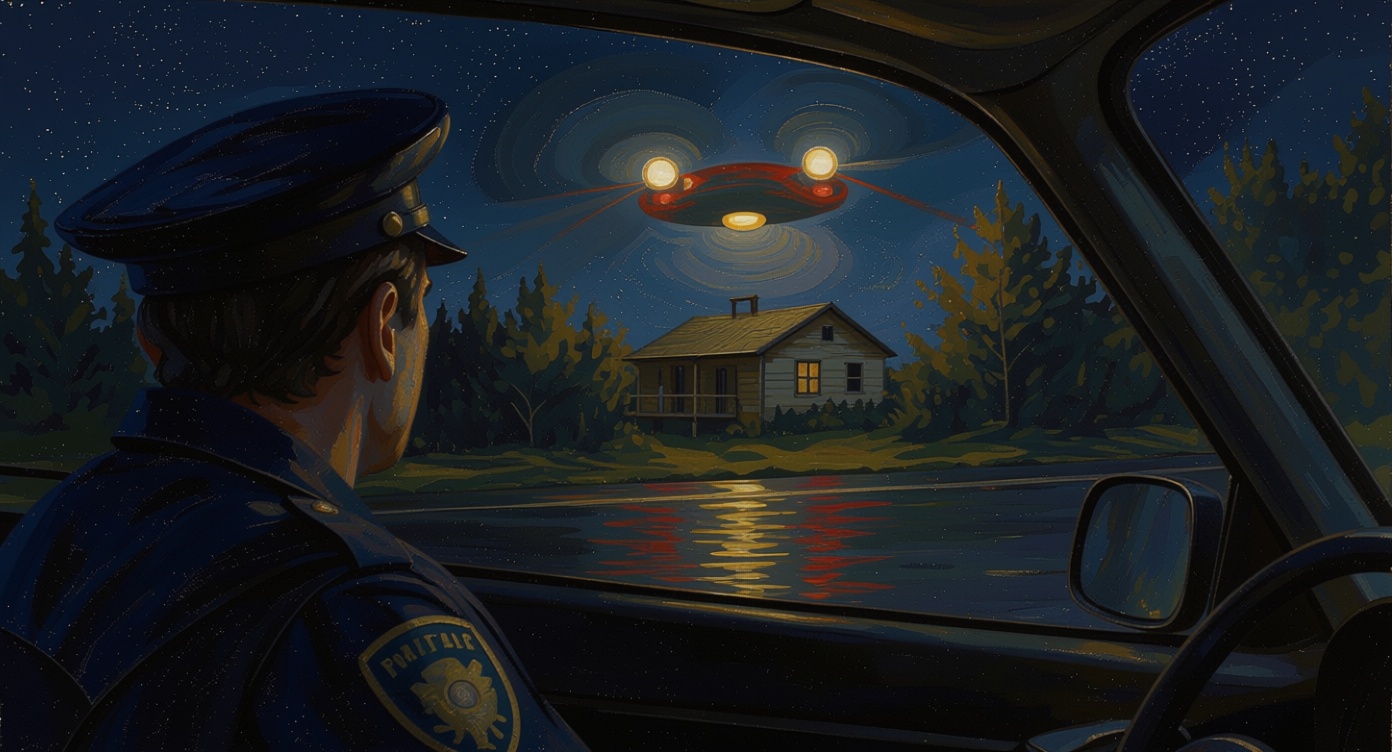
An opinion column published in the Hawaii Tribune‑Herald on February 24, 2026 raises four pressing questions that the incoming White House must confront as the United States moves toward a more open discussion of unidentified aerial phenomena (UAP). The piece, written in the wake of the 2023 presidential directive that mandated systematic reporting of UAP encounters, argues that the administration’s response will shape public trust, scientific inquiry, and national security for years to come. While the article reflects a single commentator’s perspective, the questions echo concerns voiced by members of Congress, former intelligence officials, and civilian “UFO experiencers” who have long sought official acknowledgment of their sightings.
The Four Questions
How will the White House institutionalize the reporting and analysis of UAP data collected under the Trump‑era directive?
The 2023 order required agencies such as the Department of Defense and the Office of the Director of National Intelligence to forward all credible UAP reports to a central repository. Critics note that the system remains fragmented, with overlapping databases and inconsistent classification standards. The column asks whether the new administration will create a permanent, inter‑agency body—similar to the 2022 All‑Domain Anomaly Resolution Office—or simply fold the effort into existing structures.What evidence, if any, supports the hypothesis of non‑human intelligence behind some UAP incidents?
The author cites a handful of de‑classified Navy videos and recent testimony from former pilots who described “flight characteristics that defy known physics.” Yet the piece stresses that anecdotal accounts alone do not constitute proof. The question calls for a transparent scientific review, possibly involving independent experts from academia and aerospace engineering, to evaluate whether observed performance exceeds the limits of current technology.How will the administration balance national‑security secrecy with the public’s demand for disclosure?
The 2023 directive included language to protect classified sources while encouraging “timely declassification” where possible. The columnist warns that excessive redaction could erode credibility, especially as congressional hearings on UAP are slated for the summer of 2026. The question seeks a clear policy on what categories of information will be released, and what oversight mechanisms will ensure accountability.What role will civilian UFO experiencers and the broader “paranormal” community play in the forthcoming inquiry?
Beyond military and intelligence reports, the article highlights a growing network of civilian witnesses who claim contact with anomalous craft. Their testimonies have historically been dismissed, but recent legislative efforts—such as the “UAP Transparency Act” passed by the House in late 2025—have called for their inclusion. The author asks whether the White House will establish a formal channel for these reports, and how it will vet their credibility without stigmatizing the witnesses.
Government Response and Legislative Context
Since the directive’s issuance, the Pentagon has released a quarterly “UAP Summary Report,” yet analysts note that many entries remain vague, citing “insufficient data.” In March 2025, the Senate Armed Services Committee held a closed‑door briefing that hinted at “potentially advanced sensor platforms” but stopped short of confirming extraterrestrial origins. The upcoming 2026 hearings, scheduled for July, are expected to feature testimony from former Director of National Intelligence Avril Haines and senior Air Force officials. Lawmakers have urged the administration to adopt a clear, bipartisan framework that delineates the chain of custody for UAP evidence and outlines criteria for public release.
Community and Scientific Perspectives
The scientific community remains divided. Dr. Elena Ramirez, a physicist at the University of Colorado Boulder, told Science in January that “while some UAP sightings exhibit unusual kinematics, we lack reproducible data to draw firm conclusions about non‑human intelligence.” Conversely, organizations such as the Mutual UFO Network (MUFON) argue that systematic data collection—including radar logs, infrared imagery, and eyewitness accounts—could yield patterns recognizable by machine‑learning algorithms. The Tribune‑Herald column underscores that any credible investigation must bridge the gap between classified military data and the open‑source observations contributed by civilian groups.
Looking Ahead
As the Biden‑Harris administration prepares its first full‑year budget, the allocation of resources to UAP research will be a litmus test for its commitment to transparency. The four questions posed by the Hawaii Tribune‑Herald serve as a roadmap for policymakers: establish an enduring inter‑agency structure, demand rigorous scientific validation of extraordinary claims, define a balanced declassification policy, and integrate civilian witnesses into a vetted reporting system. How the White House answers these questions will not only affect the national discourse on UFOs but also set precedents for handling other emerging, high‑impact scientific mysteries.