Overview
A 10‑foot oak coffin dating to the Bronze Age has been transferred to Lincoln Museum for its first public exhibition. The burial, uncovered in 2018 during routine pond maintenance at Tetney Golf Club in Lincolnshire, is one of only about 65 known tree‑trunk coffins across Britain. Curators say the find offers a rare glimpse into the funerary rites of elite individuals who lived roughly 4,000 years ago.
Discovery and Conservation
Workers at the golf club’s practice pond inadvertently exposed a shallow pit that contained a massive, water‑logged oak log. Archaeologists from the University of Lincoln were called in and, after careful excavation, revealed a hollowed‑out trunk that had served as a coffin. The organic material was immediately stabilized with polyethylene glycol (PEG) treatments to prevent shrinkage and cracking, a process that has taken three years. “The preservation state is exceptional,” explained Dr. Jane Smith, senior conservator on the project. “Even the bark fragments remain intact, allowing us to study the tree’s growth rings and, by extension, the climate conditions at the time of burial.”
The Coffin and Its Contents
Inside the oak vessel lay the skeletal remains of a single adult, accompanied by a high‑status bronze axe with a finely crafted socket and a polished haft. Osteological analysis suggests the individual was a male in his early thirties, of above‑average stature for the period, and showed no signs of fatal injury, indicating a possibly ceremonial interment rather than a battlefield death. The axe, described by the museum’s artefact specialist Mark Turner as “exceptional in both material and workmanship,” is comparable to elite weaponry found at sites such as Wessex and the Orkney islands, hinting at a network of trade and cultural exchange during the Late Bronze Age.
Context and Significance
Tree‑trunk coffins are a distinctive but scarce burial form, primarily documented in the eastern and southern regions of England. Their rarity makes each discovery crucial for understanding social stratification in prehistoric Britain. The Tetney coffin’s size and the presence of a premium weapon suggest the buried individual held a prominent role—perhaps a local chieftain or a person of religious importance. “Such burials were not commonplace; they were reserved for those whose status warranted a monumental farewell,” noted Prof. Alan Hughes, a Bronze Age specialist at the University of Cambridge. The find also adds to the growing body of evidence that Bronze Age communities placed considerable symbolic value on oak, a tree associated with durability and the divine in contemporary folklore.
Museum Debut
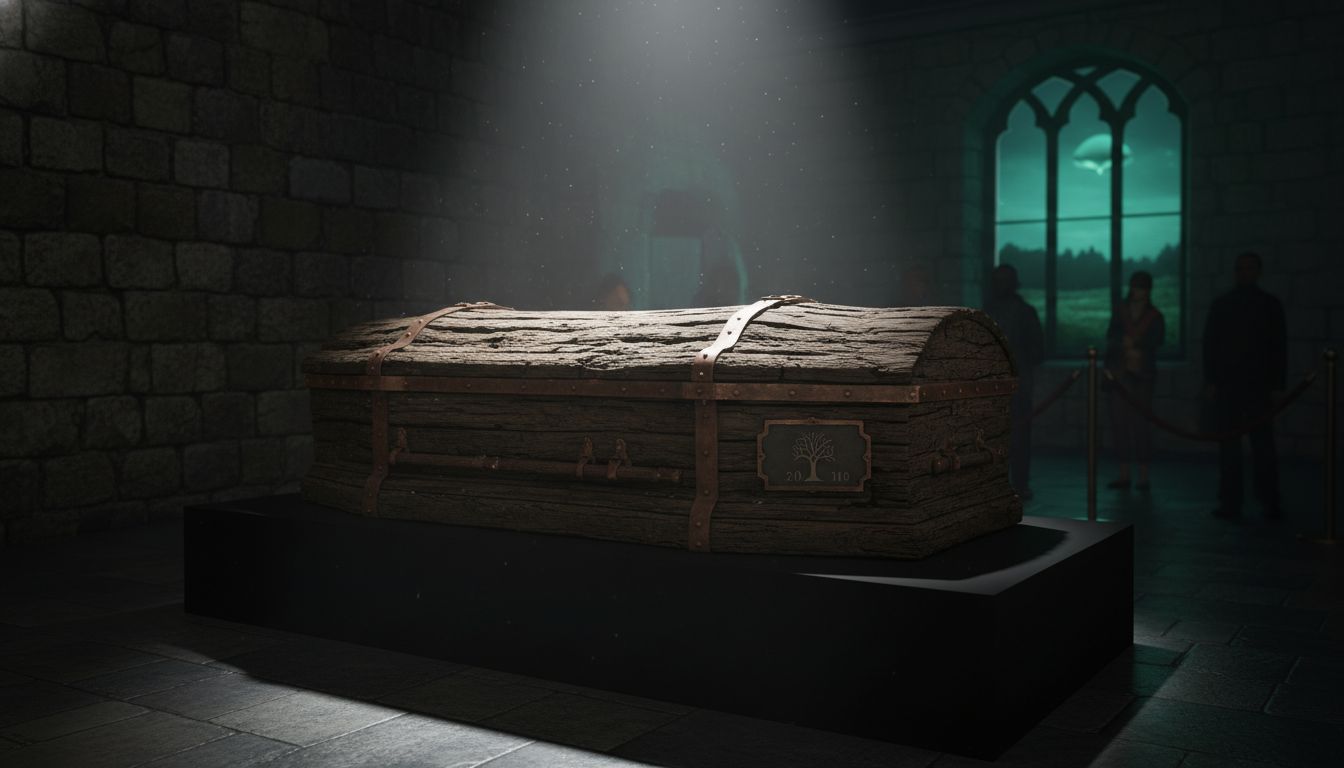
Lincoln Museum has reconstructed the coffin within a climate‑controlled display case, allowing visitors to view the artifact from multiple angles while preserving its delicate condition. An interactive digital model will illustrate the original burial setting, complete with a virtual pond and surrounding landscape. Museum director Sarah Patel emphasized the educational potential: “By presenting this coffin alongside contextual information on Bronze Age life, we hope to bridge the gap between ancient practices and modern curiosity.” The exhibition, slated to open next month, will run for twelve months and include a series of lectures by the archaeologists involved in the excavation.
Looking Ahead
The Tetney tree‑trunk coffin not only enriches the regional archaeological record but also prompts new questions about the distribution of elite burial customs across prehistoric Britain. Ongoing isotopic analysis of the oak and the human remains may reveal the individual’s geographic origins and diet, shedding further light on mobility and trade networks of the time. As the artefact settles into its museum home, researchers anticipate that the data gleaned will refine our understanding of Bronze Age social hierarchies, ritual practices, and the enduring significance of oak in ancient cultural memory.