Overview
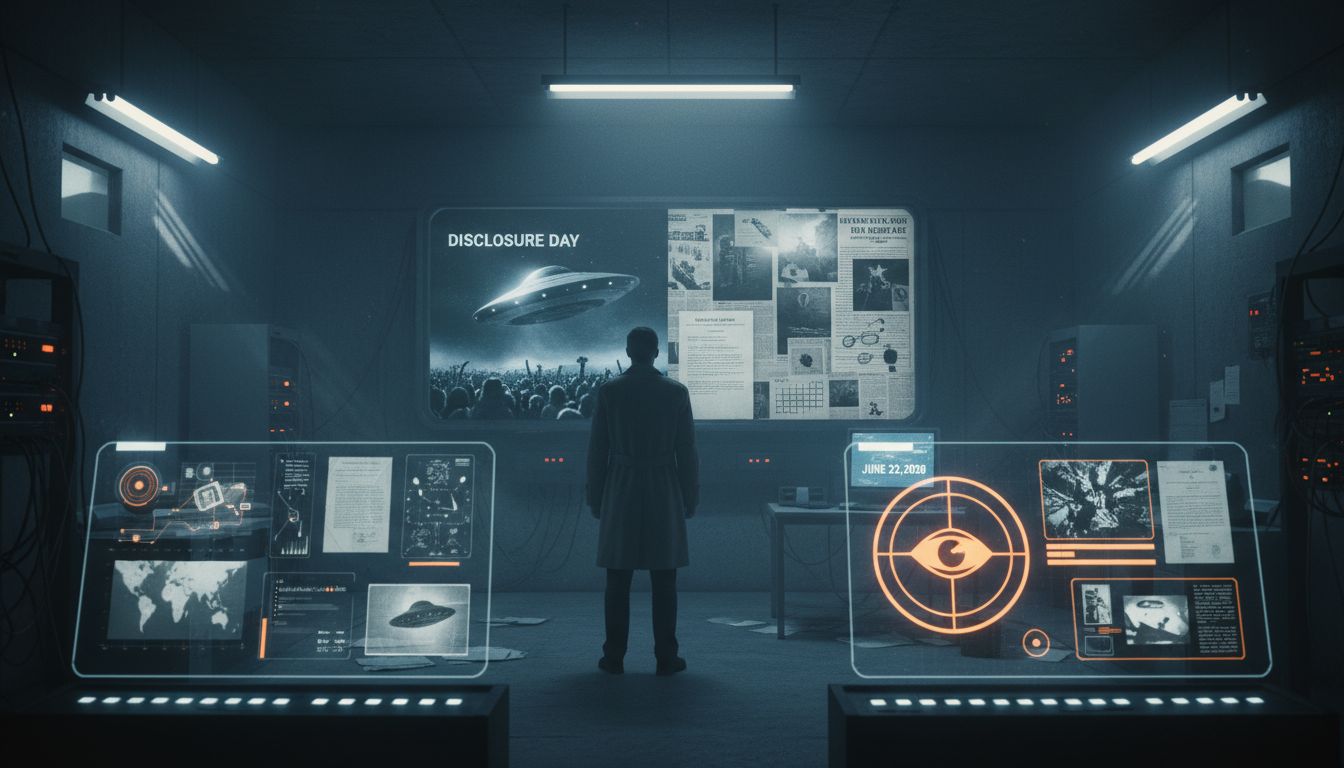
Mashable on June 22, 2026, published a look at five real-world UFO coverup stories that helped shape the mythology behind Steven Spielberg’s Disclosure Day, positioning the film within a broader, decades-long conversation about government secrecy and unidentified aerial phenomena. Rather than treating the movie as pure science fiction, the article argues that its most unsettling ideas draw power from a history of classified programs, withheld documents, and official denials that have long fueled public suspicion around UFOs and, more recently, UAPs.
The Real-World Backdrop
The piece places Disclosure Day in the context of the modern disclosure era, when congressional hearings, declassified military footage, and whistleblower claims have pushed the subject back into the mainstream. That backdrop matters because the public’s fascination with UFOs has never been driven only by speculation about extraterrestrials; it has also been shaped by the perception that institutions may know more than they have revealed. Mashable’s framing suggests that the film resonates because it echoes a familiar pattern: extraordinary reports are often met first with secrecy, then with skepticism, and only later with partial acknowledgment.
At the center of that discussion are the kinds of incidents and programs that have become touchstones in UFO history. For decades, cases involving alleged crash recoveries, military tracking, intelligence compartmentalization, and official public-relations campaigns have been cited by researchers and disclosure advocates as evidence that some information was intentionally kept from the public. The article connects those themes to the film’s narrative logic, showing how Hollywood has borrowed from real anxieties about who controls the story when something unexplained is encountered by the military or intelligence community.
Why the Story Lands Now
What makes the article timely is not just the film itself, but the broader climate surrounding it. In recent years, the U.S. government has increasingly acknowledged that some aerial encounters remain unexplained, even while cautioning against jumping to conclusions about their origin. That careful wording has done little to calm curiosity. Instead, it has sharpened the debate over whether “disclosure” means full transparency, limited declassification, or simply a more disciplined way of discussing unknowns. Mashable’s piece taps into that tension, suggesting that Disclosure Day succeeds partly because it reflects a public mood shaped by half-revealed truths and institutional ambiguity.
Entertainment, History, and Public Trust
The article also underscores how UFO stories continue to blur the line between entertainment and investigative journalism. Spielberg’s film may be fictional, but its credibility with viewers depends on the fact that many of the themes it explores—classified files, restricted briefings, and contested narratives—are rooted in real history. Mashable’s approach treats that overlap carefully, avoiding sensational claims while acknowledging why these stories endure: they speak to a deep public concern about transparency, military power, and the possibility that some unexplained events have been managed more tightly than the public ever knew. In that sense, Disclosure Day is not just a movie about UFOs; it is a reflection of the modern disclosure debate itself.