Overview
A recent episode of the Portuguese‑language astronomy channel Galeria do Meteorito examined a collection of declassified NASA material and contemporary scientific studies that have reignited discussion of Unidentified Aerial Phenomena (UAPs). Host Richard Santos walked viewers through an audio clip from the 1965 Gemini 7 mission, photographic anomalies from the Apollo lunar landings, and recent peer‑reviewed research on transient orbital objects. The program framed these items as evidence that the scientific community is confronting “a growing body of data that does not fit neatly into existing aerospace catalogs,” while also noting the need for rigorous analysis before drawing conclusions.
Historical Evidence: Gemini 7 and Apollo Imagery
The centerpiece of the broadcast was a leaked recording from Gemini 7 in which astronaut Frank Borman reported a “bogey” at the ten‑o’clock position. When Mission Control suggested the sighting might be the spent second stage of the launch vehicle, Borman insisted he saw both the booster and an additional, structured object, using the military term “bogey” that typically denotes an unidentified aircraft. “It was an actual sighting, not a misidentification of debris,” Richard emphasized.
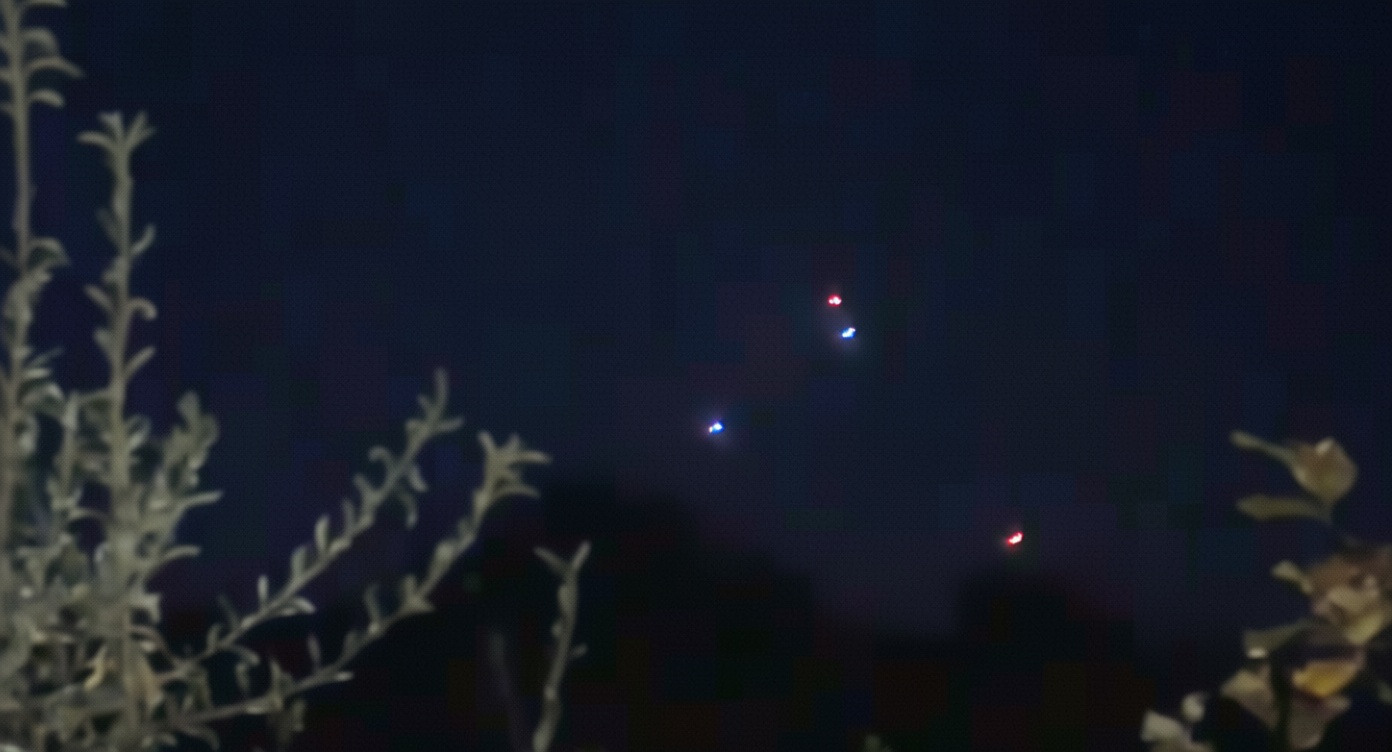
The segment also revisited photographs taken during the Apollo missions. Harvard astronomer Avi Loeb has previously explained certain blue specks as cosmic‑ray hits on film. However, the video presented examples of triangular formations and illumination patterns that change with solar angle, arguing that these characteristics are consistent with physical objects in near‑Earth orbit rather than sensor artifacts. While the interpretation remains contested, the analysis underscores the difficulty of distinguishing genuine phenomena from instrument effects in historic data.
Scientific Debate: Loeb versus Villarroel
A key portion of the episode highlighted a dispute between Loeb and Chilean astrophysicist Dr. Beatriz Villarroel, whose 2023 peer‑reviewed paper identified transient luminous objects on photographic plates predating Sputnik’s launch. Villarroel’s team argued that the objects exhibited orbital motion, suggesting a class of “unregistered” near‑Earth bodies. Loeb publicly dismissed the findings as cosmic‑ray interference, a stance that Richard described as potentially motivated by “professional rivalry and ego.”
Independent verification from German researchers, who reported similar transient detections using archival sky surveys, lends weight to Villarroel’s claim, though the evidence remains preliminary. NASA’s internal “Uncorrelated Targets” list—cataloguing objects that do not match any known satellite or debris—was mentioned as a possible repository for such anomalies, but the agency has not released detailed information about the list’s contents or criteria.
Mainstream Discourse: From Skepticism to Caution
The program noted a perceptible shift among high‑profile scientists. Astrophysicist Neil de Grasse Tyson, long a vocal skeptic of UFO claims, recently appeared on CNN to discuss his forthcoming book Take Me to Your Leader. In the interview, Tyson suggested the central question had evolved from “Are we alone?” to “Are we ready?” for a potential encounter, signaling a more cautious stance toward the topic. Investigative journalist Ross Coulthart, known for his work on government disclosure, echoed this sentiment, arguing that “the conversation is moving from denial to preparation.” While these remarks reflect a broader openness, experts caution that policy discussions must be grounded in verifiable data.
Near‑Earth Asteroids and Ongoing Monitoring
The episode concluded with a review of two recently discovered near‑Earth asteroids, 2024 JH2 and 2024 KB, which passed within a few lunar distances of Earth in May 2024. Images captured by Gianluca Masi of the Virtual Telescope Project showed the objects brightening as they approached, consistent with standard asteroid behavior. European Space Agency simulations briefly flagged a non‑zero collision probability, but both bodies safely missed Earth. The segment used these events to stress the importance of continuous sky monitoring, noting that “even routine celestial passes