Overview
In the harsh winter of 1816‑17, a Swiss‑origin family settling in Scioto County, Ohio, became the focus of a grim folk belief that linked their deadly bout of tuberculosis—then known as consumption—to the rise of undead vampires. The Salladay family, who had migrated westward after the 1795 French Grant opened new farmland along the Ohio River, found themselves confronting a disease that medical science of the era could not explain. Their response—a desperate ritual to guard the graves of the recently deceased—offers a stark illustration of how fear and ignorance intertwined in early American frontier communities.
Historical Context
The early nineteenth‑century American frontier was a patchwork of immigrant groups seeking fertile land and a fresh start. The French Grant, a congressional land parcel awarded to displaced French families, also attracted Swiss settlers like the Salladays, whose name derives from the German Salathe. At the time, tuberculosis was a leading cause of death, described in contemporary accounts as a “silent killer” that produced a wasting pallor, chronic cough, and occasional bouts of blood‑streaked sputum. Without a germ‑theory understanding, physicians and laypeople alike attributed the disease to malevolent forces, a view reinforced by the disease’s slow, relentless progression.
The Salladay Tragedy
Within a few years of establishing their farm, multiple members of the Salladay household fell ill with consumption. Historical records indicate that the disease spread rapidly through the family, a pattern not uncommon in tightly‑knit frontier settlements where cramped living conditions and limited nutrition facilitated contagion. As the illness claimed lives, the surviving relatives observed a disturbing pattern: each death seemed to be followed by another bout of illness among the living. This perceived correlation fueled a belief that the dead were somehow “rising” to drain the life of the living, echoing the vampire folklore that had previously ignited panics in New England during the 1840s.
The Vampire Superstition
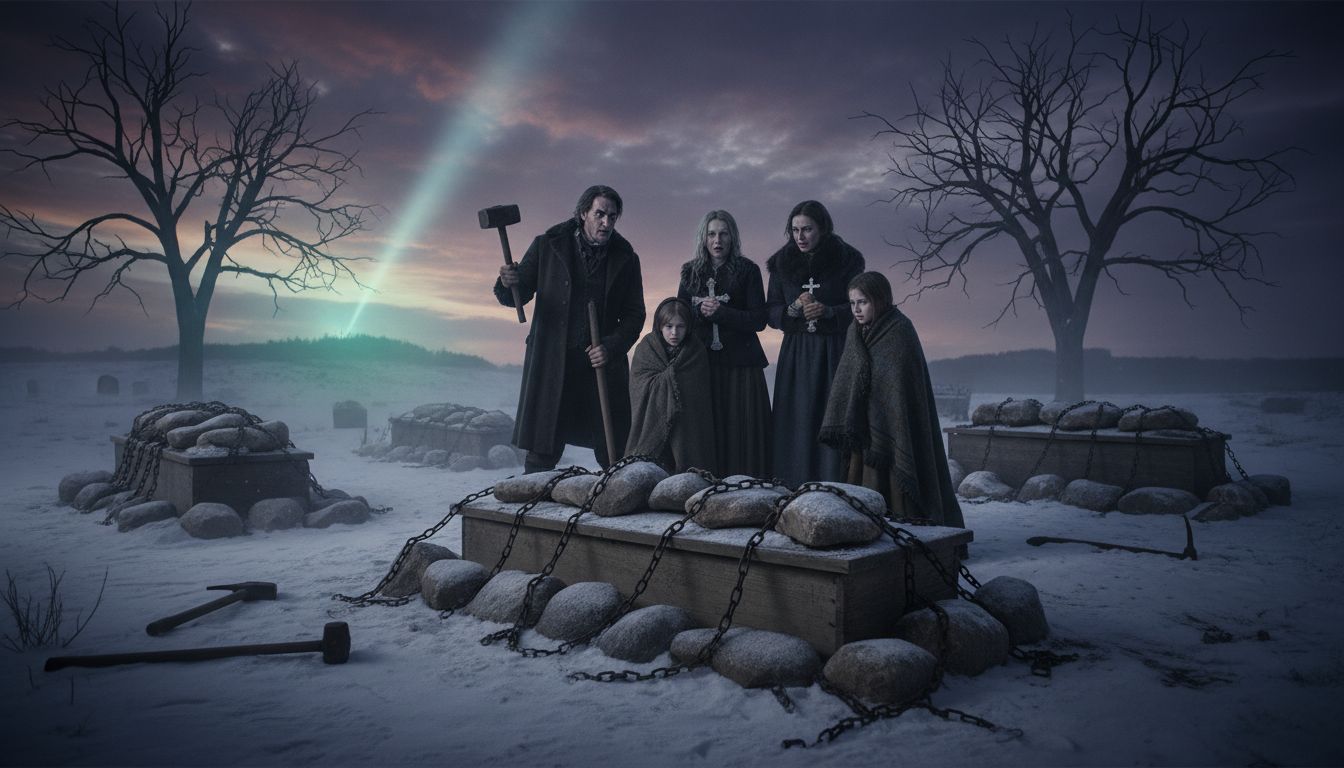
In response, the Salladays adopted a ritual that mirrored the anti‑vampire measures documented elsewhere in early America. They guarded the graves of recently buried relatives, reportedly staying awake through the night with tools such as stakes, knives, or even fire to prevent any “undead” from emerging. While no contemporary newspaper accounts provide direct quotations from the family, secondary sources from local historical societies describe the practice as a “desperate attempt to halt the spread of consumption by stopping a phantom vampire.” The superstition was not unique to Ohio; similar beliefs surfaced in Pennsylvania, Maryland, and New England, where communities exhumed bodies and placed stones or iron implements to deter presumed revenants.
Legacy and Scholarly Perspective
Modern historians view the Salladay episode as a cautionary example of how medical ignorance can give rise to folklore‑driven interventions. Dr. Elaine Harper, a historian of early American medicine at Ohio State University, notes that “the link between disease and vampirism was a cultural coping mechanism, allowing families to feel a measure of control in the face of an otherwise invisible threat.” Recent archaeological surveys of the Salladay Cemetery confirm the presence of iron objects placed near graves—a material choice consistent with folklore that iron repels supernatural entities. The site now serves as a tangible reminder of the period’s intersection between public health crises and community mythmaking.
Contemporary Reflection
Today, the Salladay story is preserved in local heritage tours and featured on platforms such as Moon Mausoleum, which document “ghost stories from the USA.” While the narrative retains a haunting allure, scholars stress the importance of separating sensationalist retellings from the underlying historical realities. The family's experience underscores the broader lesson that public health challenges, when met with fear rather than knowledge, can spawn enduring cultural myths—a pattern that continues to echo in modern responses to emerging diseases.