Overview
A video posted by former United States Antarctic Program participant Eric J. Hecker has resurfaced on social‑media platforms, prompting renewed discussion about the status of unidentified aerial phenomena (UAP) disclosure. In the clip, Hecker describes his experiences at the South Pole Station, alleges that critical information about anomalous sightings was concealed, and urges the public to demand greater transparency. The video has been shared widely under hashtags such as #ufotwitter and #UFOx, and it coincides with Hecker’s broader outreach through the website deciphering.tv and appearances on television programs like The Alaska Triangle and Redacted with Clayton Morris.
Background
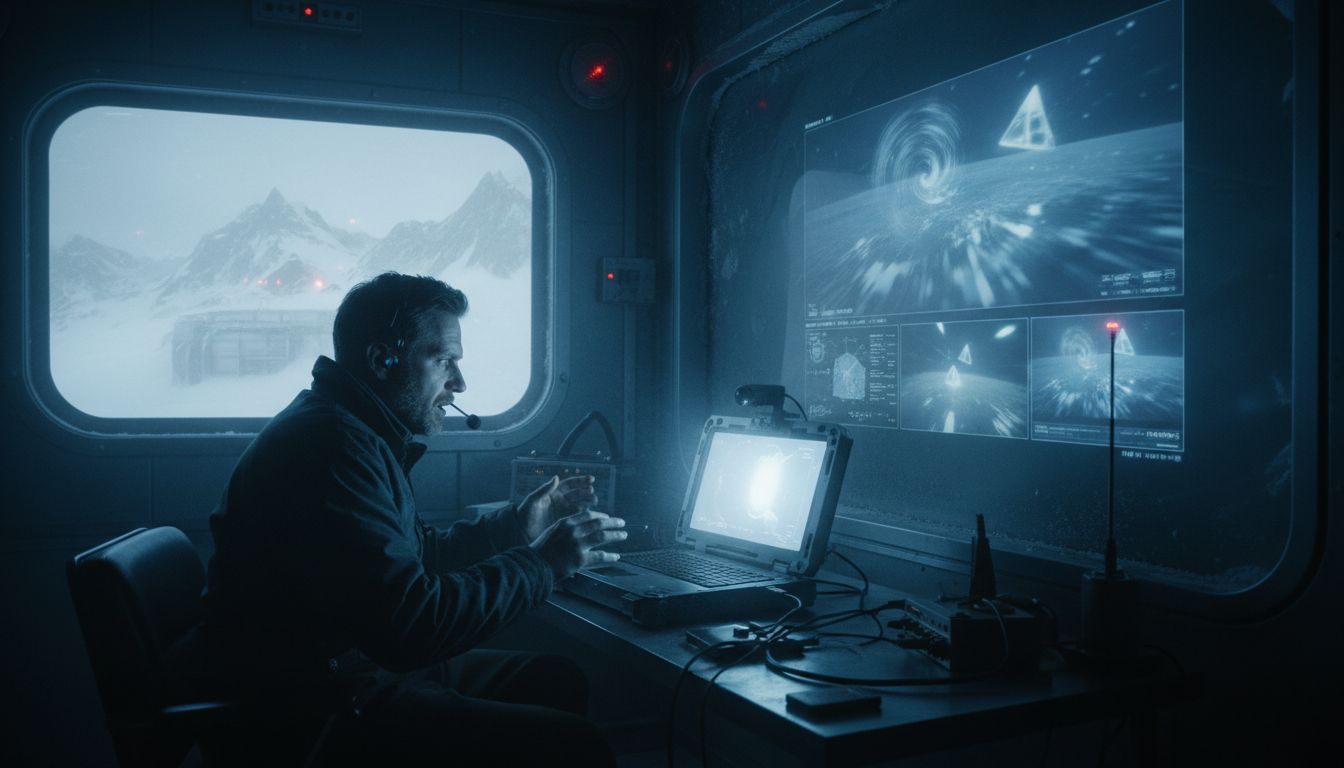
Hecker, a Long Island native, claims involvement in several classified initiatives beginning in childhood. According to his biography, he participated in the “Stargate Program,” a former U.S. intelligence project focused on remote viewing, before serving briefly in the Navy’s Submarine Service where he encountered a “peculiar program run by Raytheon.” In November 2010, he was selected for a year‑long assignment at the United States’ South Pole Station, a research outpost operated by the National Science Foundation. Hecker states that during this tenure he observed activities that “were not as presented to the world,” a phrase he repeats in public statements and on deciphering.tv.
The site, launched in 2024, positions itself as a “platform created in good faith” to share Hecker’s accounts and to “connect the dots” that mainstream media allegedly overlook. The site lists a small editorial team and hosts a forum for discussion of “new frontiers” and “conspiracy theories.” While the website’s design and language are overtly activist, Hecker’s claims have attracted attention from both UAP researchers and skeptics.
Testimony and Official Channels
In addition to the video, Hecker reports that he was invited to provide testimony before the Senate Intelligence Committee and the All‑Domain Anomaly Resolution Office (AARO), the Pentagon’s newly established UAP office. He says his statements will be entered into the National Archives, a step that could make his allegations part of the public record. The Senate Intelligence Committee has, in recent months, held open hearings on UAPs, and AARO has begun releasing de‑classified reports. However, no official transcript or verification of Hecker’s testimony has been released to date, and the committee’s public docket does not list him as a witness.
Public Reaction and Media Coverage
Hecker’s video has generated a mixed response. Supporters cite his prior media appearances—on The Shawn Ryan Show, Dr. Steven Greer’s Disclosure 2.0 event, and various podcasts—as evidence of credibility. Critics point out that many of the claims rely on personal recollection and lack corroborating documentation. The broader UAP community continues to debate the weight of anecdotal testimony versus empirical data, especially after the Office of the Director of National Intelligence’s 2021 preliminary assessment, which concluded that most UAP incidents remain unexplained but did not attribute them to extraterrestrial technology.
Next Steps
The resurgence of Hecker’s video underscores a growing public appetite for clarity on UAP matters. Analysts suggest that, if Hecker’s testimony is indeed archived, it could be examined by researchers under the Freedom of Information Act. Meanwhile, the Senate Intelligence Committee has indicated it will seek additional witnesses as part of its ongoing investigation. For observers, the key question remains whether personal narratives like Hecker’s will translate into actionable policy changes or remain part of the “illusion” narrative Hecker himself describes. As the discourse evolves, journalists will continue to monitor official releases and independent investigations to separate verifiable evidence from speculation.