Overview
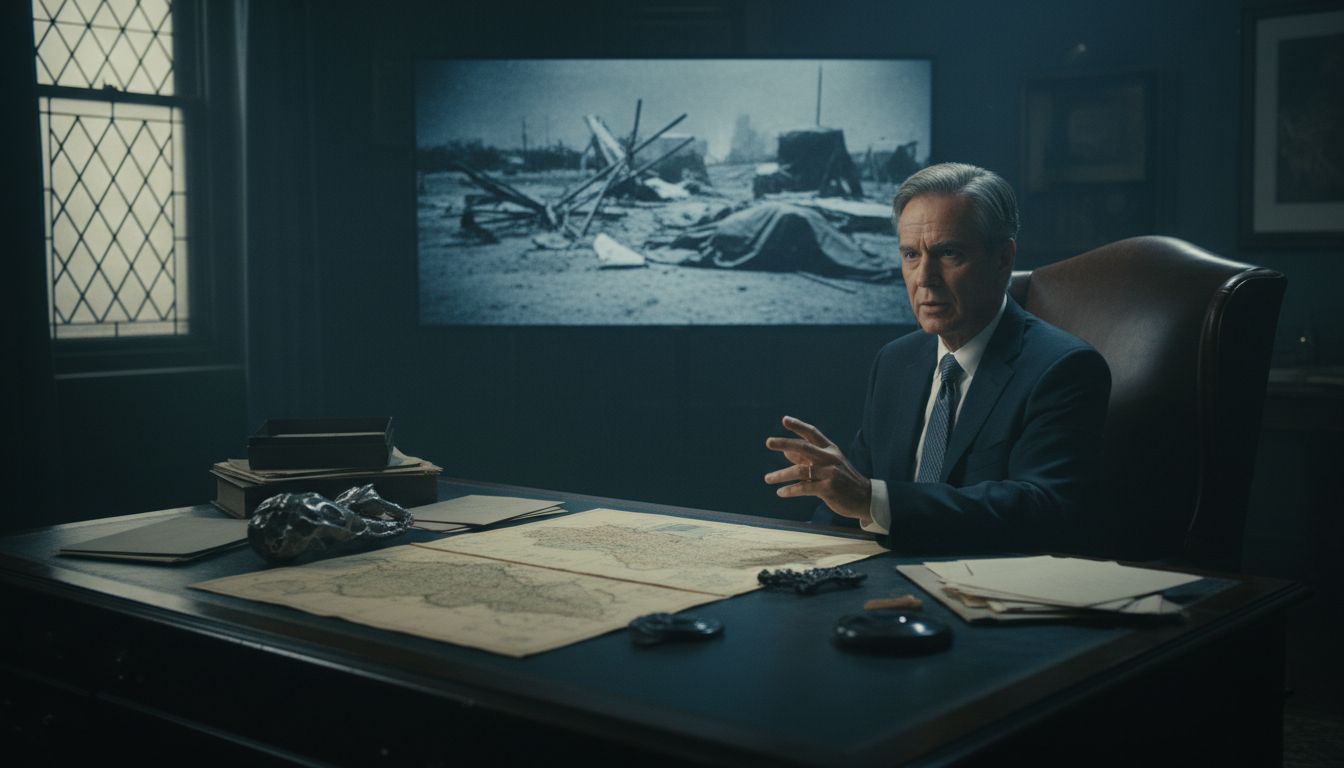
Prime Video’s new documentary “Age of Disclosure” (directed by Dan Farah) joins a growing slate of streaming titles that explore the United States’ long‑standing UFO phenomenon. The film centers on a series of interviews with researchers, former military personnel, and scientists, most prominently Dr. Eric Davis, a former emergency‑room physician who has long advocated for the release of classified information about the 1947 Roswell incident. In a pivotal segment, Dr. Davis states that “four non‑human bodies were recovered from the Roswell crash site,” a claim that has circulated within UFO‑research circles for decades but has never been substantiated by official documentation.
The Roswell Claim
Dr. Davis’s assertion is not new; it echoes testimonies first publicized in the 1990s by alleged whistleblowers such as “Albert K.” and “Al H.” The documentary presents a concise timeline: a weather balloon allegedly crashes near Roswell, New Mexico; the military subsequently recovers debris and, according to the witnesses, several bodies with anatomical features that differ from known terrestrial species. While the film does not disclose original forensic reports, it references a 1995 interview in which Dr. Davis described “unusual skeletal structures, elongated limbs, and a lack of recognizable DNA markers” observed during a brief, classified medical examination. The documentary stops short of presenting physical evidence, instead relying on the credibility of the interviewees and the consistency of their recollections.
Community Reaction
Since its release, “Age of Disclosure” has generated a mixed response among UFO researchers and skeptics alike. Prominent members of the Mutual UFO Network (MUFON) have praised the film for bringing “a measured, interview‑driven approach” to a topic often dominated by sensationalist speculation. Conversely, the Center for Inquiry’s science director, Dr. Michael Shermer, cautioned that “without verifiable data, anecdotal accounts—even from medical professionals—remain insufficient for scientific validation.” Social‑media commentary reflects this divide: some viewers cite the documentary as “the most compelling evidence yet,” while others label it “another piece of the myth‑making puzzle” that lacks peer‑reviewed corroboration.
The Broader Disclosure Landscape
The documentary arrives at a moment when the U.S. government has begun to acknowledge unidentified aerial phenomena (UAP) more openly. In June 2021, the Office of the Director of National Intelligence released a preliminary assessment acknowledging 144 UAP sightings by military pilots, and in 2022, the Pentagon established the All‑Domain Anomaly Resolution Office (AARO) to investigate such reports. “Age of Disclosure” positions the Roswell narrative within this evolving framework, suggesting that the “four bodies” claim could be a missing link in the chain of evidence that may eventually compel formal disclosure. The film also references recent congressional hearings, noting that lawmakers are now demanding greater transparency on UAP data—a shift that could, in theory, open the door to declassifying historical records related to Roswell.
Availability and Outlook
“Age of Disclosure” is currently streaming worldwide on Prime Video, with a runtime of approximately 90 minutes. The production credits list Dan Farah as director and producer, with additional archival footage sourced from public domain news reels of the 1947 crash. While the documentary does not provide new documents or physical artifacts, its reliance on first‑hand testimonies—particularly from Dr. Eric Davis—adds a layer of personal credibility that may encourage further inquiry. As the UAP community watches both governmental and cinematic developments, the film underscores a central question: whether the accumulation of anecdotal evidence will eventually translate into the concrete, peer‑reviewed data required for scientific consensus and official disclosure.