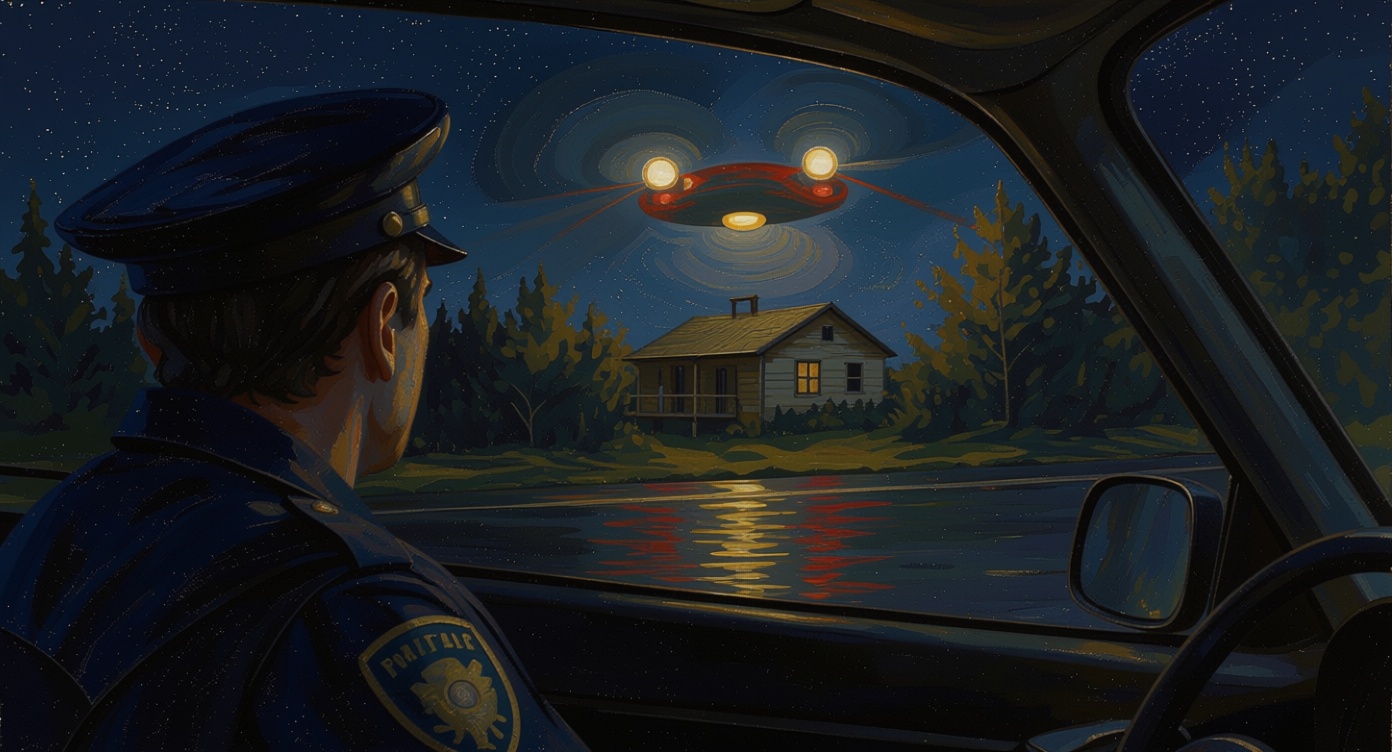
Overview
Seattle‑based filmmaker Dan Farah released the documentary The Age of Disclosure this week, a project that brings together 34 former military, intelligence and aerospace officials who assert that the United States has been concealing information about unidentified aerial phenomena (UAP) for more than eight decades. The film, which premiered on a limited streaming platform and was highlighted in a recent KOMO News segment, positions itself as a “call to transparency” and adds a new voice to the growing public discourse on UAPs [122].
Documentary Details
The Age of Disclosure runs just over an hour and is structured around on‑camera interviews, archival footage and narrated commentary. Farah, who previously produced investigative pieces on defense topics, says the film was motivated by “the persistent pattern of government silence that many insiders have described as a coordinated cover‑up.” The documentary’s participants include former senior officers from the Air Force, the Defense Intelligence Agency, and senior engineers from aerospace firms that have historically worked on classified programs. While the film does not present classified documents, it references declassified reports, such as the 2023 Office of the Director of National Intelligence (ODNI) assessment that acknowledged the existence of “unexplained aerial objects” in restricted airspace.
Core Claims
According to the interviewees, a systematic effort to hide UAP data began shortly after World War II, intensifying during the Cold War when the perceived threat of Soviet technology prompted the creation of “black projects” that blended genuine research with misinformation. The officials allege that a “committee of senior officials” was established in the late 1940s to evaluate and, where deemed necessary, suppress any public disclosure of anomalous sightings. They contend that this policy persisted through the formation of the Advanced Aerospace Threat Identification Program (AATIP) in 2007 and continued even after the 2022 congressional hearing that brought the topic into the public arena.
The documentary emphasizes three recurring themes: (1) consistent visual and radar signatures that defy known aircraft capabilities, (2) documented encounters involving trained pilots and sensor operators, and (3) internal memos indicating that the Department of Defense considered the information “potentially destabilizing” if released. Farah’s film stops short of labeling the phenomena as extraterrestrial, instead framing the issue as a matter of national security and scientific integrity.
Reactions from Experts and Officials
The release has drawn a mixed response. Some UAP researchers, such as Dr. Jacques Vallee of the UFO Research Institute, praised the documentary for “bringing credible, high‑ranking witnesses into the public eye,” noting that the sheer number of senior officials lends weight to the claim of a long‑standing secrecy. Conversely, a spokesperson for the Pentagon declined to comment on the specific allegations but reiterated the department’s stance that “all legitimate UAP reports are evaluated through established channels.” Academic analysts caution that personal recollections, while valuable, require corroboration with documentary evidence before reshaping official policy. The film’s reliance on anecdotal testimony, rather than newly declassified files, has been highlighted as a limitation by several scholars.
Context and Outlook
The Age of Disclosure arrives at a moment when UAPs occupy a more prominent place in both media and legislative agendas. Following the 2023 ODNI report and the 2024 Senate hearing on UAPs, Congress allocated additional funding for the All‑Domain Anomaly Resolution Office (AARO) to improve data collection and analysis. Farah’s documentary adds cultural momentum, echoing earlier works such as Unacknowledged (2017) and the recent Netflix series UFOs: The Untold Truth. Whether the film will spur further governmental transparency remains uncertain, but it underscores a growing public appetite for answers.
Looking Ahead
KOMO News plans to continue covering developments related to the documentary, including any official responses that may arise. For viewers, the film offers a curated collection of insider perspectives, but the broader scientific community urges a cautious approach: rigorous peer‑reviewed research and the release of verifiable data are essential before drawing definitive conclusions. As the UAP conversation evolves, The Age of Disclosure serves as both a catalyst for dialogue and a reminder of the challenges inherent in untangling decades of classified information.