Overview
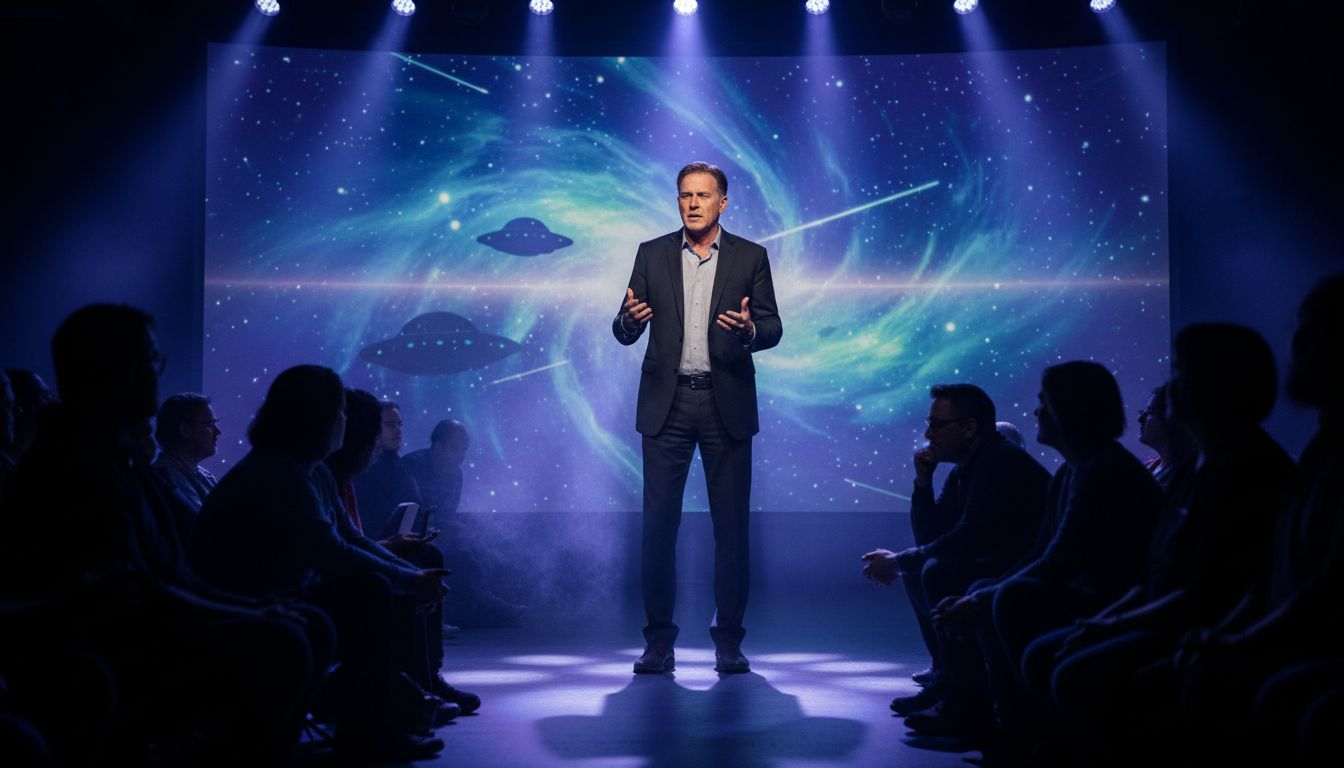
Author and attorney Kent Heckenlively appeared on Good Day Chicago to discuss his upcoming book, Catastrophic Disclosure: The Deep State, Aliens, and the Truth, a project he co-authored with UFO documentary filmmaker Michael Mazzola. The interview revisited long-running allegations of government secrecy surrounding unidentified aerial phenomena (UAPs) and extraterrestrial life, while also touching on recent congressional testimony that has helped keep the issue in the public eye. Heckenlively framed the subject as part of a broader question about who controls information on UAPs and whether the public is being told the full story.
Congressional Testimony and Public Interest
Heckenlively said his interest in the topic was sharpened by the June 2023 testimony of whistleblowers David Grusch, Ryan Graves, and David Fravor before Congress. He described the hearings as important because witnesses who appear in that setting are typically vetted, which he argued gives their claims a measure of credibility. He also questioned why intelligence officials, whom he referred to as “the spooks,” should have exclusive authority over what the public learns about possible extraterrestrial encounters. His comments reflect a familiar tension in UAP reporting: the growing demand for transparency versus the government’s long-standing reluctance to confirm or deny sensitive claims.
Research Claims and Interviews
According to Heckenlively, the book represents about two years of research and interviews with several prominent figures in the disclosure movement and related investigations. He said he spoke with Dr. Steven Greer, attorney Danny Sheehan, journalist Michael Shellenberger, and Rep. Eric Burlison as part of the project. The author presented the book as an attempt to synthesize a wide range of voices, from activists to lawmakers, into a narrative about how information on UAPs may have been handled behind the scenes. While the interview emphasized these names as part of his research process, the claims themselves remain contested and are not independently verified in the segment.
Roswell, Trinity, and Historical Theories
A substantial portion of the discussion focused on the 1947 Roswell incident, which remains one of the most disputed episodes in UFO history. Heckenlively pointed to the book Trinity Crash by Jacques Vallée and Paola Harris, which advances the theory that an alleged crash near the Trinity test site in New Mexico occurred in 1945, shortly after the first atomic bomb test. He argued that if extraterrestrial visitors were monitoring nuclear activity, an earlier event near Trinity might make more chronological sense than Roswell, which took place two years later. He also suggested that the military’s swift and organized response at Roswell could indicate officials already had a protocol in place from previous encounters.
Controversial Evidence and Calls for Transparency
The interview also addressed the much-debated “alien mummies” reportedly discovered in Nazca, Peru. Heckenlively said Mazzola is producing a documentary titled This Is Not a Hoax about the specimens and cited forensic experts who allegedly described the three-fingered, three-toed remains as “actual beings.” He further claimed that early genetic testing showed a profile that was partly human, partly chimpanzee, and partly “unknown” DNA, though such findings remain highly controversial and have been challenged by skeptics. Asked whether he believes aliens are among us, Heckenlively described himself as “85/15” — 85% convinced they are present, and 15% suspicious of a sophisticated deception. The segment ended with his broader appeal for openness, underscoring a central theme in the UAP debate: the public’s demand for access to information that may still be withheld by government agencies.