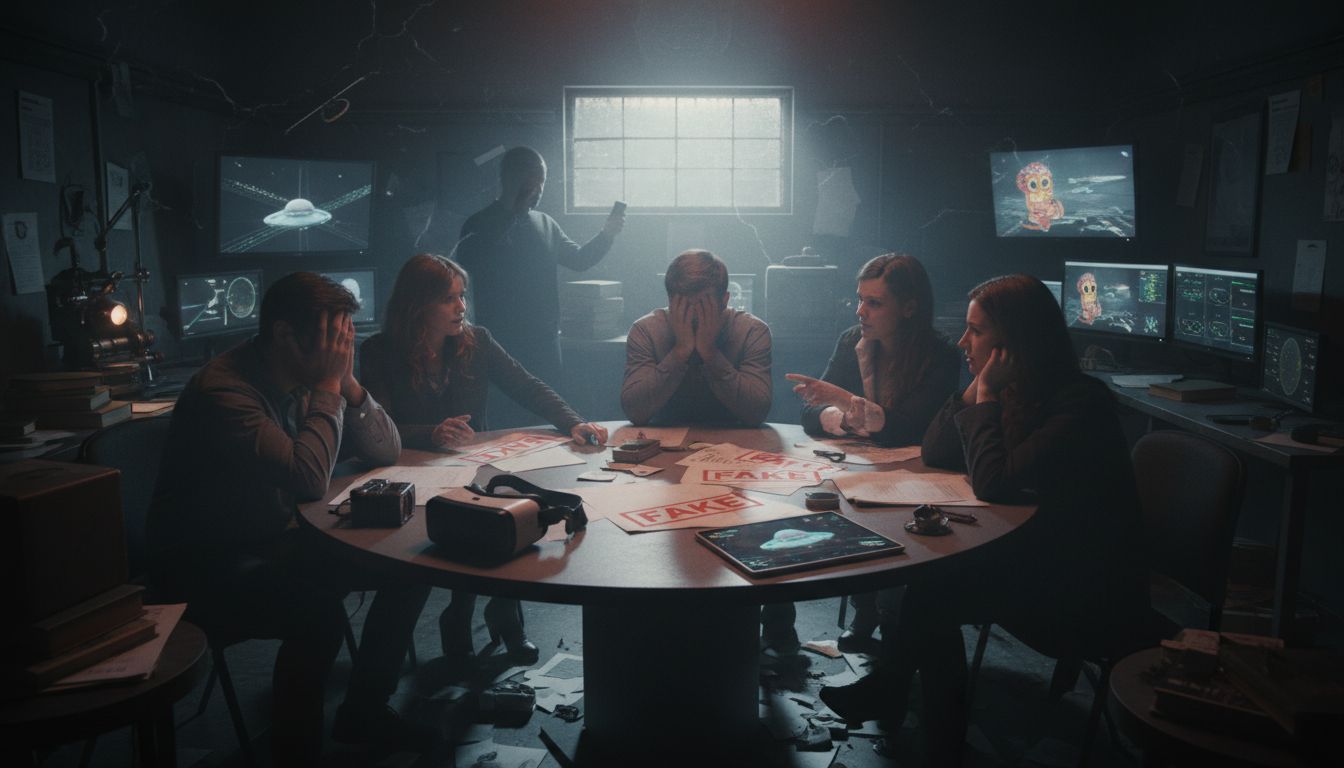
The UFO research community is confronting a growing sense of disillusionment, a sentiment articulated in a recent entry on the long‑running “Alien UFO Blog.” Titled “My Alien & UFO Existential Crisis,” the post, published on December 8, 2017, laments how a surge of hoaxes, unverified footage and sensational claims is eroding the credibility of serious investigators. The author, an anonymous veteran of the online UFO‑sighting scene, argues that without stricter verification standards the movement risks being dismissed as a playground for pranksters rather than a legitimate field of inquiry.
The blog entry points to a pattern that has become increasingly common in the last decade: videos that appear to show anomalous aerial phenomena quickly go viral, only to be debunked as camera artifacts, drones or CGI. “Every week there’s a new ‘proof’ that turns out to be a misidentified balloon or a cleverly edited clip,” the author writes, noting that the sheer volume of such false leads drains both time and resources from researchers who are trying to isolate genuinely unexplained events. The piece does not name specific cases, but its timing coincides with high‑profile incidents such as the 2017 “Tic Tac” Navy footage, which, after extensive analysis, still sparked debate over its authenticity.
Beyond the immediate frustration of chasing false leads, the author warns that the community’s reputation is at stake. “When the public sees a parade of hoaxes, they start to assume the entire field is a joke,” the post says, echoing concerns voiced by academic researchers who have long urged a more rigorous methodological framework. Studies published in peer‑reviewed journals have highlighted the need for standardized data collection, chain‑of‑custody protocols for video evidence, and transparent peer review—principles that are often ignored in the fast‑moving world of social media. The blog’s call for “better verification standards” aligns with recent initiatives by the All‑Domain Anomaly Resolution Office (AARO) and the Pentagon’s Unidentified Aerial Phenomena Task Force, both of which emphasize scientific rigor.
The existential crisis described on the blog also reflects a broader cultural shift. While public fascination with extraterrestrials remains high, skepticism toward unsubstantiated claims has grown, especially after high‑profile debunkings of “alien” footage on platforms like YouTube. The post’s mention of “lack of critical thinking” is a nod to this tension: enthusiasts who share sensational content without corroboration may inadvertently undermine the credibility of those who apply disciplined analysis. As the author notes, “the community must police itself before external authorities do.” This sentiment resonates with recent statements from the Scientific Coalition for UAP Studies (SCU), which has urged hobbyists to adopt the same evidentiary standards used in mainstream science.
In concluding the piece, the blog’s writer urges a collective recommitment to verification, suggesting that the community adopt a “fact‑first” ethos akin to that of investigative journalism. The author proposes a simple set of guidelines: require multiple independent witnesses, preserve original data files, and subject any claim to peer review before public dissemination. While the post itself is brief and largely focused on the emotional toll of ongoing deception, it serves as a reminder that the path to credible disclosure will depend as much on discipline and self‑regulation as on any eventual governmental acknowledgment of unidentified phenomena.