Overview
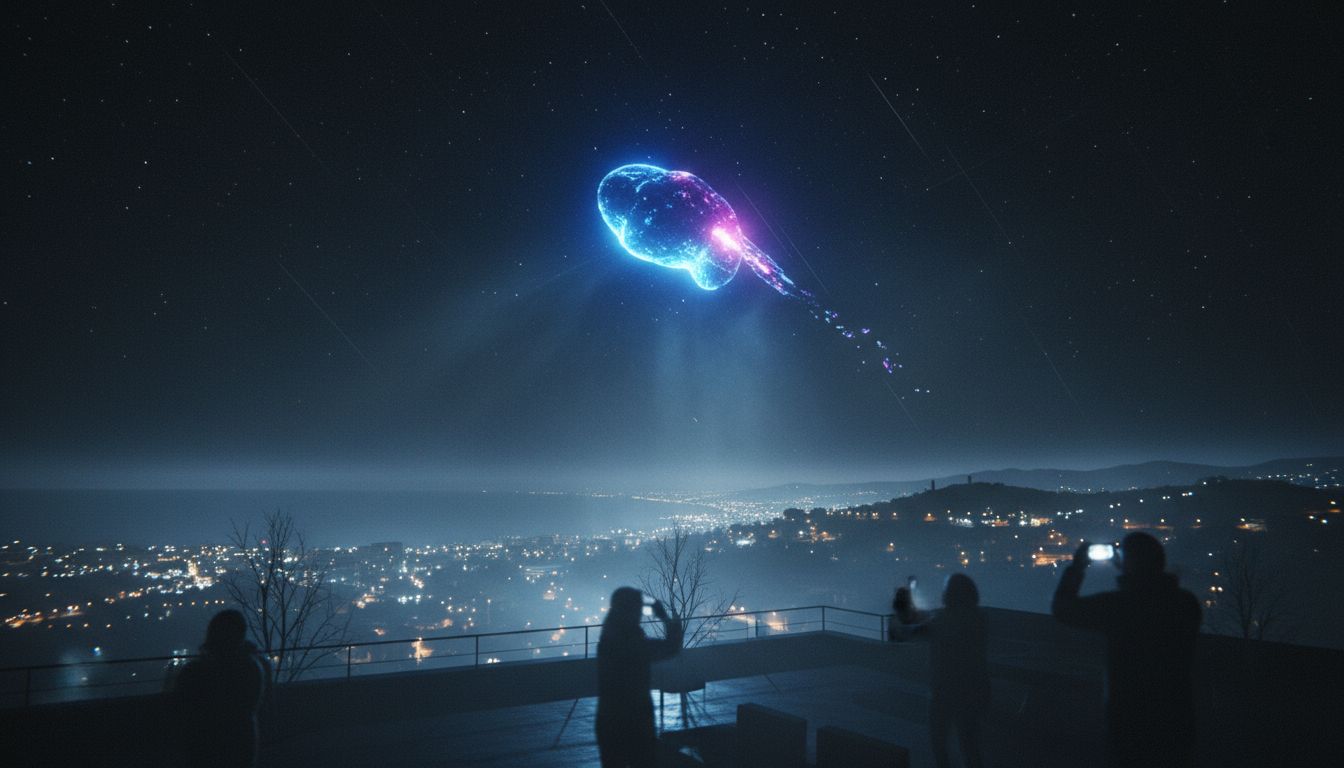
On the evening of Monday, 2 February 2026, residents of the Baraccola district in Ancona reported a brief but striking visual event in the night sky. A glowing orb appeared near the horizon, hovered for a few seconds, and then vanished in a rapid double flash. The incident was captured on a short video posted to Instagram by a local user known as “Chioscotosto,” and the clip quickly spread across social media, prompting a flurry of speculation about its nature.
Eyewitness Accounts
More than a thousand Anconans took to online forums and local news comment sections to describe what they saw. “It looked like a big, white ball of light, almost the size of a car, moving erratically before it split into two quick flashes,” said Marco Bianchi, a 34‑year‑old barista who was walking home from work at 18:32. Another resident, Laura Ferri, 27, who was on her balcony, added, “I thought it might be a firework, but the light was too steady and the flashes came one after the other, not like any fireworks I’ve seen.”
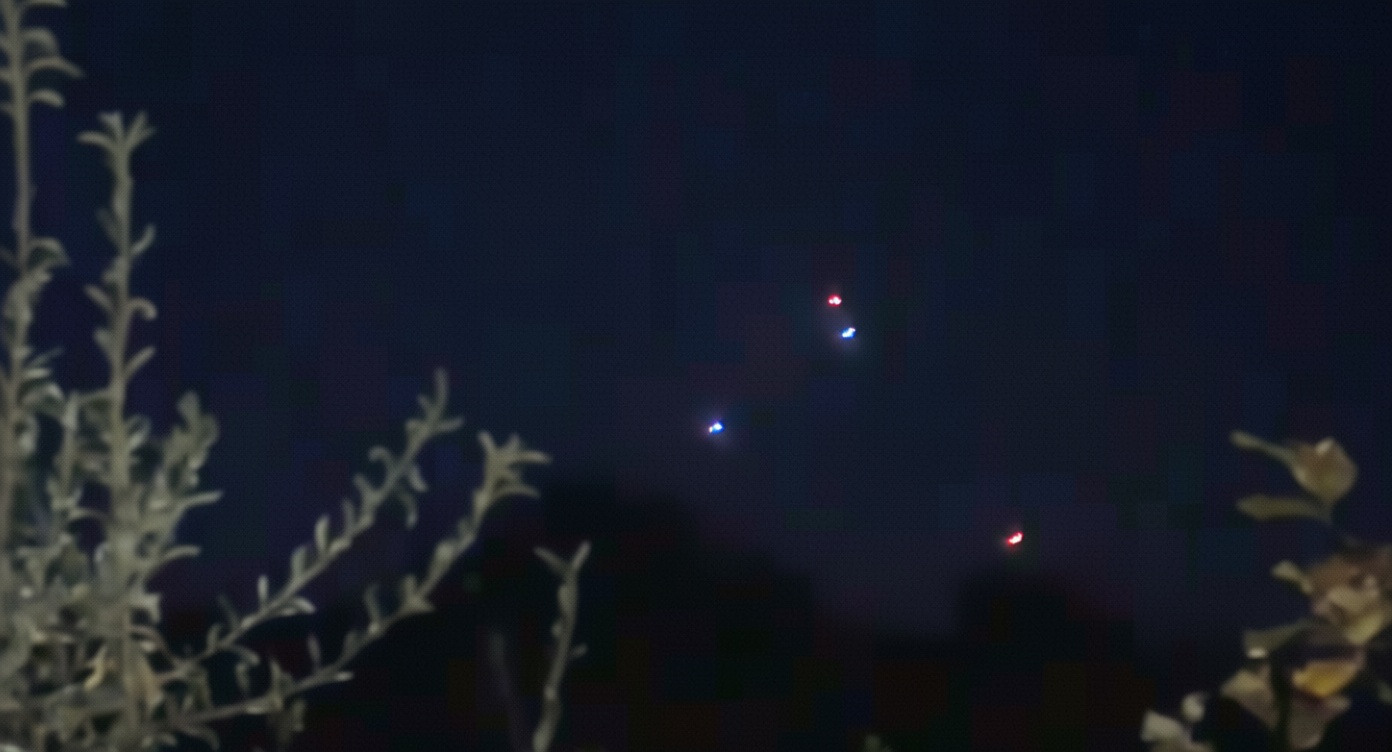
The video, which runs for roughly 12 seconds, shows the luminous sphere rising a short distance before a sudden brightening that splits into two distinct bursts. The footage, though low‑resolution, captures the timing of the event with enough clarity to allow independent analysis.
Technical Analysis
Astronomers and atmospheric scientists have offered several plausible explanations. Dr. Elena Russo, a professor of atmospheric physics at the University of Bologna, noted that “ball lightning—a rare, self‑contained plasma phenomenon—can appear as a glowing orb and sometimes dissipates with a bright flash. However, its occurrence is typically associated with thunderstorms, and weather reports from the Italian Meteorological Service indicated only light rain and no significant electrical activity at the time.”
Satellite experts point to the possibility of an Iridium flare or a similar satellite‑generated reflection. These flares can produce intense, short‑lived flashes, but they usually lack the sustained glow observed in the first portion of the video. “A satellite pass would create a single, predictable flash,” explained Luca Conti, a senior analyst at the European Space Agency’s (ESA) Space Situational Awareness unit. “The double flash pattern is atypical, though not impossible if two reflective surfaces are involved.”
Digital forensics specialists have examined the video’s metadata, confirming it was recorded on a smartphone at 18:34 CET on the reported date, with GPS coordinates matching the Baraccola shoreline. No evidence of editing or post‑production alteration was found.
Official Response
The Ancona Police Department opened a preliminary inquiry to verify the authenticity of the footage and to rule out any public safety concerns. In a statement released on 3 February, spokesperson Chief Inspector Giulia Marchetti said, “We are reviewing the video and consulting with scientific authorities. At this stage, there is no indication of a threat to residents.”
The Italian Civil Protection Agency also monitored the event. Their bulletin noted “no anomalous atmospheric or astronomical activity reported in the region during the time frame.” Meanwhile, the National Observatory of Italy (INAF) offered to assist in a more detailed optical analysis, emphasizing the need for corroborating data from additional observers or instruments.
Broader Context
Unidentified aerial phenomena (UAP) have periodically surfaced in Italian media, most notably the 2021 “Milan Lights” incident, which was later attributed to a combination of drone activity and atmospheric refraction. The Ancona sighting adds to a growing catalog of civilian‑reported events that challenge existing scientific explanations.
While the video fuels UFO speculation among enthusiasts, experts caution against jumping to extraterrestrial conclusions without rigorous data. As Dr. Russo summarized, “Extraordinary claims require extraordinary evidence. Until we have multiple, independent observations and a clear physical model, the safest approach is to consider natural or human‑made sources first.”
The investigation remains open, and local authorities encourage anyone who captured additional footage or who observed the phenomenon from a different location to come forward. The episode underscores the importance of systematic documentation when confronting unexplained sky events, ensuring that curiosity is matched with scientific scrutiny.