Overview
In recent years, the conversation surrounding unidentified aerial phenomena (UAP) has moved from fringe internet forums to the halls of Congress, military briefings, and mainstream newsrooms. Public hearings, declassified defense reports, and whistle‑blower testimonies have transformed what was once dismissed as “UFO hype” into a topic that journalists, scientists, intelligence officials, and even theologians now address with measured seriousness. While contemporary debates focus on whether these sightings are extraterrestrial, interdimensional, psychological, or unknown natural phenomena, scholars point out that the language of “aliens” may simply be a modern re‑labeling of ancient categories of unseen beings already present in biblical and Near‑Eastern cosmologies.
Ancient Cosmology Meets Modern UAP Discourse
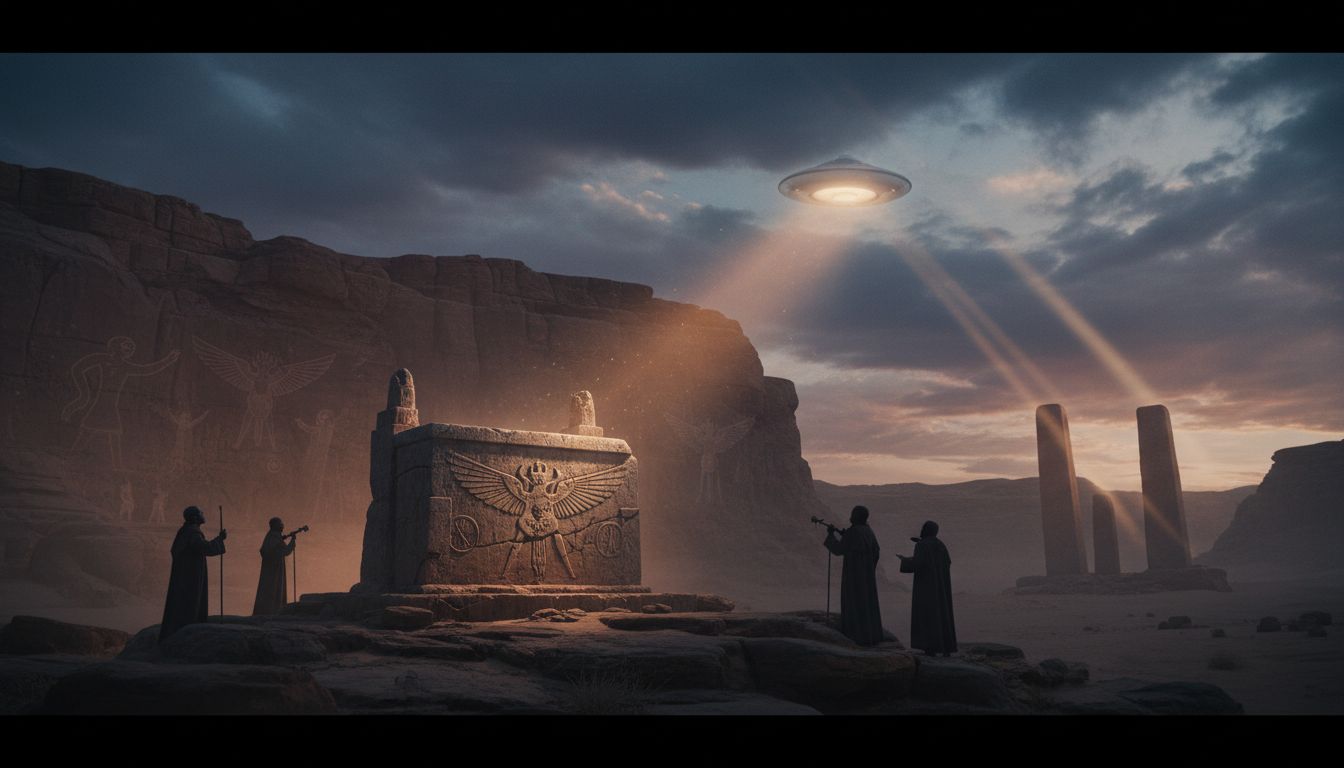
The biblical authors wrote from a worldview that assumed the existence of spiritual intelligences—angels, heavenly hosts, divine councils, and rebellious entities—that interact with human history. Texts such as Psalm 82, which depicts God judging a council of celestial rulers, and the Dead Sea Scrolls‑based reading of Deuteronomy 32:8‑9, which assigns each nation a “son of God” while reserving Israel for Yahweh, illustrate a cosmos populated by layered realms and intermediary beings. Similar concepts appear in Egyptian, Mesopotamian, and Canaanite mythologies, where gods, watchers, and spirits occupy the skies and the earth.
When modern witnesses describe luminous objects, intelligent pilots, or “beings in craft,” they are employing a vocabulary shaped by contemporary technology. Yet, as the article notes, these narratives echo ancient folklore: the same sense of awe, the perception of messages from beyond, and the experience of a hidden hierarchy of powers. This parallel suggests that the surge in UAP reports may be less about literal spacecraft and more about a cultural re‑awakening of long‑standing spiritual categories.
Scholarly Perspectives
Computer scientist and UFO researcher Jacques Vallée has long argued that contemporary UFO encounters resemble ancient mythic and spiritual experiences more than straightforward extraterrestrial visits. Vallée’s comparative analyses highlight recurring motifs—bright lights, sudden disappearances, and cryptic communications—that cut across millennia, implying a phenomenon that transcends a single explanatory model.
Biblical scholar Michael Heiser cautions Christians against interpreting Scripture through a post‑Enlightenment materialist lens. He emphasizes that the biblical text presupposes a supernatural reality, and that modern readers often “flatten” passages that ancient audiences would have understood as describing real spiritual actors. Heiser’s work underscores the risk of reducing the biblical worldview to purely naturalistic terms while simultaneously warning against sensational speculation that equates every UFO sighting with demonic activity.
Theological Implications for the Church
The article’s purpose is not to endorse every UFO claim nor to promote conspiracy theories; rather, it invites the Church to re‑engage with a richer theology of the unseen realm. By recognizing that the biblical narrative already accommodates unseen intelligences, believers can approach UAP reports with discernment, humility, and Christ‑centered sobriety. Heiser’s warning—that “the supernatural worldview of Scripture” should not be dismissed—serves as a reminder that spiritual vigilance is required when evaluating contemporary phenomena.
Looking Ahead
As UAP investigations continue to receive governmental and scientific attention, the intersection of ancient cosmology and modern technology offers a fertile ground for interdisciplinary study. Researchers from theology, anthropology, and aerospace fields are increasingly called upon to collaborate, ensuring that discussions remain objective, evidence‑based, and respectful of both scientific rigor and theological tradition. Whether future data reveal a physical origin, an interdimensional dimension, or a purely psychological construct, the conversation now benefits from a broader historical perspective—one that acknowledges humanity’s longstanding fascination with the unseen and the possibility that the language of “aliens” is simply a contemporary echo of age‑old spiritual concepts.