Overview
NASA astrophysicist Dr. Robin Corbet told reporters that, given the sheer number of stars and potentially habitable worlds in the Milky Way, “the odds that we are alone are vanishingly small.” Yet, despite this statistical confidence, Corbet warned that any extraterrestrial civilization that has detected humanity may deliberately choose not to make contact. The scientist’s remarks, made during a recent interview with the agency’s Astrophysics Division, echo long‑standing debates in the scientific community about why the cosmos appears silent despite the apparent abundance of life‑supporting environments.
Scientific Basis for the Claim
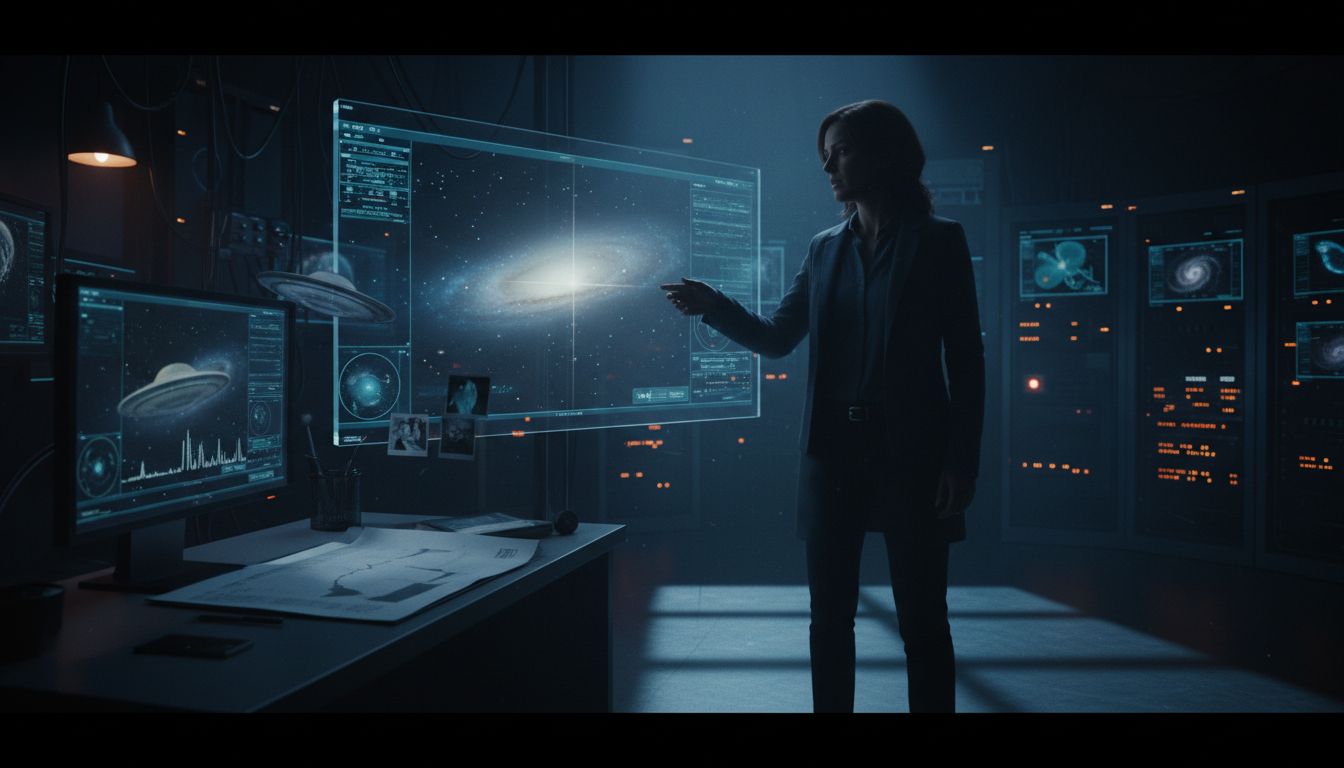
Corbet’s position rests on data gathered from a suite of NASA missions, including the Kepler and TESS telescopes, which have identified thousands of exoplanets—many of them Earth‑size and situated in their star’s “habitable zone.” “When you look at the catalog of exoplanets, you see a galaxy teeming with worlds that could, in principle, host life,” Corbet explained. He added that the Drake Equation, while speculative, suggests a non‑negligible number of technologically capable societies could exist today. However, he cautioned that the equation’s parameters remain uncertain, and that the lack of detected technosignatures—radio, laser, or other artificial emissions—means any such societies are either rare, short‑lived, or intentionally quiet.
Why the Silence May Be Deliberate
The most striking aspect of Corbet’s interview was his suggestion that an advanced alien civilization might choose not to call after observing humanity. He outlined two plausible scenarios. First, an extraterrestrial intelligence could have detected Earth’s early radio leakage—broadcast television, radar, and other emissions—and concluded that our species is still in a volatile, war‑prone stage, making contact risky. Second, he noted that any signal we might receive could be extremely faint, buried beneath cosmic background noise, and beyond the sensitivity of current detection technology. “It’s possible they are out there, listening, but the signal they send is simply too weak for us to notice with today’s instruments,” Corbet said.
Community Reaction and Skepticism
Corbet’s comments have reignited discussion among both astronomers and UFO researchers. SETI (Search for Extraterrestrial Intelligence) scientists welcomed the emphasis on “quiet” civilizations, noting that recent projects such as Breakthrough Listen are specifically designed to hunt for low‑power, narrow‑band signals that could indicate intentional, low‑profile communication. Conversely, some skeptics warned against drawing conclusions from a single interview. Dr. Sara Miller, a professor of astrophysics at the University of California, remarked, “Statistical arguments are compelling, but without empirical evidence—an actual detection—we remain in the realm of hypothesis.” She added that the “dreadful reason” phrasing could unintentionally fuel sensationalist speculation.
Looking Ahead
NASA plans to expand its search capabilities with the upcoming Nancy Grace Roman Space Telescope and the Laser Interferometer Space Antenna (LISA), both of which will improve sensitivity to faint electromagnetic and gravitational signatures. Corbet highlighted that these missions could help answer whether alien societies are simply silent by design or whether our detection methods need refinement. He concluded, “The universe may be full of observers; the challenge is to become better listeners.” As the scientific community refines its tools and models, the question of why we have not yet heard from the stars remains a central, and increasingly nuanced, focus of modern astrophysics.