The new two‑hour documentary released this week by former Air Force intelligence officer Richard Dot Doty and UFO historian Richard Dolan has reignited discussion about a little‑known chapter of the Cold War‑era UFO program. In the video, the two insiders trace a “shadow history” of intelligence work that began in the 1950s, when U.S. and Soviet agencies covertly monitored a narrow band of radio frequencies for anomalous signals. Doty, who once served in the Air Force’s “Special Investigations” unit, says the effort was “less about chasing flying saucers and more about listening for anything that didn’t fit the known spectrum.” The pair argue that the same monitoring net captured a series of transmissions that Chinese radar stations later identified as “orbital probes” passing over the nation’s airspace in the early 1970s.
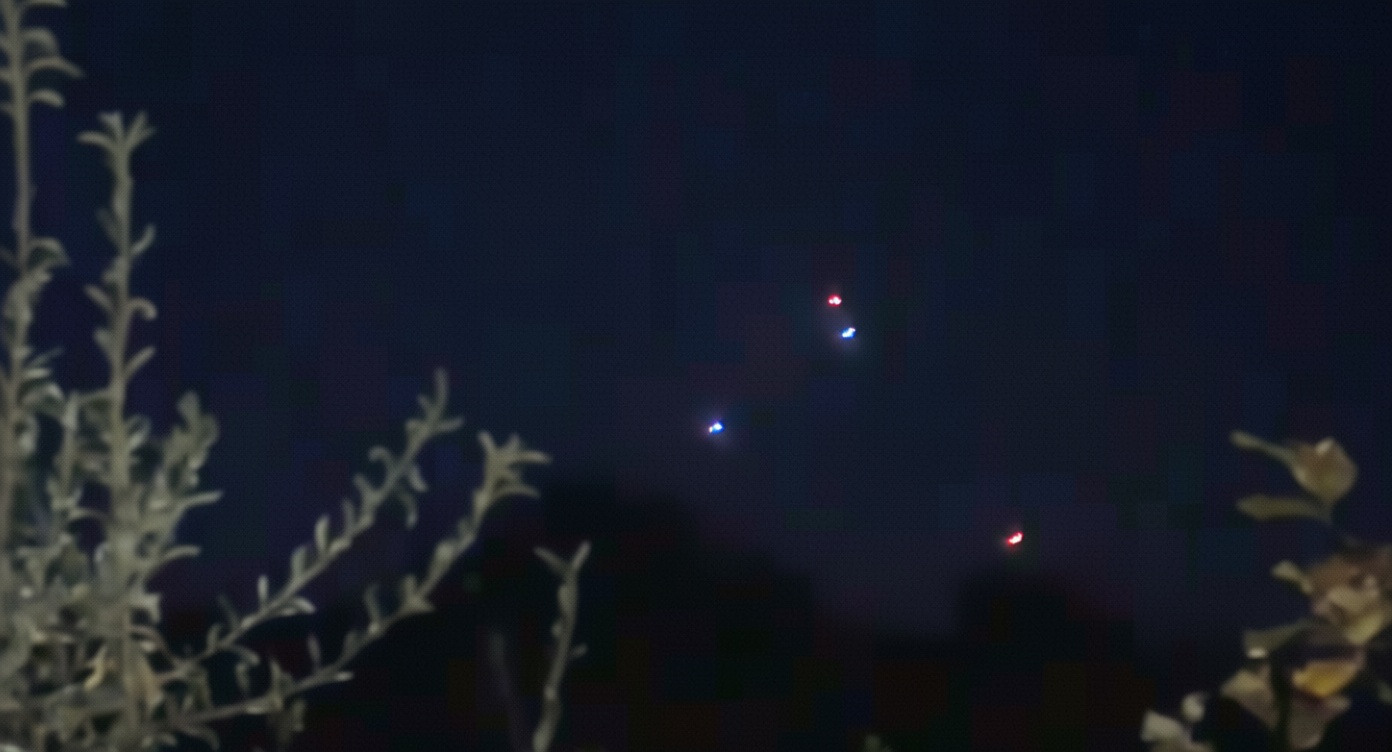
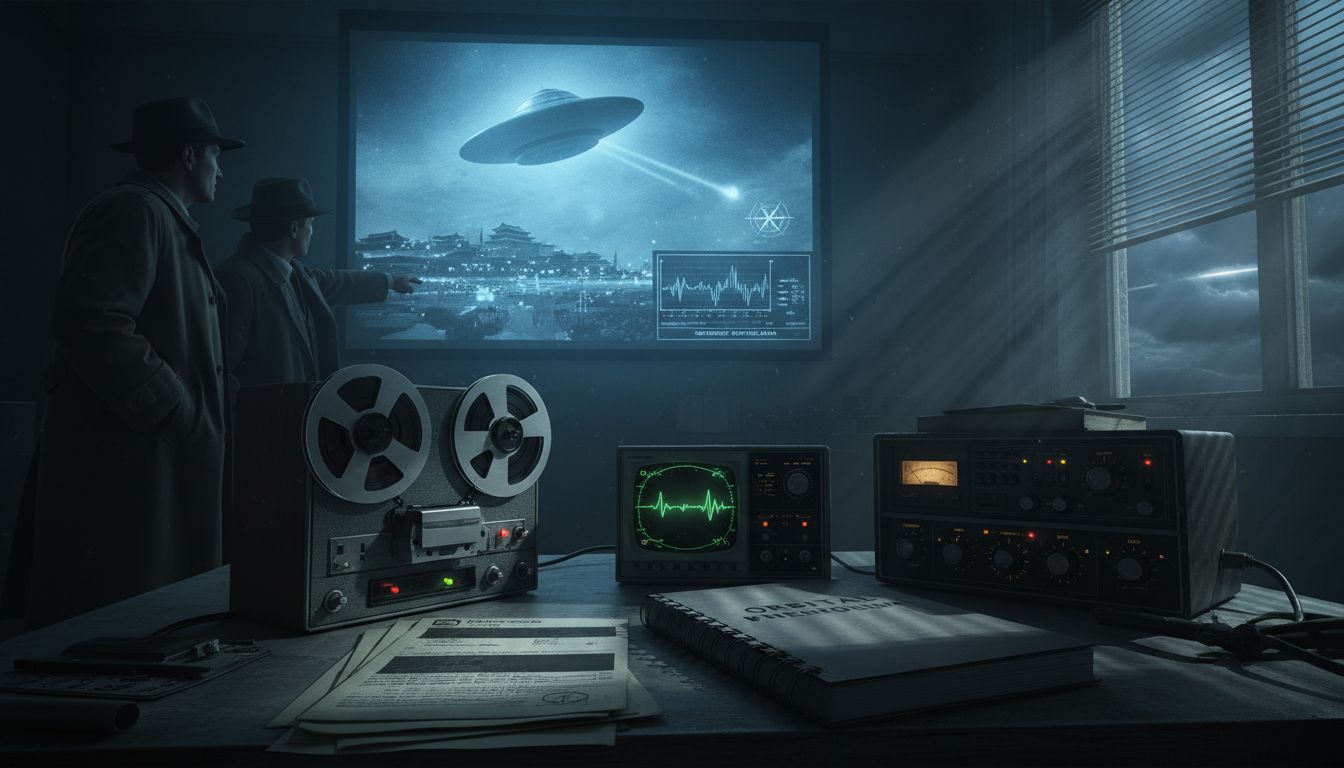
According to the documentary, Chinese military observers recorded at least three distinct objects that behaved unlike conventional satellites, maintaining stable orbits while executing rapid altitude changes and emitting low‑frequency bursts. The recordings, now allegedly stored in a declassified PLA archive, were reportedly shared with U.S. analysts via a back‑channel established after the 1972 Nixon‑Mao rapprochement. “What the Chinese called ‘unidentified orbital phenomena’ matched the frequency signatures we were already tracking,” Dolan notes, citing a now‑public excerpt from a 1974 joint briefing. The footage, though never released to the public, allegedly showed a luminous disc performing maneuvers that defied known propulsion technology.
The most controversial segment of the film deals with a 1994 crash site in the Gobi Desert of Mongolia, where a “metallic craft of unknown origin” is claimed to have been recovered by a combined Chinese‑Russian special‑operations team. Doty describes the operation as “one of the most tightly sealed incidents of the post‑Cold War era,” stating that the wreckage was disassembled and its components shipped to secret laboratories in both Beijing and Moscow for reverse‑engineering. While no verifiable photographs have surfaced, the documentary cites an anonymous former technician who recalled “seeing alloys that melted at temperatures far above any known aerospace material, and circuitry that seemed to operate on a principle we still cannot explain.” The claim aligns with earlier, unverified reports that Chinese engineers in the late 1990s began experimenting with propulsion concepts that resembled the alleged craft’s design.
The film also revisits the United States’ Advanced Aerospace Threat Identification Program (AATIP), the Pentagon office that was publicly disclosed in 2017. Dolan argues that AATIP’s later incarnation, the Unidentified Aerial Phenomena Task Force, inherited much of the data gathered from the earlier frequency‑monitoring missions and the Mongolian crash analysis. “The program was never about hiding the truth; it was about managing the flow of information,” Doty says, emphasizing that officials deliberately compartmentalized findings to prevent premature public panic while scientists worked to understand any potential technological breakthroughs. He points to a 2022 internal memo that instructed analysts to “release only what can be corroborated by multiple sensor modalities,” a policy that, according to the documentary, shaped the measured pace of modern disclosure.
The overarching theme of the documentary is the tension between controlled release and the inevitability of revelation. Both presenters suggest that the accumulation of data—from Chinese frequency interceptions to the Mongolian wreckage—created a “tipping point” that could no longer be contained within classified circles. As Dolan concludes, “When you have multiple nations independently confirming anomalous phenomena, the secrecy model collapses under its own weight.” While the video stops short of declaring definitive extraterrestrial involvement, it underscores how a series of technical observations and cross‑national exchanges have forced governments to confront the possibility that the sky may host technologies far beyond current human capability. The discussion invites further scholarly scrutiny and, perhaps, a more transparent dialogue between intelligence agencies and the public.