Overview
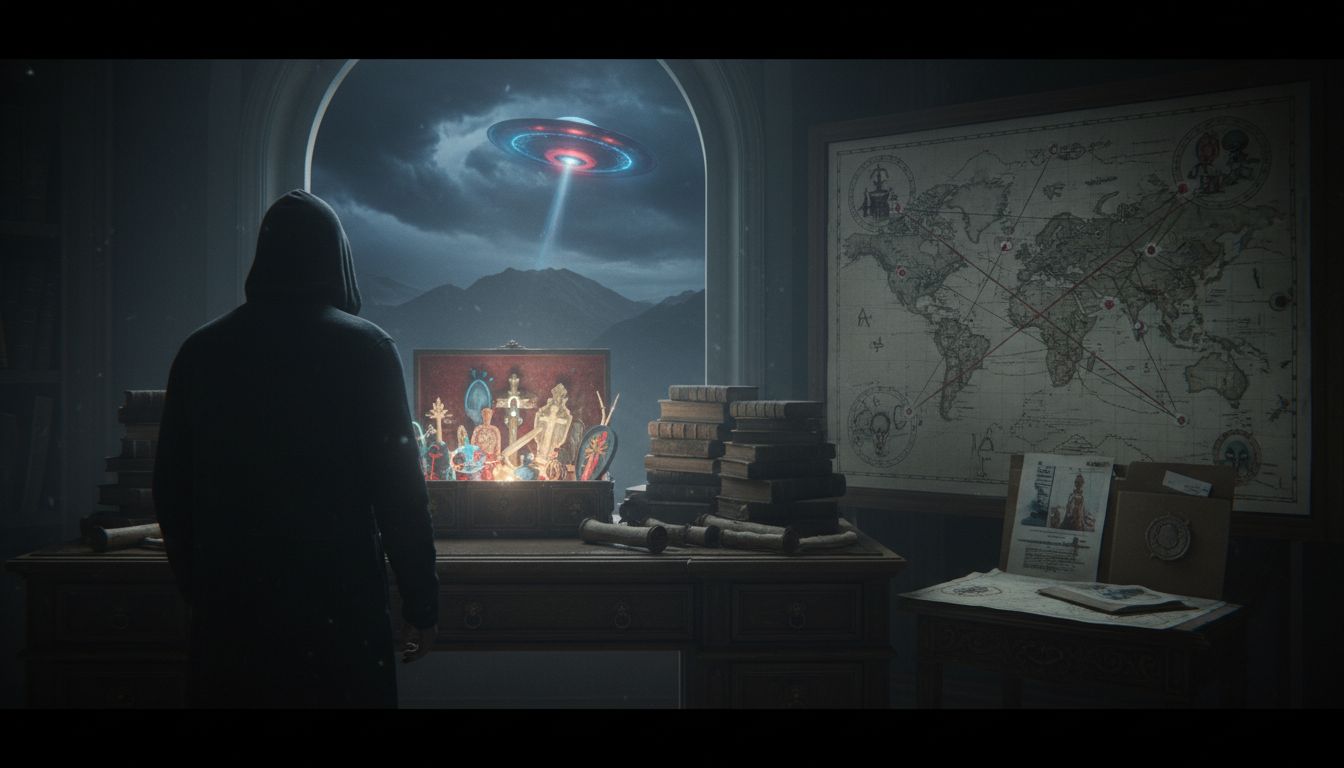
A wave of public interest in unidentified aerial phenomena (UAP) has resurfaced after a recent Truth Social post by former President Donald Trump, in which he announced that the Secretary of War and other agencies would begin “the process of identifying and releasing” government files on extraterrestrial matters. The announcement has reignited debates that have spanned centuries, linking modern UFO investigations to theological questions once raised by literary figures such as C.S. Lewis and contemporary Vatican scientists. While the political directive promises greater transparency, scholars caution that the flood of declassified material may raise more questions than answers.
Historical Context
The fascination with strange lights and “beings from the heavens” is not new. In a 1958 essay titled “Will We Lose God in Outer Space?”, Oxford scholar C.S. Lewis warned that each new scientific discovery would be seized by skeptics as “the basis for a new attack on Christianity.” Lewis argued that, after rigorous debate among theologians, scientists, and philosophers, the core issues—such as whether non‑human entities possess “rational souls”—remain unresolved. This sentiment echoes through the ages, from medieval chroniclers describing “angelic” sightings to 20th‑century UFO sightings that were often framed in religious language.
Recent Political Action
Trump’s post, shared on May 15, 2026, instructed the Secretary of War and relevant departments to “identify and release” any classified information pertaining to UAPs. The move follows a series of high‑profile releases by the Pentagon and the Office of the Director of National Intelligence, which have disclosed videos and encounter reports dating back to the 2000s. Government officials have indicated that a task force, originally created under the 2021 UAP Transparency Act, will now expand its scope to include historical documents that may have been archived under defense or intelligence classifications. The administration has not specified a timeline, but insiders suggest a phased release could begin within the next six months.
Scientific & Theological Perspectives
The Vatican’s own scientific community has weighed in on the extraterrestrial question. In 2014, Jesuit astronomer Brother Guy Consolmagno published Would You Baptize an Extraterrestrial?, stating, “Neither I, nor anyone I know, has any evidence that extraterrestrials exist.” As an “Official Astronomer” of the Vatican Observatory, Consolmagno emphasizes a methodological caution: any claim of alien life must meet the same evidentiary standards as terrestrial discoveries. Meanwhile, contemporary theologians note that the “angel‑demon” framework historically used to interpret anomalous aerial events may persist, influencing how new data are socially digested. Dr. Elaine Harper, professor of religious studies at the University of Chicago, observes that “when the unknown appears, societies often map it onto existing cosmologies—whether angelic, demonic, or extraterrestrial.”
Looking Ahead
The convergence of political, scientific, and religious discourse suggests that the upcoming file releases could become a catalyst for broader cultural reflection. Analysts warn that without rigorous contextualization, sensational headlines may dominate, obscuring the nuanced realities of UAP research. As the task force prepares its findings, experts recommend a multidisciplinary review panel that includes astronomers, defense analysts, ethicists, and theologians to evaluate the material responsibly. Whether the newly disclosed documents will substantiate claims of extraterrestrial visitation—or simply illuminate bureaucratic processes—remains to be seen. What is clear, however, is that the dialogue about humanity’s place in the cosmos is once again at the forefront of public consciousness, echoing debates that have persisted for centuries.


