Overview
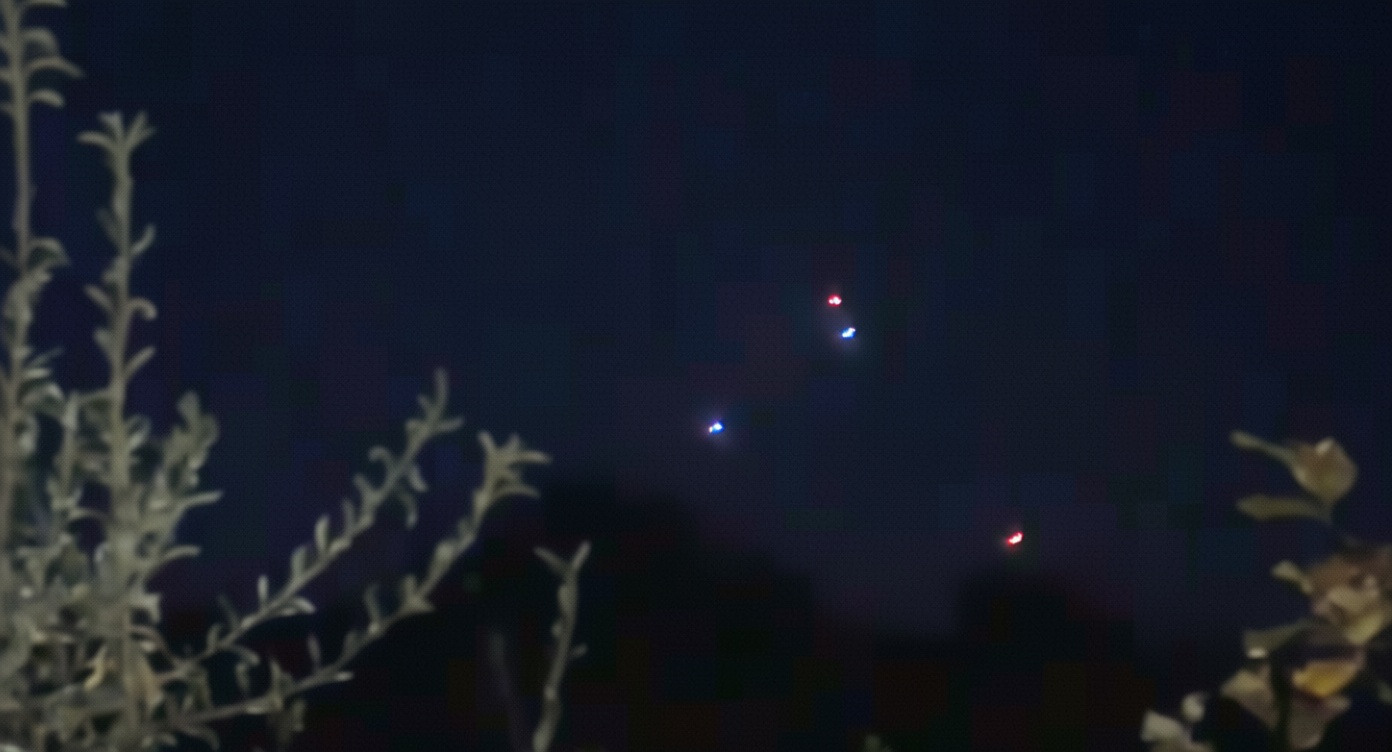
A new image, dubbed “Chandelier,” has resurfaced on the r/UFOs subreddit, purportedly taken from a deleted Indonesian military Facebook post. The photograph allegedly shows an unidentified aerial phenomenon (UAP) hovering over the Natuna Islands, captured by a forward‑looking camera aboard a CN‑235 maritime patrol aircraft (MPA). The post’s author links the image to earlier “leaks” circulated by documentary filmmaker Jeremy Corbell and the YouTube channel Strange Mysteries, suggesting a pattern of undisclosed military footage entering the public domain.
Source and Claim
According to the Reddit submission, the image originated from a CN‑235 MPA operated by the Indonesian Navy. The aircraft’s surveillance system routinely records video for maritime domain awareness, and the user claims the original post was removed after a brief appearance on the Indonesian Defense Ministry’s official Facebook page. The Redditor writes that the photo was “deleted shortly after posting” and that the screenshot was saved before removal. No direct link to the original post is provided, and attempts to retrieve the content from the Ministry’s page return a 403 error, indicating restricted access.
The “Chandelier” moniker comes from the object’s apparent shape: a cluster of bright, filament‑like lights arranged in a radial pattern, reminiscent of a decorative chandelier suspended in the night sky. The image’s resolution is low, but the illumination appears to be self‑generated, with no visible propulsion plume or conventional aircraft markings. The Redditor’s caption reads, “Another supposed leak from a CN‑235 MPA camera—looks like the ones Corbell and Strange Mysteries have been sharing.”
Context: Prior Leaks and the CN‑235 Platform
The claim echoes previous releases of alleged UAP footage. In 2020, Jeremy Corbell published a video allegedly captured by a U.S. Navy fighter jet’s targeting system, sparking renewed public interest in military‑recorded anomalies. Strange Mysteries, a channel that curates obscure UFO sightings, has similarly posted “leaked” videos from various air forces, often citing “deleted social‑media posts” as the source. Critics have repeatedly highlighted the difficulty of authenticating such material, noting that low‑resolution screenshots can be easily manipulated.
The CN‑235 is a twin‑engine turboprop aircraft employed worldwide for maritime patrol, surveillance, and transport. Its onboard electro‑optical/infrared (EO/IR) sensors are capable of night vision and thermal imaging, making them suitable for detecting small vessels and, inadvertently, any anomalous aerial objects. Indonesia’s extensive archipelagic waters, especially around the Natuna Islands, are a hotspot for both legitimate maritime activity and unverified aerial sightings, given the region’s strategic significance and frequent military patrols.
Verification Challenges
Independent verification of the “Chandelier” image faces several hurdles. First, the original file is unavailable; the Reddit post offers only a compressed screenshot, limiting forensic analysis of metadata such as timestamp, sensor specifications, or geolocation tags. Second, the Indonesian Ministry of Defense has not issued a statement confirming or denying the existence of the deleted post. In past instances, Indonesian officials have occasionally released footage of unidentified objects—most notably a 2021 video of a luminous object over the Java Sea—only to later attribute it to camera artifacts or atmospheric phenomena.
Experts in aerospace imaging caution that lens flare, sensor blooming, or reflections from aircraft structures can produce chandelier‑like patterns, especially when recording bright sources such as the moon or city lights at low altitude. Without access to raw sensor data, it remains speculative to assert that the object is a genuine UAP rather than an optical anomaly.
Implications and Next Steps
If the image does originate from a legitimate Indonesian military sensor, it would add to a growing catalog of non‑U.S. UAP recordings, underscoring that the phenomenon is not confined to any single nation’s airspace. However, the lack of corroborating evidence—such as radar tracks, multiple sensor angles, or official acknowledgment—means the claim remains unsubstantiated. Researchers and journalists are urged to request the original footage through formal channels, such as Indonesia’s Freedom of Information Act provisions, and to compare the visual with known atmospheric and technical artifacts.
For now, the “Chandelier” image serves as a reminder of the information gap that often surrounds military‑captured UAP data. While the public’s appetite for such material is high, responsible reporting demands a clear distinction between verified evidence and speculative leaks. As the discourse evolves, transparent collaboration between defense agencies, scientific institutions, and the media will be essential to move the conversation beyond anecdote toward rigorous analysis.