
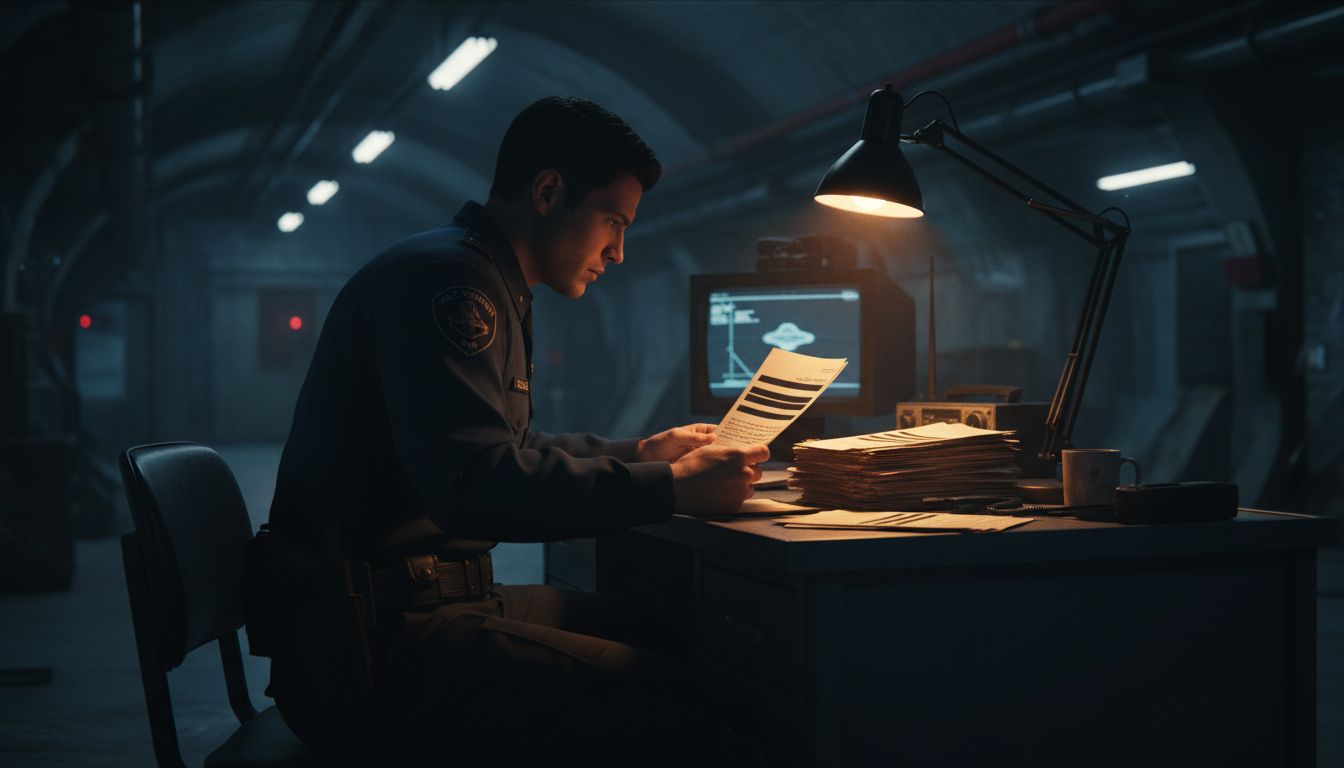
The latest installment of the “DEBRIEFED” podcast, released on November 7, 2025, revisits Chapter Five of Nick Redfern’s controversial volume NASA Conspiracies. In that chapter, Redfern recounts the story of a former Wackenhut security guard who, while assigned to protect classified material at the Nevada test site commonly known as Area 51, allegedly read a set of internal reports describing the recovery of seventeen non‑human entities. According to the guard’s account, the documents detailed a series of invasive experiments on the beings and even claimed that the suits surrounding them exhibited signs of autonomous activity.
Redfern, a prolific author of UFO‑related literature, has long drawn criticism for blending documented incidents with speculative interpretation. His narrative in NASA Conspiracies relies heavily on anecdotal testimony and unverified paperwork. The guard’s identity has never been disclosed, and the purported documents have not been produced for independent analysis. In the podcast, host Michael “Mick” Alvarez notes, “We have no way of confirming the authenticity of those files, but the story aligns with a pattern of alleged ‘living suit’ phenomena that have surfaced in other whistle‑blower accounts over the past two decades.” The episode does not present the original documents, instead summarizing their alleged contents.
The claim of seventeen recovered beings adds to a growing list of alleged extraterrestrial recoveries tied to the secretive Groom Lake facility. Historically, the U.S. government has acknowledged the existence of classified aircraft testing programs at Area 51, but it has never confirmed any non‑human occupants. The notion of “living suits” echoes earlier reports from the 1990s, such as the alleged “Mysterious Metallic Objects” described by former contractor Paul Miller, which were said to respond to environmental stimuli. While these stories have fueled public fascination, they remain unsupported by verifiable evidence, and the Department of Defense has consistently classified any related material under national security exemptions.
The DEBRIEFED episode draws much of its material from a YouTube channel called “Area52 Investigations,” which has amassed a sizable following and frequently publishes video essays on alleged UFO incidents. The channel’s content, like the blog post on the “Information Machine” site that accompanied the episode, presents the narrative without offering primary source documentation. Media analysts caution that the reliance on secondary platforms can amplify uncorroborated claims. “When a story moves from a private memo to a podcast and then to a YouTube video, each step can introduce distortion,” says Dr. Elaine Harper, a researcher at the Center for Aerospace Policy Studies.
Nevertheless, the episode has sparked renewed discussion among UFO researchers and skeptics alike. Some commentators view the guard’s alleged curiosity as a plausible scenario—security personnel occasionally encounter highly restricted files and may be tempted to read them. Others argue that the lack of concrete evidence renders the story indistinguishable from myth. As the conversation continues, the broader issue remains: the balance between transparency about government‑run aerospace programs and the protection of genuinely classified information. Until the alleged documents surface in a verifiable format, the claim of seventeen alien beings and their “alive” suits will stay within the realm of speculation, serving as yet another chapter in the long‑standing saga of Area 51 lore.


