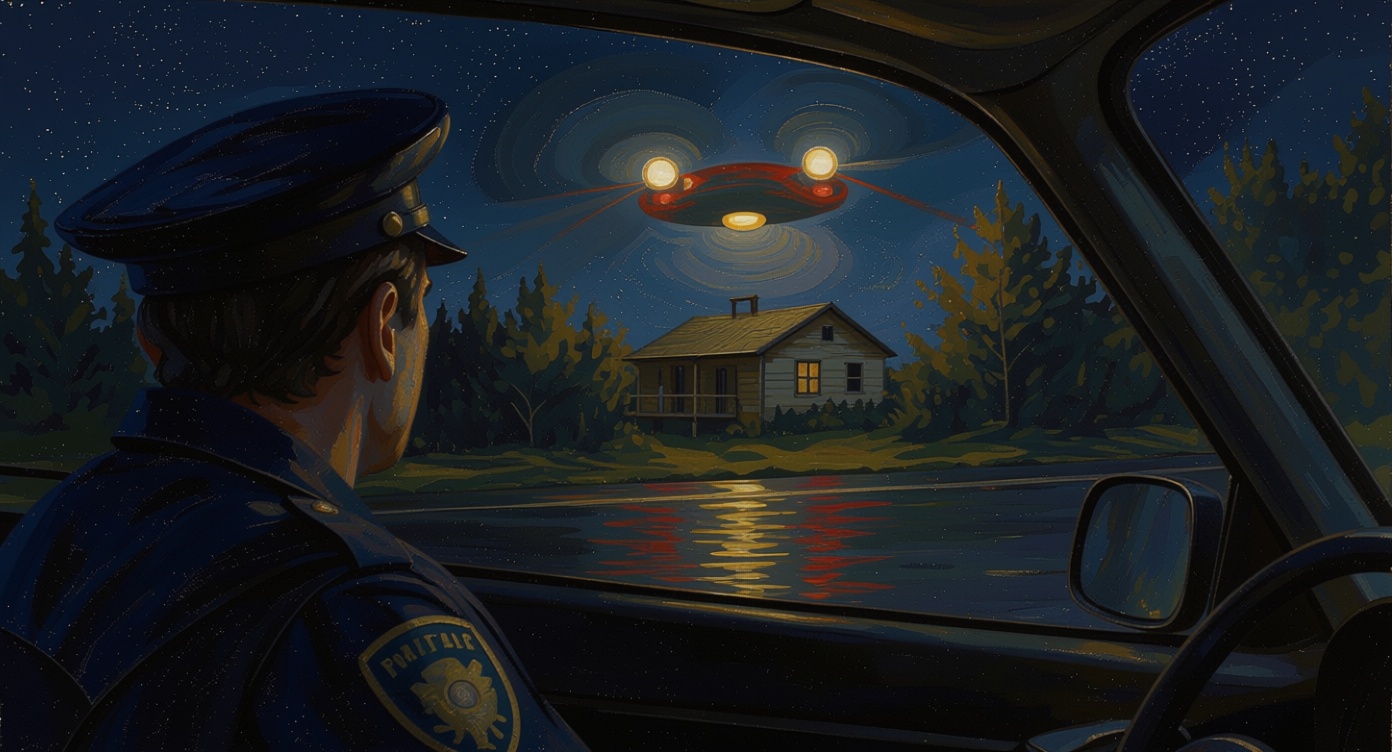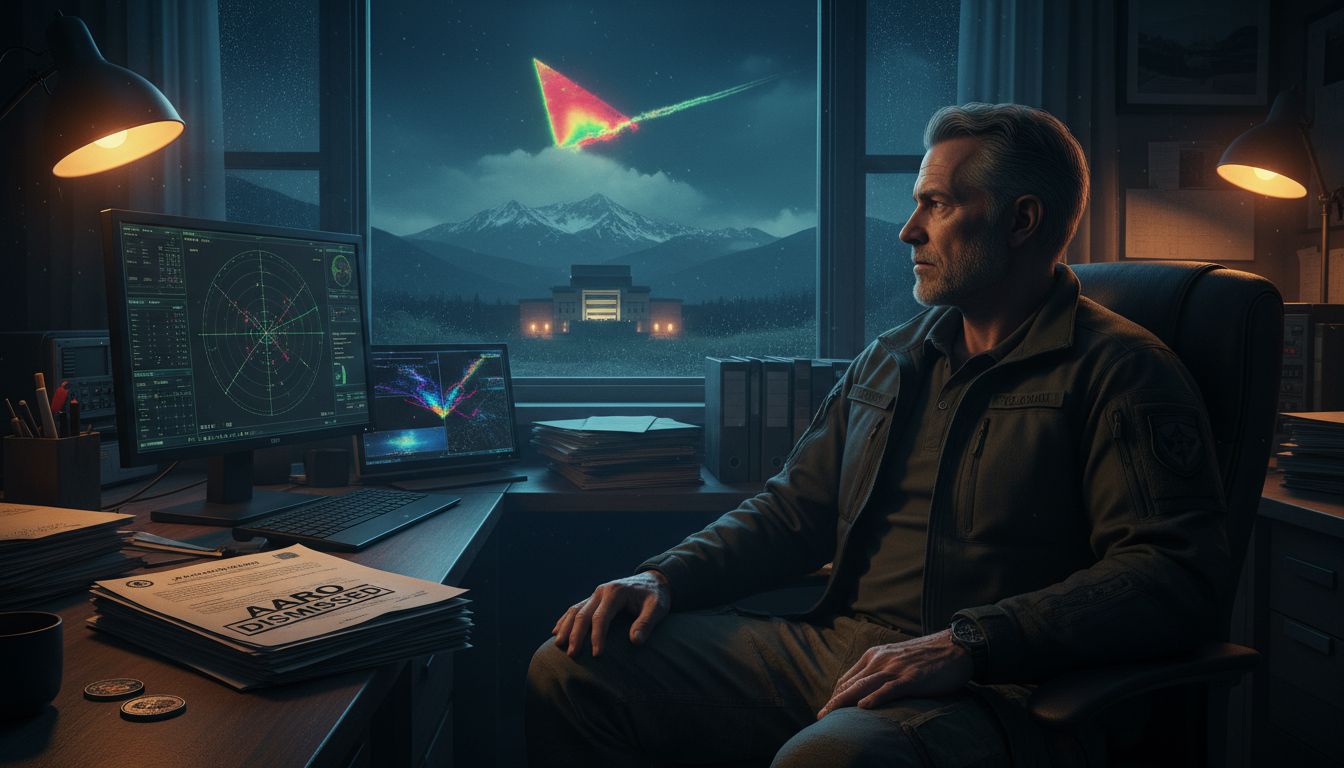
A recent interview with former Army intelligence officer Caison Best has brought new attention to the ongoing debate surrounding Unidentified Aerial Phenomena (UAP), as he recounted a dramatic encounter involving a massive UFO reportedly vanishing over NORAD airspace in 2022. According to Best, the incident was witnessed by multiple military personnel and corroborated by advanced sensor data—including FLIR (forward-looking infrared) and radar—raising fresh questions about the U.S. government’s handling of such cases.
Best, who served with the 82nd Airborne and held a role in military intelligence, described the event as occurring during a routine surveillance operation near NORAD, the North American Aerospace Defense Command. He explained that both visual observation and sophisticated detection systems tracked the object before it disappeared without warning, leaving seasoned personnel stunned. "We had multiple eyes on it, and the data was clear," Best said during the interview. "Then, it just vanished. No conventional aircraft can do that."
The report was promptly forwarded to the All-domain Anomaly Resolution Office (AARO), the Pentagon’s task force responsible for investigating UAP incidents. However, Best claims that AARO dismissed the report without further inquiry. This echoes ongoing frustrations among military witnesses who feel their accounts are not being given due consideration. The lack of follow-up has fueled concern among some in the defense community that important incidents are being downplayed or ignored, potentially at the expense of national security.
Adding to the controversy, Best stated that he witnessed the removal of decades’ worth of UAP files from military records following the high-profile congressional testimony of whistleblower David Grusch in 2023. Grusch’s testimony, which alleged a longstanding government cover-up regarding UAP and possible recovered non-human craft, prompted increased scrutiny of defense protocols and transparency. Best’s observations suggest that, rather than fostering greater openness, the government may be restricting access to historical UAP data in the wake of mounting public and legislative interest.
This account is the latest in a series of testimonies from credible military sources, many of whom have reported encounters with unidentified objects exhibiting extraordinary capabilities—such as extreme acceleration, lack of visible propulsion, and the ability to operate in multiple domains (air, sea, and possibly space). As in the well-documented cases involving Navy pilots on the U.S. East Coast, Best’s experience underscores the challenge these phenomena pose to conventional defense systems and the questions they raise about potential adversary technologies or other unknown sources.
While some officials and experts continue to urge caution—emphasizing the need to rule out misidentification or classified domestic programs—others argue that the persistent pattern of unexplained sightings warrants greater transparency and investigation. As the Senate and defense agencies prepare further reports on UAP activity, accounts like Caison Best’s highlight the enduring mystery and the stakes involved in understanding what, precisely, is traversing sensitive U.S. airspace.