Overview
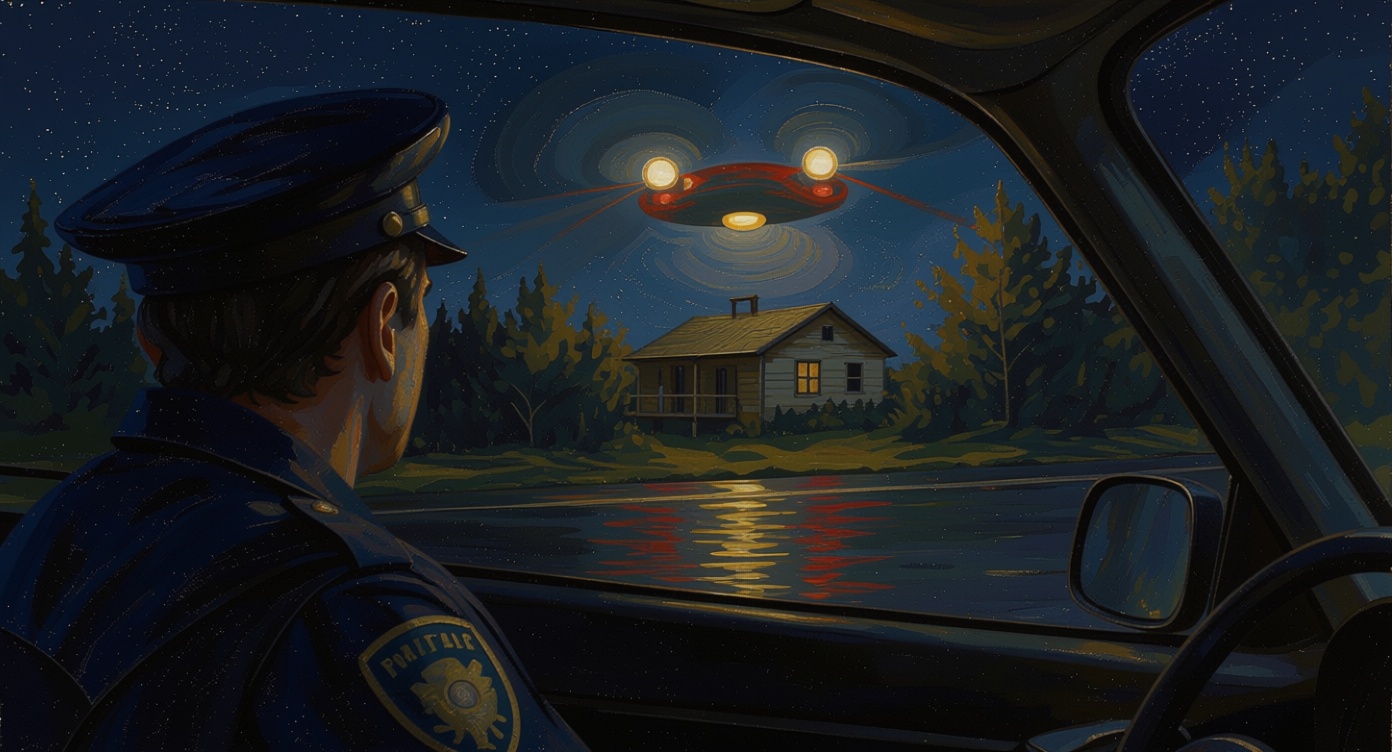
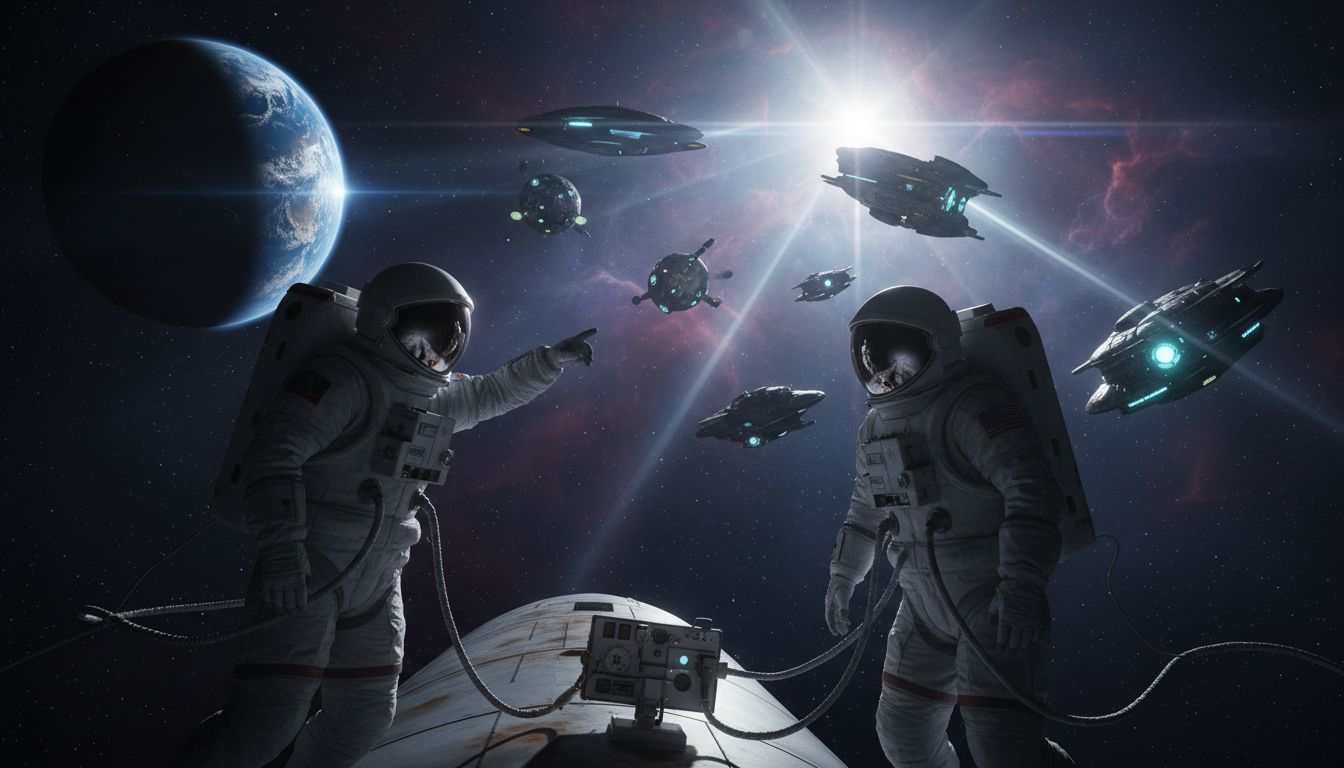
Astronauts who have spent months in orbit or walked on the Moon have occasionally reported seeing objects that they could not readily identify. The accounts, collected from missions ranging from Apollo 16 in 1972 to a Space Shuttle untethered EVA in 1984, have resurfaced amid renewed government interest in unidentified aerial phenomena (UAP). While the sightings do not constitute proof of extraterrestrial technology, they add a layer of credibility to the broader discussion because the observers are trained to note and record anomalous visual events with scientific rigor. The recent posting of these testimonies on the #UFOTwitter community has prompted analysts and policymakers to revisit the historical record and consider the implications for future disclosure.
Eyewitness Accounts
Charles Duke, the Apollo 16 lunar module pilot, described a “mysterious light” that appeared during his moonwalk, noting that it “didn’t behave like any known spacecraft or natural phenomenon” and lingered for several seconds before vanishing. In a 2023 interview, Duke said, “It was a bright, steady glow that seemed to hover just beyond the horizon—nothing I could explain at the time.” Similarly, Bruce McCandless, who performed the first untethered spacewalk on STS‑41B, reported seeing “something” outside his helmet visor while maneuvering the Manned Maneuvering Unit. He later recalled, “I could see a faint, disc‑shaped outline moving at a speed that didn’t match any of our debris or satellite tracks.” The list also includes Gordon Cooper, Mercury‑Atlas 9 veteran, who claimed to have observed a “flying saucer” over a ground tracking station during his 1963 orbital flight. These reports share common descriptors—unusual speed, erratic motion, and lack of identifiable propulsion—suggesting that the observers were encountering visual phenomena that fell outside standard aerospace explanations.
Historical Context
The phenomenon of UFO sightings predates human spaceflight, but the 1960s space race amplified public and scientific attention. As NASA and the Soviet Union launched crews beyond the atmosphere, reports of strange lights and objects began to appear in mission debriefs and astronaut memoirs. A 1965 NASA internal memo referenced “unidentified luminous objects” observed near the Gemini 7 orbit, noting that the sightings were “recorded for further analysis.” The Cold War era also saw heightened radar activity and atmospheric re‑entry events that could be mistaken for extraterrestrial craft. Nonetheless, the presence of trained observers in space introduced a new data point: direct visual confirmation from individuals accustomed to differentiating spacecraft, debris, and natural phenomena. This historical backdrop frames the current conversation, linking past anecdotal reports with today’s more systematic UAP reporting mechanisms established by the Department of Defense.
Credibility and Scientific Scrutiny
Astronauts are not lay witnesses; their training emphasizes precise observation, documentation, and cross‑checking with instrument data. John Young, former chief of NASA’s astronaut office, has publicly expressed interest in unexplained aerial phenomena, stating that “if a trained pilot sees something that doesn’t fit known parameters, it deserves a serious look.” Independent researchers have examined mission transcripts, video footage, and telemetry to verify whether the reported objects could be accounted for by known satellites, space debris, or optical artifacts. In most cases, the data remain inconclusive, leaving the sightings classified as “unidentified” rather than “extraterrestrial.” The scientific community stresses that without corroborating sensor data—such as radar signatures or spectroscopic analysis—the anecdotes alone cannot substantiate claims of alien technology. Nevertheless, the consistency of descriptions across multiple missions adds weight to the argument that a subset of UAPs merit further investigation.
Implications for Humanity
If future investigations confirm that some of these space‑based sightings are of non‑human origin, the ramifications would extend far beyond aerospace engineering. Policy analysts warn that disclosure could influence international security frameworks, stimulate new scientific research, and reshape public perception of humanity’s place in the cosmos. Even absent definitive proof, the mere acknowledgment that highly trained professionals have encountered unexplained phenomena encourages a more transparent approach to data collection and sharing. As the Pentagon’s UAP Office expands its mandate and NASA plans dedicated sensor suites for deep‑space missions, the legacy of astronaut testimonies may help shape the protocols that govern how such encounters are recorded, analyzed, and, if necessary, communicated to the public.
Looking Ahead
The renewed focus on astronaut UFO reports underscores a broader shift toward systematic, evidence‑based inquiry into anomalous space events. Upcoming Artemis missions, scheduled to return humans to the lunar surface, will carry advanced optical and infrared cameras capable of capturing high‑resolution data on any unexpected objects. Moreover, the International Space Station’s continuous crew presence offers a unique platform for real‑time observation and reporting. As these technologies come online, the scientific community hopes to move the conversation from anecdotal speculation to verifiable data, ensuring that any future revelations about unidentified phenomena are grounded in rigorous analysis rather than sensationalism.