Overview
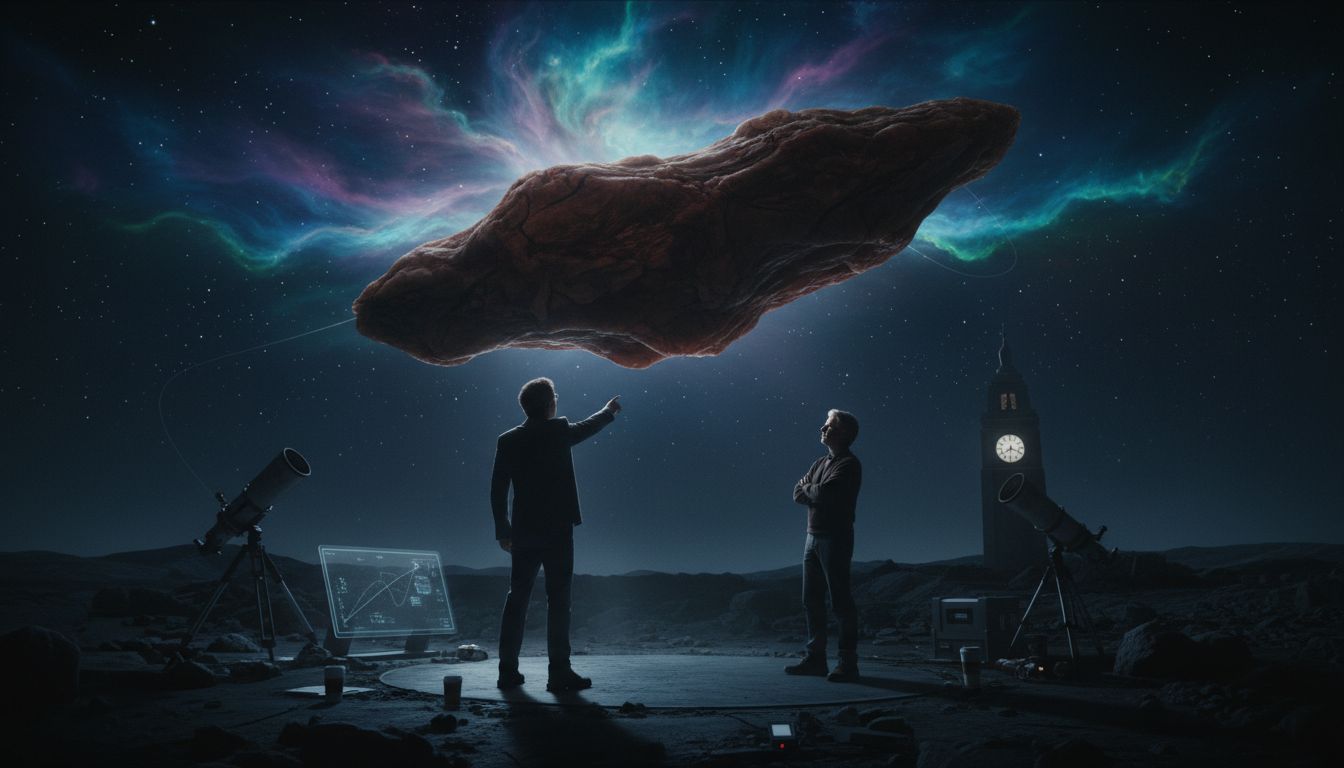
A high-stakes wager has brought together two prominent figures in the scientific community, pitting renowned Harvard astronomer Avi Loeb against professional skeptic Michael Shermer in a $1,000 bet over the discovery of extraterrestrial life by the end of the decade. The terms of their agreement, registered on the Long Now Bets platform, require ironclad scientific confirmation of alien intelligence by December 31, 2030. The outcome promises to either validate growing optimism in the search for life beyond Earth or reinforce skepticism rooted in decades of unfulfilled predictions.
The Terms of the Bet
The wager is more than a friendly challenge: the rules are explicit and stringent. For a win, at least two out of three major scientific organizations—NASA, the National Science Foundation, or the American Astronomical Society—must officially confirm the detection of extraterrestrial intelligence. As the video explains, “It’s not enough for someone to claim they saw a UFO or post a blurry video online. The victory requires irrefutable data signed off by major scientific bodies.” The criteria for discovery are broad, encompassing anything from “physics-defying artifacts” to interstellar technology fragments or even alien biological forms found on Earth, so long as their non-human origin is indisputable.
This careful standard aims to avoid the endless debates that often follow ambiguous sightings or unofficial announcements: “Either the science signs off with irrefutable data, or nothing happens.” The burden of proof lies heavily on those, like Loeb, who believe contact is imminent—a silence from the cosmos by 2030 would hand victory to the skeptics.
Competing Visions: Optimism vs. Skepticism
Avi Loeb’s optimism is grounded in emerging technology and recent discoveries. He cites the significant advances in observational equipment—such as the Rubin Observatory and the Galileo Project’s global telescope network—as game-changers in the hunt for alien technosignatures. Loeb references the discovery of interstellar objects like Oumuamua and the mysterious “TR,” which reignited scientific debate about visitors from beyond our solar system. His statistical argument is compelling: with a galaxy full of ancient, potentially life-bearing systems, “civilizations had billions of years to send probes, and we may finally have the tools to detect their cosmic messages.”
On the other side stands Michael Shermer, whose skepticism is shaped by a long history of unmet predictions. Shermer has witnessed “decades of people promising imminent alien disclosure that never materializes,” leading him to dismiss the current wave of enthusiasm as another cycle of excitement without evidence. He is notably critical of recent U.S. congressional hearings on UFOs, where, despite dramatic testimonies, “no hard evidence is ever produced, only claims of secrecy and threats.” For Shermer, the wager is a challenge to believers: if they are so certain of impending disclosure, they should be willing to back it up with real stakes.
The Scientific Tradition of Wagers
The Loeb-Shermer bet is the latest in a long tradition of scientists settling debates through wagers. Such bets date back to the 19th century, with notable examples like Alfred Russel Wallace’s successful wager proving the Earth’s curvature against a flat-earther, and Stephen Hawking’s famous bet on black holes. These challenges are seen as a way to inject accountability and a sense of fun into profound scientific disagreements, while also pushing both sides to clarify the terms and standards of proof.
Implications for Science and Society
Beyond the personal stakes, the Loeb-Shermer bet reflects the broader tension in astrobiology and the search for extraterrestrial intelligence: how to balance open-minded inquiry with rigorous scientific standards. Whether or not the coming years produce a breakthrough, the wager underscores the need for extraordinary evidence in support of extraordinary claims—a principle that remains at the heart of scientific progress. As the countdown to 2030 begins, the world will be watching to see whether the cosmos finally yields its secrets, or if humanity must wait a little longer for definitive proof that we are not alone.