Overview
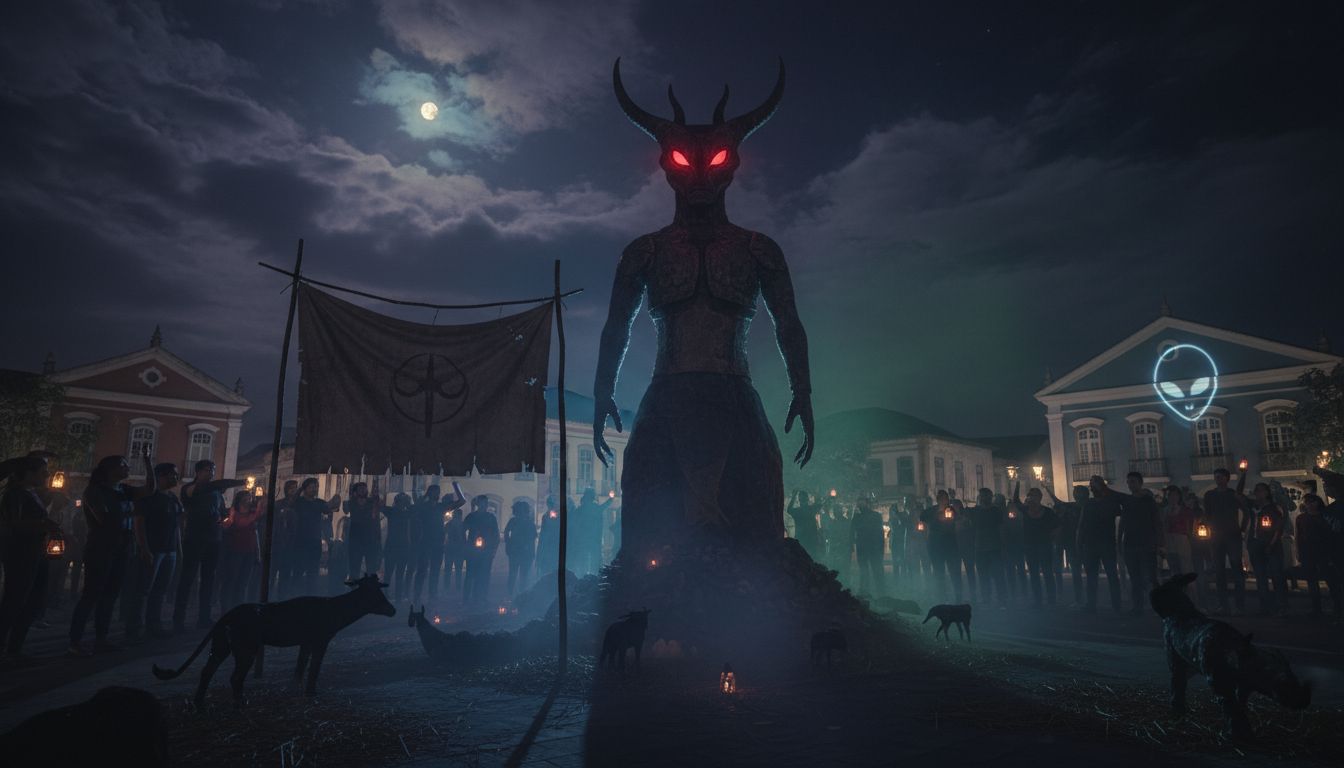
The small city of Varginha, Minas Gerais, marked the 30th anniversary of an episode that still divides Brazil’s scientific community and fuels local folklore. On the night of 20 January 1996, several residents reported a series of unexplained events—strange lights, the death of livestock, and encounters with a creature described as “horned with red eyes.” The episode, popularly known as the “Varginha UFO incident,” has become a cultural touchstone, earning the town the nickname “Brazil’s UFO capital.” A bronze statue of the alleged alien now stands in the town square, a reminder that the story remains part of everyday life.
The 1996 Incident
According to contemporary police reports, three teenage girls first saw a bright, disc‑shaped object hovering over a farm near Varginha. Within hours, local authorities were called to investigate a series of animal deaths—cattle and dogs found dead with puncture‑like wounds and blood loss. The most widely circulated testimony came from two municipal workers who claimed to have encountered a short, bipedal being, approximately one meter tall, with a large head, prominent horns, and glowing red eyes. Witnesses said the creature emitted a foul, “rotten‑egg” odor and fled when approached. A police officer who allegedly handled the creature later fell ill and died, a detail that has been repeated in many retellings, though official records of his death remain ambiguous.
Aftermath and Controversy
The incident prompted an immediate response from Brazil’s military police and the federal Ministry of Defense, which dispatched a special investigative team. Their official statement concluded that the sightings could be attributed to “misidentifications of conventional aircraft and terrestrial fauna.” However, the lack of a comprehensive forensic report on the alleged creature and the unexplained animal deaths left a vacuum that conspiracy theorists quickly filled. Researchers from the Brazilian Center for the Study of Unidentified Phenomena (CECU) have cited the Varginha case in academic papers, noting that the convergence of multiple witness accounts and physical evidence—such as unexplained burns on the ground—warrants further scientific scrutiny. Skeptics, including physicist Dr. Carlos A. Ribeiro, argue that the episode reflects a classic case of mass hysteria amplified by media sensationalism.
Community Memory
Three decades later, Varginha’s residents remain divided. Local business owner Marcos Silva, whose family ran a souvenir shop during the 1990s, recalls, “We saw a sudden surge of tourists, journalists, and UFO enthusiasts. It changed our town overnight.” Meanwhile, retired police officer Ronaldo Pereira, who was on duty that night, maintains that “the evidence we collected was inconclusive, but the fear was very real.” The city council, capitalizing on the notoriety, commissioned a 15‑meter bronze sculpture of the alleged alien in 2015, which has become a modest tourist draw. Annual gatherings on the incident’s anniversary feature panel discussions, documentary screenings, and a modest market for memorabilia.
Looking Forward
As Brazil prepares its next national UFO research program, officials have pledged to revisit historic cases, including Varginha, with modern investigative tools such as high‑resolution satellite imagery and DNA analysis of alleged biological samples. The Ministry of Science, Technology and Innovation announced a pilot study in 2024 to re‑examine the 1996 animal deaths, hoping to determine whether they were caused by known pathogens or something else. Whether future research will validate any of the more extraordinary claims remains uncertain, but the enduring public interest underscores a broader societal fascination with the unknown. For Varginha, the 30‑year milestone is less a celebration of definitive answers and more a reminder that the line between folklore and fact continues to blur in the collective imagination.


