Overview
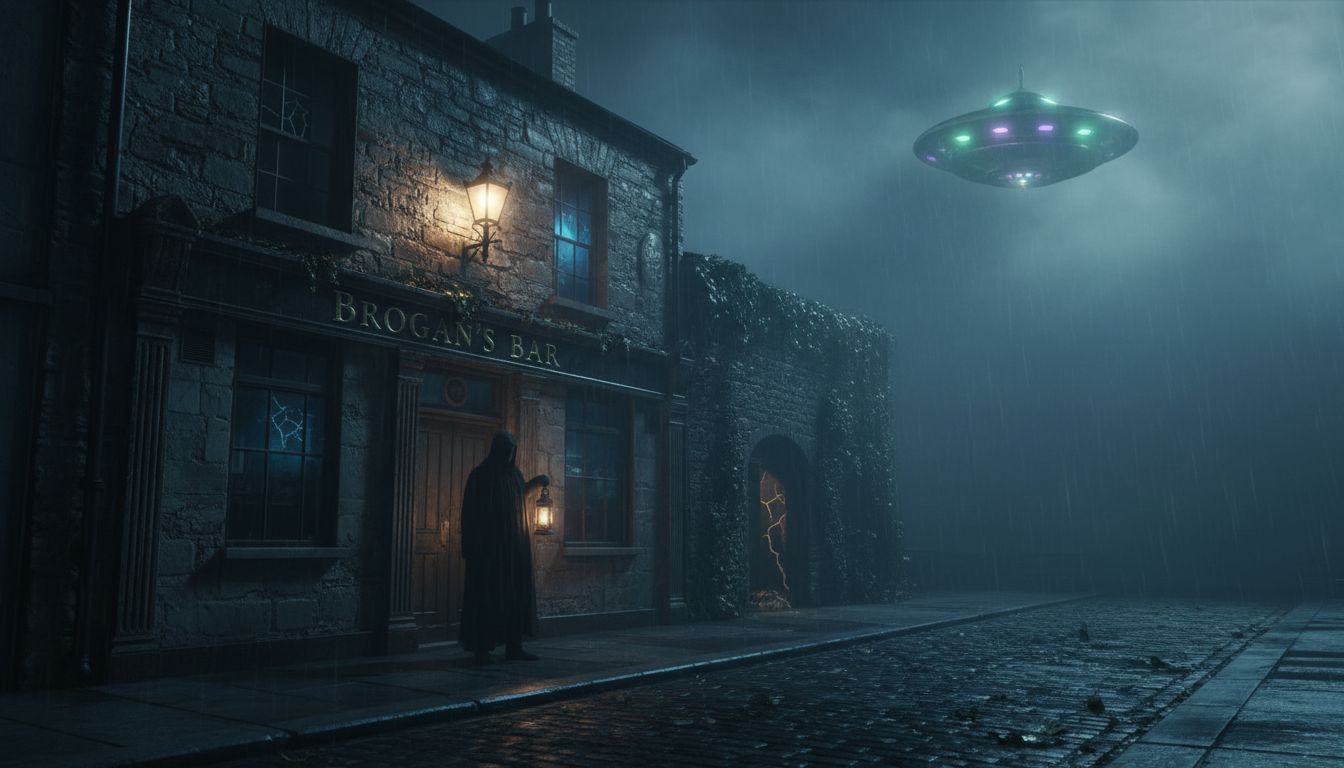
Brogan’s Bar, a long‑standing public house on Dublin’s bustling Dame Street, has attracted renewed attention after a series of reports linking the venue to both paranormal activity and a purported underground tunnel that once connected the street to Dublin Castle. The bar, which dates back to the early 19th century and was formerly known as Leonard’s, is now celebrated for its extensive Guinness memorabilia, its role in Dublin’s social history, and the lingering rumors that the building “talks” after the final call.
Historical Context
Originally operating under the name Leonard’s, the tavern served a diverse clientele, including patrons of The Viking Inn—one of Dublin’s first gay bars—before adopting the Brogan’s moniker. Its proximity to the historic Olympia Theatre and directly opposite the ancient entrance to Dublin Castle places the bar at a crossroads of political and cultural events. Michael Collins is reputed to have been a regular, using the low‑ceilinged space to discuss the future of an independent Ireland. Over the decades, the bar’s walls have absorbed stories of rebellion, politics, and everyday revelry, making it a living archive of the city’s past.
Reports of Unexplained Activity
Staff members who work late shifts have described a pattern of odd occurrences after closing. “We often hear soft footsteps on the wooden floor when the place is empty,” said longtime bartender Aoife Murphy, who has worked at Brogan’s for more than a decade. Patrons have also reported glasses rattling on their own and a door being violently thrown open with no one inside. While the Olympia Theatre next door is widely documented as haunted, the bar’s own spectral anecdotes remain “vague but prominent,” according to local folklore researcher Dr. Liam O’Shea. He notes that such reports are consistent with other historic Dublin venues that sit atop former civic infrastructure.
The Secret Passage Legend
Local legend holds that a sealed tunnel runs beneath Brogan’s, extending under Dame Street to the heart of Dublin Castle. The passage is said to have been used for discreet meetings, smuggling, or as an escape route during periods of unrest, though no archival records confirm its construction date or purpose. Contemporary visitors sometimes feel a cold draft rising from the cellar floor and claim to hear faint murmurs, which some interpret as evidence that the tunnel may not be entirely closed. Dublin City Archives have no official documentation of such a passage, but the city’s network of 18th‑century subterranean routes is well‑established, lending a degree of plausibility to the claim.
Expert Perspective and Outlook
Heritage architect Siobhan Kelly cautions against conflating folklore with verified history, stating, “Many Dublin pubs sit on layers of urban development, and while secret tunnels are part of the city’s mythic fabric, concrete evidence is required before they can be acknowledged as part of the built environment.” Nonetheless, the blend of authentic historical significance—from its Guinness collection to its political connections—and the persistent ghost stories continues to draw both tourists and scholars. As Dublin’s nightlife evolves, Brogan’s Bar remains a focal point where the city’s visible past and imagined mysteries intersect, reminding visitors that history can be as much about the stories we tell as the facts we record.