Overview
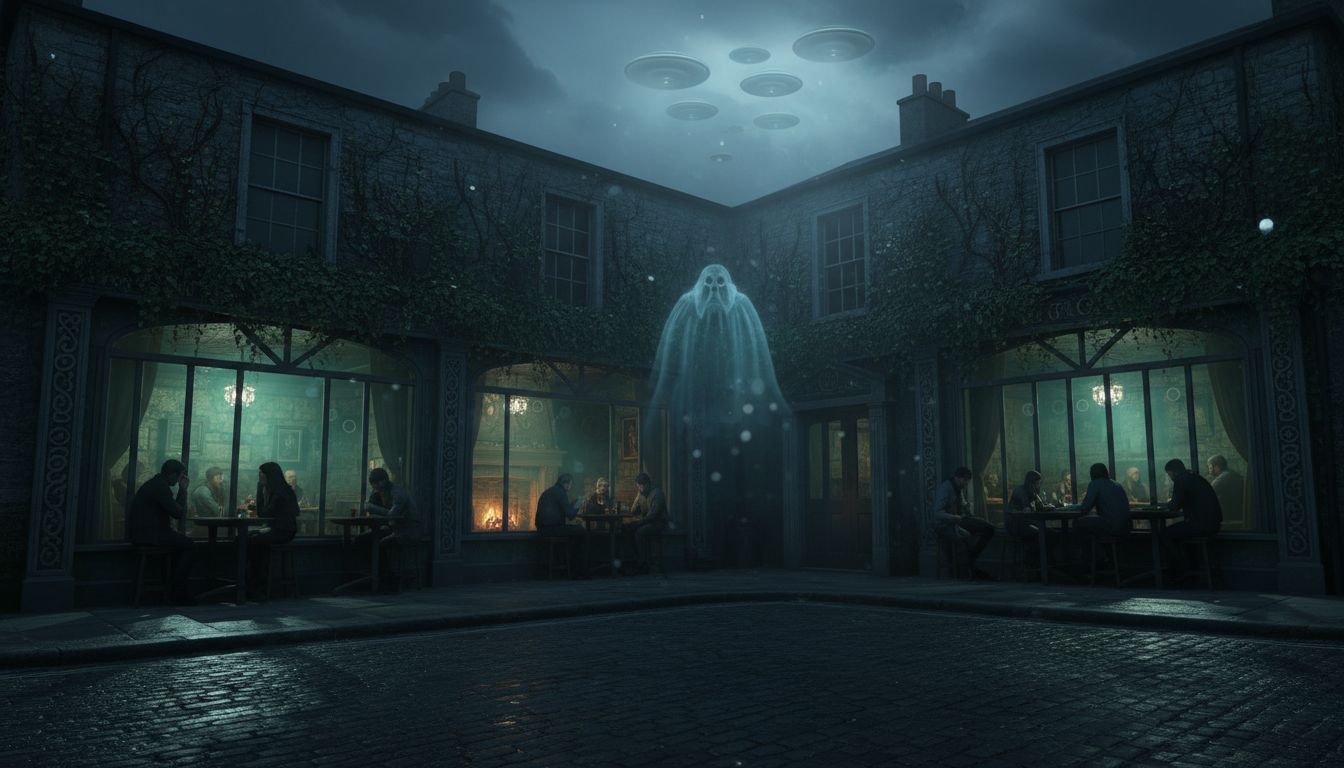
The Bull and Castle Pub, a bustling corner establishment on Lord Edward Street opposite Christ Church Cathedral, has long been a fixture of Dublin’s nightlife. In recent weeks, however, the venue has attracted attention beyond its craft ales and live music. Patrons and staff claim to experience unexplained cold drafts, sudden dimming of lights, and a lingering sense of melancholy that they attribute to the spirit of James Clarence Mangan, the 19th‑century poet who was born on the site in 1803. While the stories echo a familiar pattern of Irish hauntings, they also revive public interest in a writer whose own work was steeped in sorrow and exile.
Historical Background
James Clarence Mangan (1803‑1849), often hailed as one of Ireland’s first national poets, was born at what was then number 3 Fishamble Street—an address that later became part of the building now housing the Bull and Castle. Mangan’s early life was marked by poverty; his father, a former hedge‑school teacher, went bankrupt, leaving the family to rely on a modest grocery business. Despite these hardships, Mangan emerged as a prolific writer, producing patriotic verses such as “Róisín Dubh” and later, during the famine of the 1840s, works that expressed deep national grief. His eccentric personal style—green‑tinted spectacles, a tattered cloak, and a distinctive blond wig—made him a memorable figure in Dublin’s literary circles, earning admiration from later luminaries like W. B. Yeats and James Joyce. Mangan died of cholera at 46 and was interred in Glasnevin Cemetery, but the physical imprint of his early home remains a point of cultural curiosity.
The Pub Today
The Bull and Castle, formerly known as The Castle Inn, underwent extensive renovation after the original structure was demolished in the early 20th century. Today it offers a lively atmosphere, with regular live sessions and a menu that blends traditional Irish fare with contemporary twists. Owner Patrick O’Donovan acknowledges the ghost stories as part of the pub’s charm: “We’ve had the occasional chill or a flicker of light that catches people off guard, especially when the music drops. Whether it’s a draft or something else, it adds a layer to the experience that our guests love to talk about.” The establishment has even begun to reference the legend in its promotional material, noting the “melancholy spirit that once walked these streets” as a nod to Dublin’s rich literary heritage.
Witness Accounts
Several regulars have described moments that they interpret as Mangan’s presence. Siobhan O’Leary, a longtime patron who frequents the back room, recounted, “One night the room went silent, the candles flickered, and I felt an inexplicable sadness, as if someone were mourning. It reminded me of Mangan’s poems about exile.” Similarly, a group of university students studying Irish literature reported a sudden drop in temperature near the bar while discussing Mangan’s life, prompting them to pause and listen to an imagined “whisper of verses.” While these anecdotes are anecdotal, they reflect a pattern of sensory experiences that align with classic hauntings: temperature changes, auditory anomalies, and emotional shifts.
Expert Perspective
Folklorist Dr. Eoin Murphy of Trinity College cautions against drawing definitive conclusions from such experiences. “Human perception is highly suggestible, especially in environments where a story is already circulating,” he explained. “The power of expectation can create real physiological responses—cold sweats, goosebumps, even auditory hallucinations.” Nevertheless, Dr. Murphy acknowledges that the cultural resonance of Mangan’s work makes the site a natural focal point for collective memory. “Places associated with prominent literary figures often become symbolic anchors for communal narratives of loss and longing,” he added.
Conclusion
Whether the Bull and Castle’s chilly drafts are the work of a 19th‑century poet’s lingering melancholy or simply the result of drafty old walls, the legend enriches Dublin’s tapestry of myth and history. The pub’s owners, patrons, and scholars alike recognize that the story of James Clarence Mangan’s ghost serves both as a reminder of Ireland’s literary past and as a contemporary draw for visitors seeking a touch of the uncanny. As the establishment continues to blend modern hospitality with historic intrigue, the conversation about the poet’s possible spectral return remains a lively, if understated, part of Dublin’s cultural dialogue.