Overview
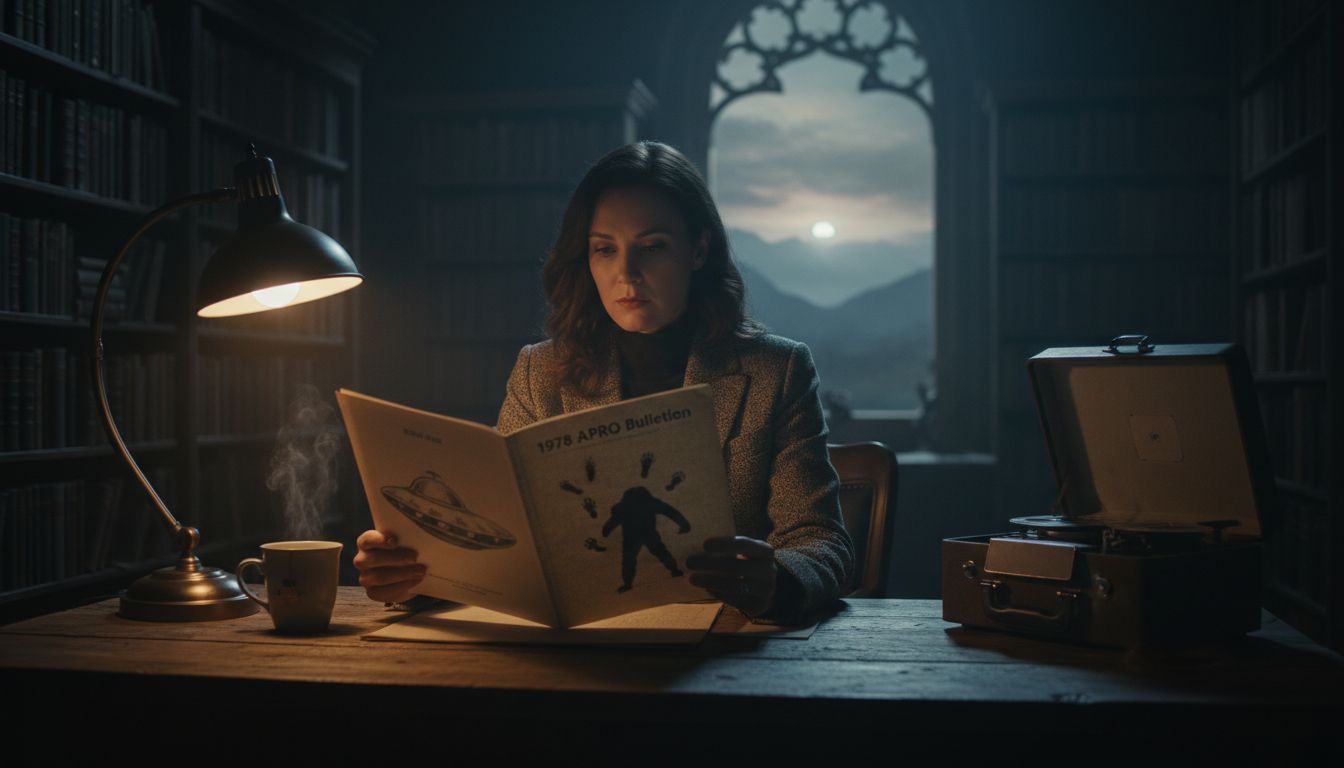
In the third installment of the “Rocky Mountain Ranch Research” series, investigator Katie Paige examines a 1978 American Paranormal Research Organization (APRO) bulletin that documents a series of unexplained events reported by the Duke family at a ranch in Elbert County, Colorado. The bulletin, titled “Multiple Phenomena on a Colorado Ranch,” describes a mix of auditory, visual, and tactile incidents that occurred during the 1970s, including low‑frequency humming, “dark shapes” that allegedly chased witnesses, large footprints, and disk‑shaped objects observed from the house. Paige’s presentation juxtaposes these historical claims with contemporary scientific explanations and recent anecdotal reports from current residents.
Geological Context of the “Hum”
Paige begins by addressing the persistent “hum” that ranch occupants described as a low‑frequency vibration audible throughout the property. She cites historical mining records from the Denver Basin, noting that shallow coal seams and abandoned mine shafts were common in the region between the early 1800s and 1915. According to geophysical studies, such voids can act as resonant chambers, amplifying wind‑induced or temperature‑driven sounds into a localized droning effect. “The acoustic environment of the basin provides a plausible, non‑paranormal source for the reported hum,” Paige concludes, suggesting that the phenomenon is more likely geological than supernatural.
Physical Encounters on the Ground
The bulletin details several direct encounters that the Duke family described as “hairy creatures” and “dark shapes.” John “Jim” Duke reported a large, hair‑covered entity striking the walls of his home and later shot at a figure near the corral; despite his claim of a clean hit, no blood or physical trace was recovered, though a brief mechanical “whine and beep” was noted. Duke also collected long hair samples after an alleged breach of a barbed‑wire fence. While the original report claims a biogeneticist could not match the hair to any known species, later analyses of similar samples have typically identified them as horse hair. Additionally, Duke recounted that his Cadillac’s trunk opened and closed on its own, with the lock’s pin found bent—a detail that investigators have not been able to corroborate with forensic evidence.
Unidentified Aerial Phenomena
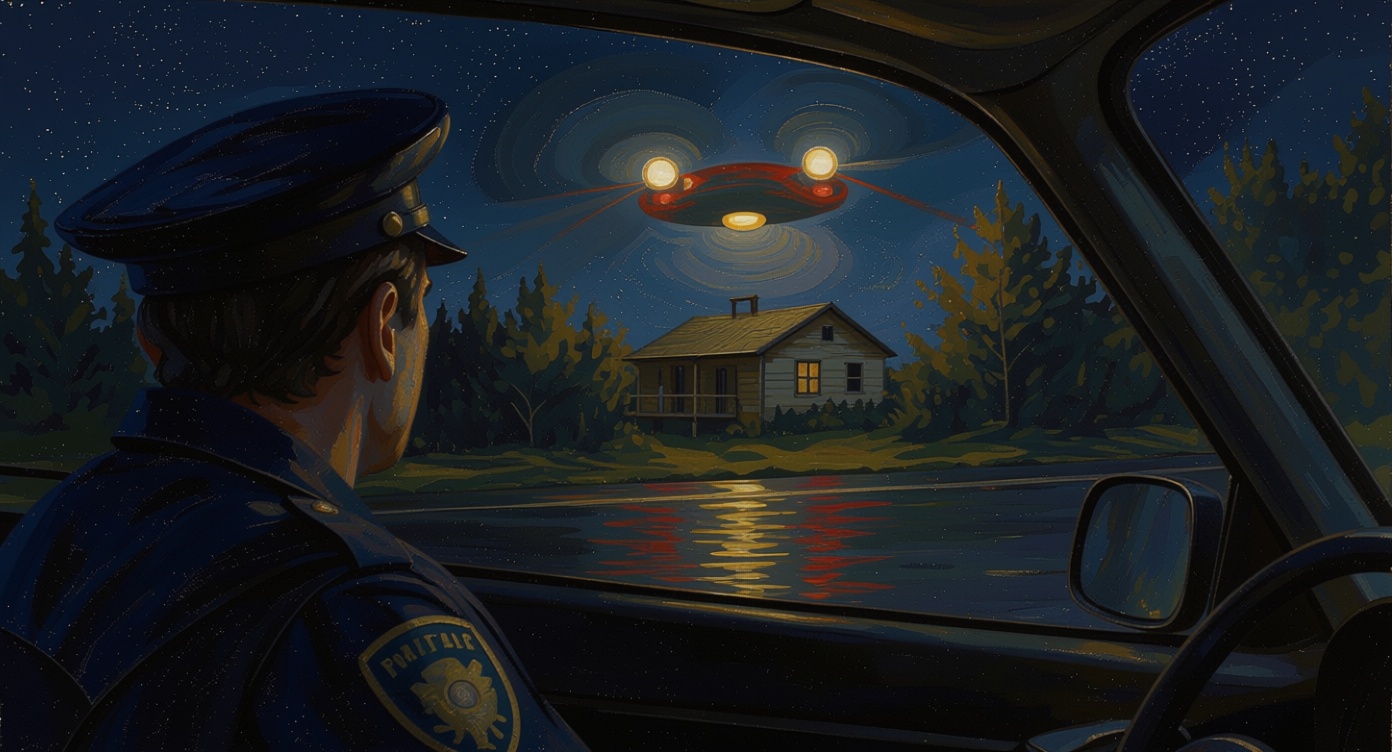
The APRO bulletin records multiple sightings of luminous, disk‑shaped objects. Jim Duke described a silent disk cruising past his front windows at approximately 2 a.m., while a neighboring rancher reported a disk that hovered over his vehicle for about 45 minutes. These historical accounts are echoed by recent testimonies from current ranch occupants, who have observed similar silent lights following similar flight paths. Although the sightings lack definitive photographic or radar data, the consistency of the reports over several decades has prompted local law‑enforcement officials, including then‑Elbert County Under‑Sheriff Bill Waugh, to document the incidents formally. Waugh has publicly stated that, while he remained duty‑bound to investigate, the reports left him “considerably unsettled.”
Psychological Impact on the Family
Beyond the physical anomalies, the bulletin emphasizes a pattern of “emotional attacks” experienced by the Duke family. Barbara (sometimes recorded as Betty) Duke reported sudden waves of intense fear, depression, and paranoia that affected both adults and children, leading to heightened domestic tension. Such psychological symptoms are not uncommon in environments where unexplained stimuli provoke chronic stress. Researchers in the field of anomalous experiences note that fear and anxiety can amplify perception of ambiguous events, creating a feedback loop that intensifies reported phenomena. Paige underscores the importance of distinguishing between physiological stress responses and objective evidence when evaluating historic case files.
Ongoing Investigation and Future Directions
While the geological explanation for the humming sound appears credible, the bulletin’s accounts of physical entities and aerial disks remain unresolved. Paige stresses the need for systematic, modern documentation—such as high‑resolution video, electromagnetic monitoring, and independent forensic analysis—to verify or refute the historic claims. The next episode in the series promises to examine Section 11 of the original briefing, potentially offering additional context or new leads. Until such data are gathered, the Clearview Rocky Mountain Ranch case serves as a reminder of the challenges inherent in