Overview
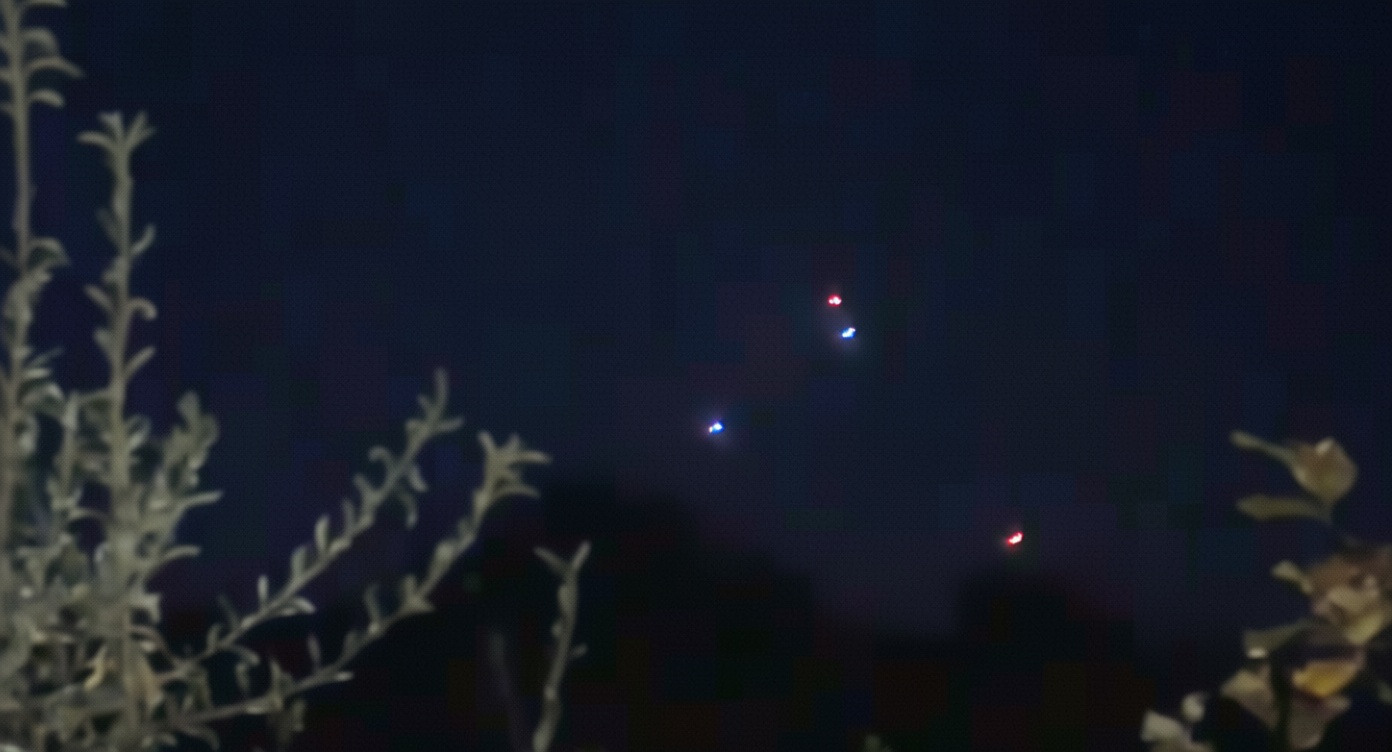
During the height of the Cold War, a series of UAP (Unidentified Aerial Phenomena) encounters were recorded near highly sensitive military installations in the United States, Iran, and the United Kingdom. Declassified documents released in recent years reveal that at least six incidents—ranging from missile‑system shutdowns at Malmstrom Air Force Base to radar‑confirmed sightings over Minot AFB, a dramatic intercept over Tehran, and the famed Rendlesham Forest event—share common traits: proximity to nuclear assets, multi‑platform detection, and unexplained interference with avionics or weapons systems. Researchers and former defense officials now view these cases as a distinct pattern rather than isolated anomalies.
Minot Air Force Base, North Dakota (24 October 1968)
Eighteen months after the mysterious missile shutdown at Malmstrom, personnel at Minot AFB reported a large, brightly lit object hovering over the base’s Minuteman ICBM launch sites. Ground security teams observed the craft moving “slowly and silently” within restricted airspace, while a B‑52 bomber on a training sortie was diverted to investigate. The bomber’s crew obtained both visual confirmation and radar returns that matched the ground observation. The incident generated a thirty‑page Project Blue Book case file, one of the final and most extensive reports before the program’s 1969 closure. Blue Book ultimately labeled the sighting a mix of an astronomical body and plasma phenomena, a conclusion that many analysts consider premature given the multiple, corroborating sources. Declassified notes suggest investigators halted the inquiry before fully reviewing the radar data and eyewitness statements.
Tehran Intercept, Iran (19 September 1976)
The Tehran incident stands out for its thorough documentation and official acknowledgment as “unexplained.” Two Imperial Iranian Air Force F‑4 Phantom II fighters were scrambled after civilian reports of a luminous, star‑like object over the city. Both aircraft achieved radar lock and visual contact; the object’s maneuverability exceeded the performance envelope of any known aircraft at the time. Crucially, the first F‑4 suffered a total loss of instrumentation and communications as it approached, while the second pilot’s AIM‑9 heat‑seeking missile and related weapons systems locked up just before launch. A declassified Defense Intelligence Agency (DIA) report classified the encounter as a genuine UAP event, highlighting the weapons‑system interference as a factor of particular significance. The report has become a cornerstone reference in contemporary UAP research.
Rendlesham Forest, England (December 1980)
From 26 to 28 December 1980, personnel at the twin NATO bases of RAF Bentwaters and RAF Woodbridge recorded a series of night‑time sightings in Rendlesham Forest, Suffolk. Service members described a craft emitting pulsating lights, hovering, and then accelerating away at speeds “far beyond conventional aircraft.” Multiple ground‑based radar stations logged contacts that corresponded with eyewitness accounts, and physical traces—such as indentations in the forest floor and elevated radiation levels—were documented in contemporaneous logs. Though the event has been heavily debated, the combination of visual, radar, and environmental data places it among the most rigorously recorded Cold‑War‑era UAP cases.
Emerging Patterns and Technical Implications
Across these incidents, three recurring elements emerge:
- Proximity to strategic nuclear assets – both Malmstrom and Minot involve ICBM facilities, while Rendlesham occurred near NATO nuclear‑ready bases.
- Multi‑sensor verification – visual sightings were consistently corroborated by radar returns, eliminating single‑source misidentification.
- Electronic or weapons interference – the Tehran intercept’s avionics failures and the unexplained missile shutdowns at Minot echo the earlier missile‑system anomalies reported at Malmstrom.
These patterns have prompted renewed interest from the Department of Defense’s UAP Task Force, which now emphasizes “potential threats to national security” when evaluating unexplained aerial phenomena. Analysts caution that while the data points to anomalous behavior, definitive conclusions about intent or origin remain out of reach.
Ongoing Investigation and Public Disclosure
The release of the Blue Book and DIA files, along with newly digitized radar archives, has enabled independent scholars to re‑examine the evidence with modern analytical tools. Congressional hearings scheduled for later this year will address whether the documented UAP‑related system disruptions warrant changes to existing air‑space monitoring protocols. As the government moves toward greater transparency, the Cold‑War case files serve as a reminder that unexplained aerial encounters have long intersected with the world’s most critical defense infrastructures. Continued scrutiny of these historical records may illuminate whether the observed anomalies represent isolated incidents, a coordinated technological phenomenon, or a new frontier in aerospace security.