Overview
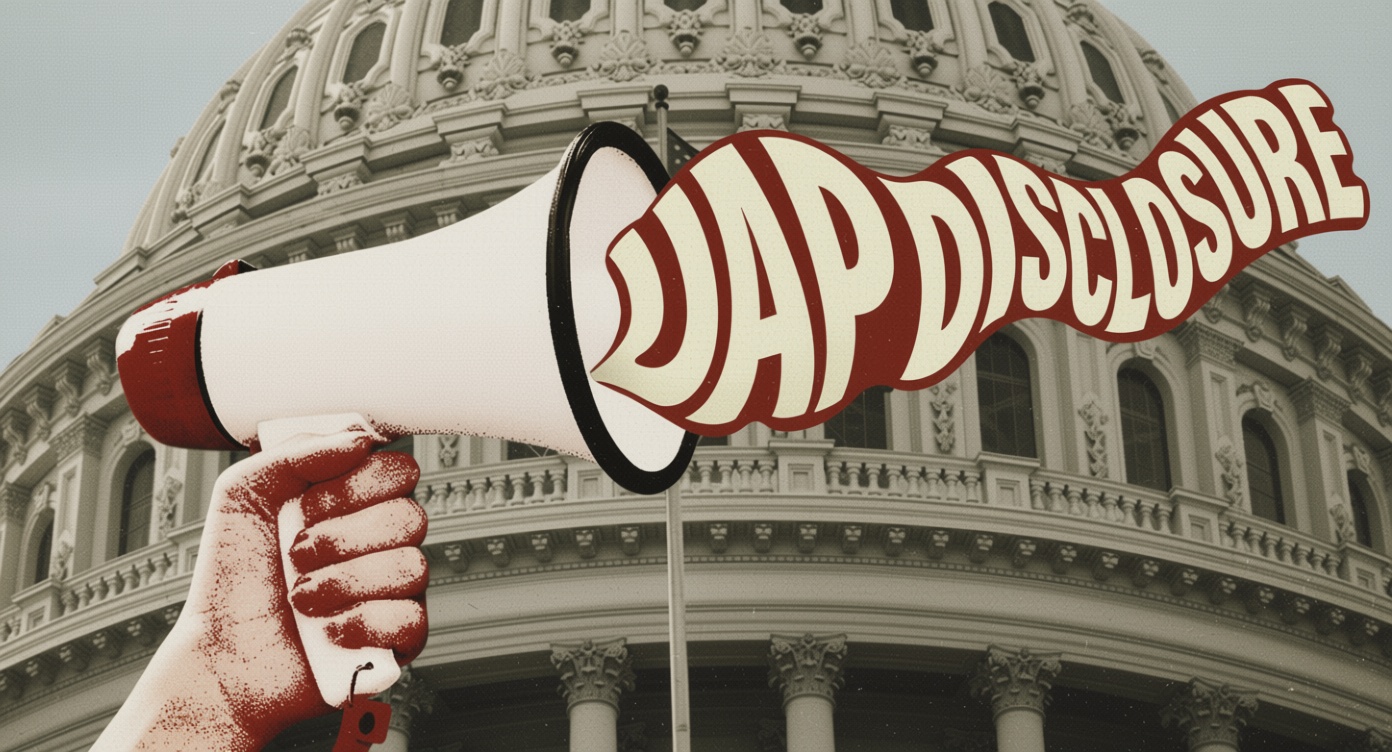
On Tuesday, a bipartisan coalition of lawmakers, journalists and former intelligence officials gathered on the Capitol’s front lawn to demand broader declassification of UAP (unidentified anomalous phenomena) records. The event, billed as “Disclosure Day,” was livestreamed by Los Angeles Magazine and featured former intelligence officer David Grusch, Rep. Anna Paulina Luna (R‑FL), Rep. Tim Burchett (R‑TN), Rep. Eric Burlison (R‑MO), Rep. Jared Moskowitz (D‑FL), investigative journalist Leslie Kean and documentary filmmaker James Fox. While the speakers pressed the Trump administration for additional releases and whistle‑blower protections, they sidestepped a growing concern on Capitol Hill: the recent disappearance of several high‑profile scientists linked to aerospace, defense and UAP research.
Congressional Push for Transparency
Lawmakers framed the disclosure effort as a matter of national security and public accountability. Grusch, who testified before Congress in 2023 about alleged secret UAP retrieval and reverse‑engineering programs, warned that “unknown objects have freely operated in restricted airspace, in large metropolitan areas and critical infrastructure” and that the agencies tasked with defending the homeland “cannot adequately defend against it.” Rep. Luna called for “temporary or permanent immunity” for whistle‑blowers who can reveal the locations of alleged craft or advanced technologies. Rep. Burlison added that Congress “is no longer asking hypothetical questions” and is now demanding specific records that agencies have allegedly withheld.
The push follows the Trump administration’s launch of the War.Gov/UFO website, which has already attracted more than 1 billion page views, underscoring the public’s appetite for official information on UAPs. Advocates argue that continued classification “protects embarrassment, hides funds, criminal activity and basic scientific information,” a sentiment echoed by Grusch who described such secrecy as “unlawful classification.”
The Unexplained Disappearances
Parallel to the disclosure campaign, a series of missing‑person cases involving scientists with aerospace and defense backgrounds has raised alarm among members of the committee. The individuals—some of whom have consulted for the Department of Defense’s UAP task force—have vanished under circumstances that investigators describe as “unusual but not yet linked to any known criminal activity.” While the press conference did not address these cases directly, reporters noted the conspicuous silence, suggesting a possible reluctance to intertwine the two sensitive topics.
Family members and colleagues of the missing researchers have appealed to Congress for answers, citing concerns that their work on advanced propulsion, radar signature analysis, and sensor technologies could make them targets for espionage or other covert actions. The Los Angeles Magazine article linked to the investigations notes that the scientists’ expertise overlaps with areas the government has hinted at studying in relation to UAPs, intensifying speculation about a connection.
Security and Policy Implications
Both the push for disclosure and the missing‑scientist inquiries converge on a core issue: airspace safety. If unidentified objects are indeed operating near civilian airports or critical infrastructure, the lack of transparent data hampers the ability of the Federal Aviation Administration and the Department of Defense to issue timely warnings or develop counter‑measures. Moreover, the potential loss of scientific talent could impede research into counter‑UAP technologies, leaving the United States at a strategic disadvantage.
Lawmakers emphasized that oversight is essential. Rep. Moskowitz, a member of the House Intelligence Committee, warned that “without full access to the data, we cannot assess whether these phenomena pose a direct threat to our citizens or our critical systems.” The call for whistle‑blower immunity is intended to encourage insiders to share otherwise classified information without fear of retaliation, a step that could illuminate both the nature of the UAPs and the circumstances surrounding the missing researchers.
Next Steps
The House Committee on Oversight is slated to hold a series of closed‑door hearings in the coming weeks, during which officials from the Office of the Director of National Intelligence and the Department of Defense are expected to testify. Simultaneously, the Senate Intelligence Committee has announced a parallel investigation into the disappearances, pledging to coordinate with law‑enforcement agencies to determine whether the cases are linked to UAP‑related work.
As the administration prepares a formal response to the “Disclosure Day” demands, observers note that transparency alone will not resolve the underlying security concerns. Comprehensive policy measures—ranging from updated air‑space protocols to robust protection for scientific personnel—will be required to address the intertwined challenges of unknown aerial phenomena and the safety of those who study them.
For ongoing coverage of the UAP disclosure effort and related investigations, follow our live updates on the Capitol Hill press briefings.