Overview
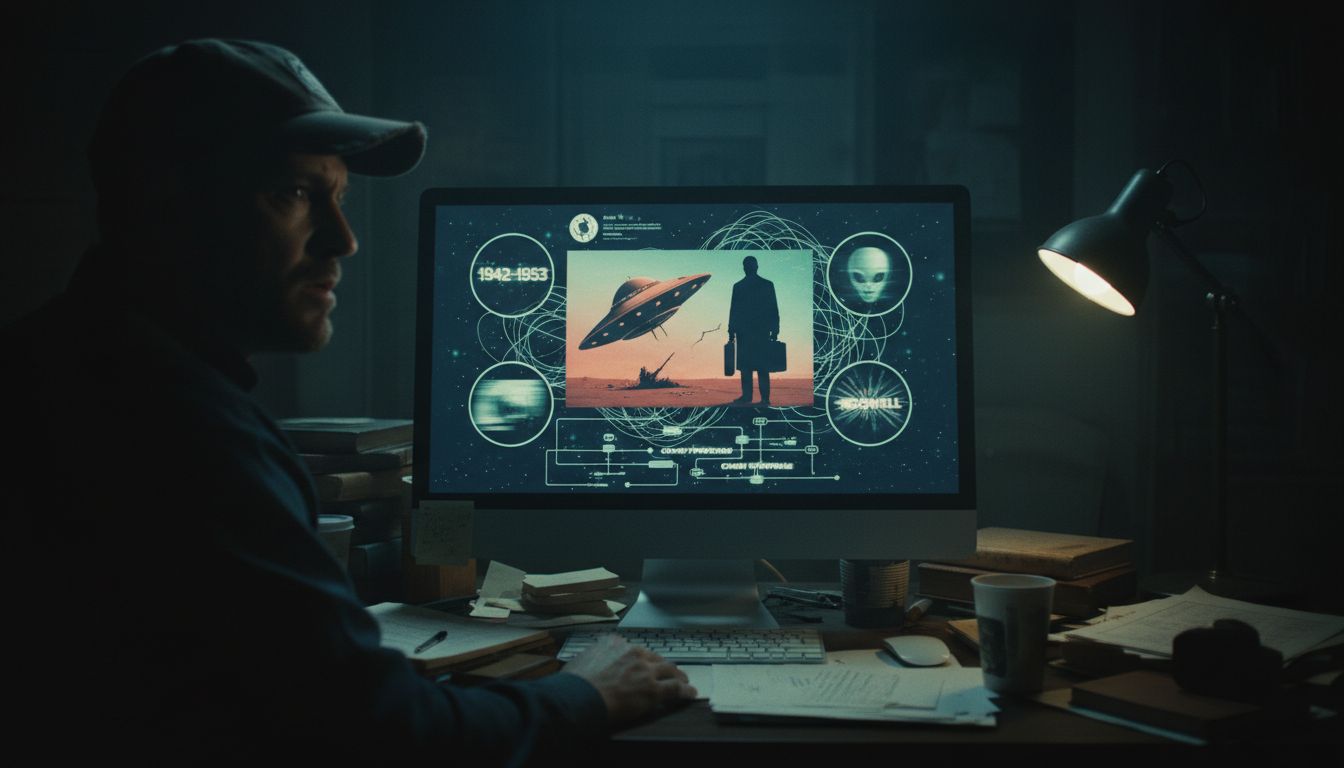
A recent post on X has reignited debate over alleged U.S. government crash‑retrieval programs that, according to its author, have concealed “hundreds of UFO recoveries” since the early 1940s. The narrative draws heavily on the work of Leonard Stringfield, a civilian researcher who, beginning in the 1970s, compiled firsthand military accounts of unidentified aerial phenomena (UAP) incidents that allegedly involved the recovery of intact craft and the bodies of non‑human occupants. The post argues that a “transnational power elite” has deliberately kept these cases classified, contending that declassification could unlock propulsion and energy technologies with planetary‑wide benefits.
Key Details
Stringfield coined the term “crash retrievals” after interviewing pilots, radar operators, and medical personnel who, he claimed, witnessed the transport of recovered objects to Wright‑Patterson Air Force Base for analysis. The post cites visualizations produced by Dr. J. Allen Hinck and Mark Rodiger of the Center for UFO Studies (CUFOS), which translate witness testimony into full‑color renderings of both the craft’s interior and the alleged occupants. Among the cases highlighted are:
- 1942, Georgia – A 15‑foot, egg‑shaped craft reportedly crashed near a small town, with four diminutive beings recovered.
- 1947, Roswell – The well‑known incident described as involving an “egg‑shaped” vehicle, two deceased occupants and a third survivor, allegedly taken to a secret facility.
- 1952, Pentagon basement – Eyewitnesses claim to have seen a recovered craft stored in a subterranean hangar.
- 1953, Hangar‑area recovery – Medical staff allegedly performed autopsies on bodies described as having oversized heads, almond‑shaped eyes, and a single‑piece suit.
The post emphasizes that these descriptions have been turned into detailed diagrams, complete with markings purportedly found on the craft’s interior, in an effort to “visualize a hidden UFO history” and press for accountability.
Historical Context
Stringfield’s research emerged during a period when the U.S. Air Force operated Project Blue Book (1952‑1969) and earlier, Project Sign and Grudge, which cataloged thousands of UAP sightings. While Blue Book concluded that most cases were misidentifications or hoaxes, a small subset remained “unexplained.” Critics note that Stringfield’s methodology—relying largely on anecdotal testimony without corroborating physical evidence—has been challenged by mainstream scholars. Nonetheless, his archives have been referenced by later investigators, including CUFOS, which continues to preserve and analyze declassified documents from the 1950s and 1960s.
Ongoing Research and Visualisation Efforts
CUFOS researchers Hinck and Rodiger have employed modern graphic tools to create “full‑color renderings” of the alleged craft and occupants, aiming to make the testimonies more accessible to both the public and policymakers. In a recent interview, Rodiger said, “Our goal is not to sensationalize but to present the data in a way that can be examined critically—drawing on the original witness statements, medical reports, and any available photographs.” The visualizations are being shared on platforms such as YouTube and Reddit, accompanied by links to the original X post and related discussions.
Implications for Disclosure
Proponents of the crash‑retrieval hypothesis argue that the reverse‑engineering of advanced propulsion systems could address energy crises and climate challenges, framing declassification as a matter of public interest. Congressional interest in UAPs has grown, exemplified by the 2022 Senate Intelligence Committee report and the establishment of the All‑Domain Anomaly Resolution Office (AARO). However, officials have repeatedly stressed that no conclusive evidence of extraterrestrial technology has been found. As one Pentagon spokesperson remarked in a recent briefing, “While we continue to investigate credible sightings, claims of recovered alien craft remain unverified.”
The renewed push for transparency reflects a broader cultural shift toward government accountability on anomalous phenomena. Whether the visualizations and testimonies will lead to formal declassification or remain part of fringe discourse remains to be seen, but the conversation underscores the enduring public fascination with the possibility that hidden UAP programs could be shaping the future of technology and security.


