Overview
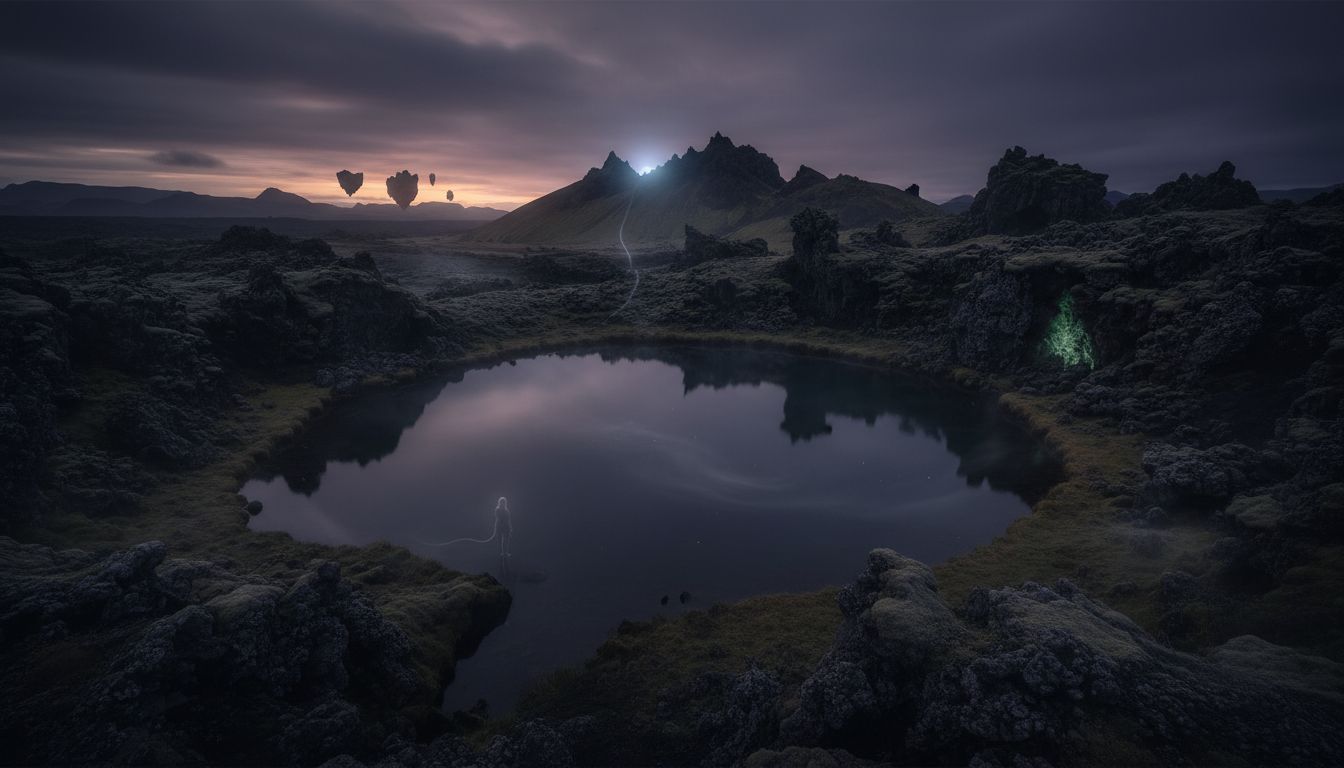
In the remote countryside of northern Iceland, a shallow pool known locally as Daníelspyttur has become the focal point of a lingering legend. Situated on the flat expanse of Gnúpufellsmýri, just below the farm Gnúpafell and adjacent to the Eyjafjörður River, the site is named after a young man who, according to oral tradition, abandoned his work, fell into the water and drowned in the early 20th century. Since that event, residents of the Eyjafjörður valley have reported eerie sightings and unusual activity around the pool, prompting the area to be regarded as haunted by many locals.
The Incident
Historical accounts recorded on the Moon Mausoleum blog describe a man named Daníel, described at the time as mentally ill and prone to sudden bouts of rage. In the spring of an unspecified year, Daníel was employed by farmer Ólafur Guðmundsson at Hleiðargarður. After a violent outburst, he seized a large goad—a pointed farming implement—and fled across the fields toward the river. Ólafur enlisted farmhand Jón Jóhannesson to pursue him. Jón observed two horses on nearby islets; one, a reluctant mare, resisted, while a steadier horse named Snarfari complied. Daníel managed to ford the river, but as Jón closed the distance, Daníel veered into a deep pit, leapt into the water, and disappeared beneath the surface. His body was never recovered, and the pool was thereafter called Daníelspyttur, literally “Daníel’s pit.”
Reported Phenomena
Over the decades, anecdotal reports have emerged describing unexplained appearances at the site. Witnesses claim to have seen a figure resembling Daníel, wielding a spear or goad, wandering the banks or surfacing briefly before vanishing. Similar accounts involve other swimmers who, after breaking the water’s surface, are allegedly pulled back down as if by an unseen force. While these stories lack photographic or forensic verification, they persist in local folklore and are frequently recounted during community gatherings, reinforcing the perception of the pool as a place of restless spirits.
Community and Expert Views
Local residents remain divided. Some, particularly older inhabitants of the Eyjafjörður valley, treat the legend as a cautionary tale about respecting the treacherous terrain and the mental health challenges of the past. Others view the sightings skeptically, attributing them to optical distortions caused by the pool’s depth variations, low‑light conditions, and the region’s frequent fog. Dr. Sigríður Kjartansdóttir, a folklorist at the University of Iceland, notes that “Icelandic rural narratives often blend real tragedies with supernatural motifs, serving both as cultural memory and as a means of explaining natural hazards.” She adds that similar water‑spirit legends appear throughout the country, from the Huldufólk of lakes to the Lagarfljót monster.
Cultural Context
The Daníelspyttur story fits within a broader tapestry of Icelandic supernatural folklore, where isolated landscapes and harsh weather have historically fostered tales of ghosts, elves, and water spirits. Such legends influence contemporary tourism; guided hikes through Gnúpafell now include brief stops at the pool for interested visitors, though operators emphasize safety and respect for local beliefs. While the narrative remains unverified by scientific investigation, its endurance illustrates how collective memory and environmental awareness intertwine in Icelandic culture, reminding both residents and outsiders of the thin line between history and myth in the nation’s rugged terrain.