Overview
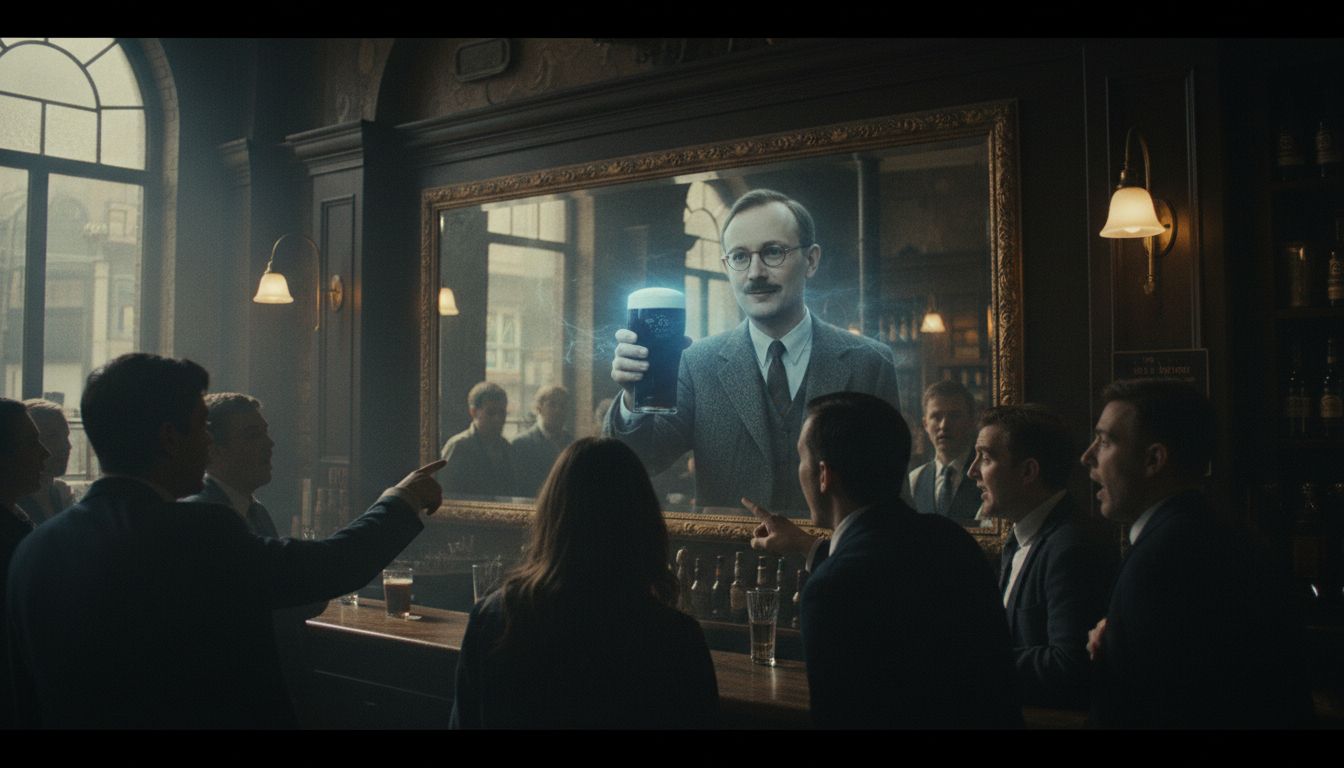
Patrons of Dublin’s historic Davy Byrne’s Pub report a recurring, if unverified, phenomenon: the spectral reflection of James Joyce appearing in the establishment’s ornate mirror and seemingly raising a glass. The claim, which has circulated among locals and visitors for years, adds a supernatural layer to a venue already celebrated for its literary heritage. While no scientific evidence confirms the apparition, the story has become part of the pub’s modern folklore, especially during the annual Bloomsday celebrations on 16 June.
Historical Background
Founded in 1889, Davy Byrne’s quickly earned a reputation as a meeting place for Dublin’s political activists and cultural figures. Records indicate that clandestine Republican gatherings were held in the upstairs rooms, with figures such as Michael Collins documented as participants. The literary connection was cemented in the early 20th century when James Joyce made the pub a regular haunt. Joyce immortalised the venue in Ulysses (1922), describing Leopold Bloom’s purchase of a gorgonzola sandwich and a glass of burgundy at Davy Byrne’s. He also referenced the establishment in the short story “Counterparts” from Dubliners. These literary nods have turned the pub into a pilgrimage site for scholars and fans alike.
Current Claims
The ghost story centers on the pub’s large, gilt‑framed mirror behind the bar. Regulars say that, on quiet evenings, a faint figure resembling Joyce materialises, pauses, and lifts an invisible pint. “I was polishing glasses when I saw a silhouette turn its head and raise a glass,” recounts Eoin Murphy, a bartender of ten years. Saoirse Kelly, a Dublin University literature student, adds, “It’s subtle—just a ripple in the reflection—but it feels like Joyce is still watching his characters come to life.” The pub’s management neither confirms nor denies the accounts, noting that “stories like these enrich the atmosphere and draw curious visitors, especially during Bloomsday when the crowd swells to over 1,000 patrons.”
Expert Commentary
Literary historian Dr. Fiona O’Leary of Trinity College cautions against taking the anecdotes at face value. “The human brain is adept at pattern‑recognition, especially in environments steeped in myth,” she explains. “When you know a location is linked to a famous author, you’re primed to interpret ambiguous visual cues as that author.” Nevertheless, Dr. O’Leary acknowledges the cultural value of such legends, noting that “ghost narratives often serve as contemporary folklore, reinforcing communal identity and keeping historic sites relevant to new generations.”
Cultural Impact
Whether fact or folklore, the Joyce apparition has become a marketing asset for Davy Byrne’s. The pub offers a “Ghost of Joyce” cocktail on Bloomsday, and guided tours now include a stop at the mirror to discuss the legend. Tourism officials report a modest increase in visitor numbers during the spring months, attributing part of the rise to media coverage of the story. As Dublin continues to leverage its literary heritage—promoting sites from the James Joyce Centre to the Dublin Writers Museum—the ghost of Joyce at Davy Byrne’s exemplifies how historical narrative and contemporary myth intertwine, keeping the city’s cultural memory both alive and, perhaps, a little haunted.