Overview
A cache of classified documents allegedly compiled by the late cyber chief of Los Alamos National Laboratory has been released to the public, prompting renewed debate over the United States’ handling of unidentified aerial phenomena (UAP). The material, described by its anonymous source as providing “100 % proof” of extraterrestrial activity, was posted online on April 16, 2026, just 22 hours after the laboratory’s former chief, Dr. Michael Hernandez, was found dead under circumstances that authorities have labeled “mysterious.” While the authenticity of the files has not yet been independently verified, their emergence adds a new layer to a series of recent high‑profile deaths of scientists linked to sensitive defense work.
The Files and Their Content
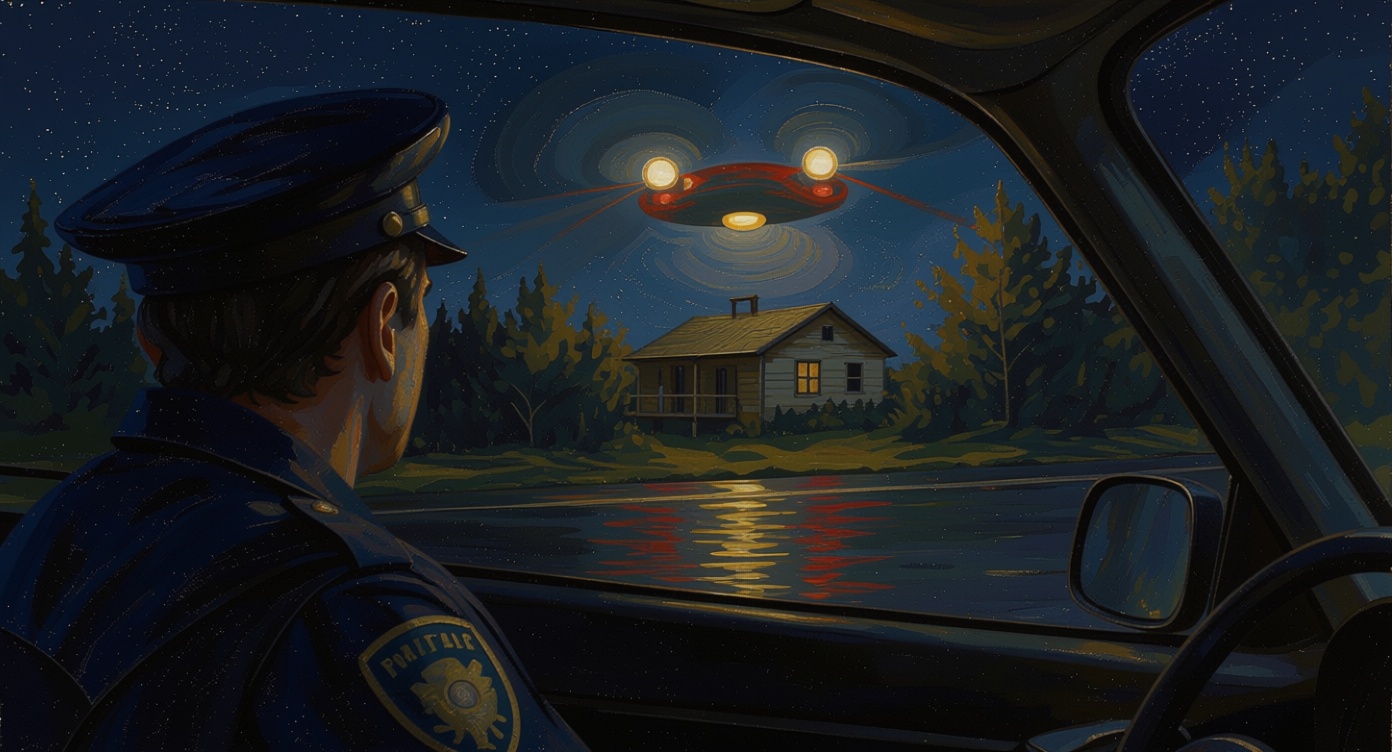
The released dossier consists of over 300 pages of internal memos, surveillance footage, and technical analyses dating from 2018 to 2025. According to the source, the documents detail multiple UAP sightings over the Los Alamos test range, including radar signatures that “defy conventional aeronautical explanations” and infrared video showing objects executing maneuvers at speeds exceeding 15 Mach. One excerpt, highlighted by the whistleblower, reads: “The observed phenomena exhibit acceleration profiles incompatible with known propulsion systems, suggesting a technology beyond current human capability.” The files also contain correspondence between the cyber chief and senior officials at the Department of Energy (DOE), discussing the need for enhanced data‑collection protocols to monitor these incidents.
Connection to Nuclear Research
Los Alamos, the birthplace of the atomic bomb, continues to play a central role in the United States’ nuclear stockpile stewardship. The documents reveal that several of the UAP encounters occurred near areas where the laboratory conducts high‑energy experiments and stores fissile material. A memorandum from 2022 advises that “any unidentified object entering the perimeter warrants immediate isolation to protect critical nuclear assets,” reflecting longstanding concerns that advanced aerial platforms could pose a security risk to nuclear facilities. Analysts note that the convergence of UAP activity and nuclear infrastructure, while not unprecedented, raises questions about potential espionage or technology‑theft scenarios that have historically motivated classified research programs.
Context of Recent Deaths and UAP Interest
Dr. Hernandez’s death joins a growing list of unexplained fatalities among scientists and engineers working on classified defense projects, including the 2024 passing of a senior physicist at Sandia National Laboratories and the 2025 suicide of a former Air Force cyber analyst. Although the FBI and the DOE have opened separate investigations, no official link between the deaths and the UFO files has been established. Meanwhile, the Pentagon’s Unidentified Aerial Phenomena Task Force, reconstituted as the All‑Domain Anomaly Resolution Office (ADARO) last year, has publicly acknowledged an increase in credible sightings near sensitive sites, urging “greater inter‑agency cooperation” to assess potential threats.
Official Responses and Next Steps
The Department of Energy released a brief statement on April 17, emphasizing that “all personnel safety and national security considerations remain paramount” and that the agency is “reviewing any newly surfaced information in accordance with established protocols.” Neither the DOE nor the Office of the Director of National Intelligence has confirmed the authenticity of the leaked documents. Congressional committees overseeing defense and intelligence have scheduled hearings for later this month to discuss the implications of UAP activity near nuclear facilities and the need for transparency. Independent experts, including former CIA analyst Dr. Linda Murray, caution that “while the files are intriguing, rigorous scientific analysis is required before drawing any conclusions about extraterrestrial involvement.”
The release of the Los Alamos chief’s secret UFO files underscores a tension between national security secrecy and public demand for openness on anomalous aerial phenomena. As investigators sift through the material, the broader scientific community watches closely, awaiting verification that could either demystify the sightings or propel the UAP debate into a new, evidence‑driven phase.